

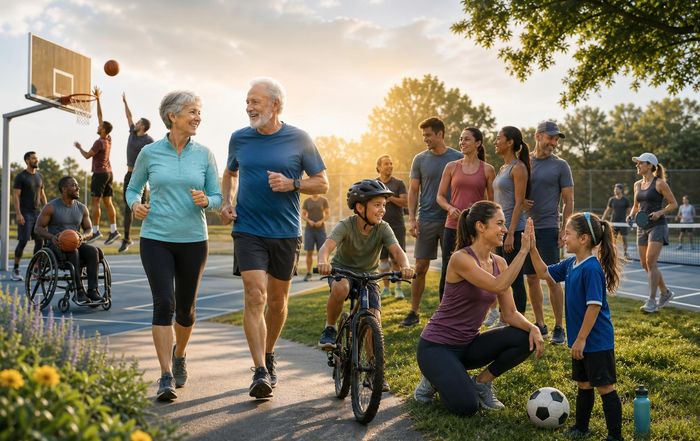
Great Sports Communities That Support Lifelong Activity
The Rise of Lifelong Sport in a High-Pressure World
The global conversation about health, performance, and sustainable lifestyles has jumped decisively from short bursts of intense training to the long arc of lifelong activity. In an era defined by digital overload, economic uncertainty, and rapidly changing work patterns across North America, Europe, Asia, Africa, and South America, sports communities have emerged as one of the most resilient and trusted anchors for wellbeing. For energetic readers of FitBuzzFeed who track news developments in sports, fitness, health, business, and technology, the question is no longer whether to stay active, but how to build a life where movement, connection, and performance are supported at every age and in every season of work and family life.
Across leading markets such as the United States, United Kingdom, Canada, Australia, France, Italy, Spain, the Netherlands, Switzerland, a new generation of sports communities is blending evidence-based training principles, digital platforms, and local culture to create ecosystems where people can thrive physically and mentally for decades. These communities are not simply clubs or gyms; they are structured environments that integrate education, coaching, social belonging, and technology, while drawing on research from organizations such as the World Health Organization and OECD to promote sustainable, inclusive participation in physical activity. Readers can explore broader health context in the dedicated health coverage on FitBuzzFeed, where lifelong activity is increasingly positioned as both a personal and societal priority.
From Elite Performance to Everyday Participation
Historically, organized sport was dominated by youth participation and elite performance, with national systems in places like the United States, the United Kingdom, Germany, and Japan oriented around competitive pathways, school programs, and professional leagues. However, over the past decade, public health data and demographic change have forced a rethinking of this model. As highlighted by global health data from Our World in Data, inactivity remains a major risk factor for chronic disease, yet traditional sport structures have often failed to retain participants beyond adolescence or early adulthood.
Forward-looking sports communities have responded by expanding their mission from winning competitions to supporting participation across the lifespan. Community football clubs in Germany and the Netherlands, running collectives in the United Kingdom and South Africa, and community-based table tennis and badminton programs in China and Singapore have reoriented their offerings to accommodate beginners, returners, and older adults, not just youth talent. This shift is supported by research from bodies such as Sport England and Sport Australia, which have documented the importance of social connection and fun in sustaining participation; those interested in policy frameworks can review current sport participation insights to understand how these ideas are being operationalized in practice.
For the business-oriented audience of FitBuzzFeed, this evolution has significant implications. Sports organizations are becoming long-term service providers rather than seasonal event organizers, and brands that support these communities are shifting from short-term campaign thinking to lifetime value and relationship strategies. The result is a more stable, trust-based ecosystem in which participants see sport as a core part of their identity and lifestyle, not an optional extracurricular activity that ends when school or early career pressures begin. FitBuzzFeed's business section has increasingly highlighted how this reorientation is reshaping sponsorship, media rights, and local economic development.
The Anatomy of a Modern Sports Community
In 2026, the most effective sports communities share several defining characteristics that reinforce their credibility and sustainability. First, they are grounded in clear, evidence-based training principles that respect the realities of work, family, and aging. This means programming that includes strength, cardiovascular conditioning, mobility, and recovery, designed in alignment with guidelines from organizations such as the American College of Sports Medicine, which offers detailed perspectives on exercise and aging. Second, they are intentionally inclusive, with pathways for individuals at different fitness levels, from beginners in their 40s returning to activity after years of sedentary work, to older adults in their 60s and 70s seeking to maintain independence and vitality.
Third, these communities embed social structures-regular meetups, online forums, mentoring systems, and local events-that reinforce accountability and belonging. Research from the Harvard T.H. Chan School of Public Health has underscored the importance of social relationships for long-term health outcomes, and many modern clubs now design their programs with social architecture in mind, treating community building as seriously as training plans. Readers who follow FitBuzzFeed's lifestyle coverage will recognize how these social elements intersect with broader trends in urban living, remote work, and mental health.
Fourth, leading communities integrate digital tools without allowing technology to replace human connection. Training apps, wearables, and online coaching platforms are used to collect data, personalize programs, and track progress, but in-person sessions, local events, and peer support remain central. The most successful organizations understand that technology should enhance, not dominate, the experience, a theme that is also visible in FitBuzzFeed's technology reporting on the sports and wellness sectors.
Digital Platforms and Hybrid Communities
The acceleration of digital adoption since the early 2020s has transformed how sports communities operate, especially in the United States, Europe, and Asia-Pacific. Hybrid models-combining in-person training with digital engagement-are now standard. Running and cycling clubs in cities such as London, Berlin, Toronto, Sydney, and Singapore use platforms like Strava to track shared challenges, while local coaches in Brazil, South Africa, and Thailand use video platforms and messaging apps to deliver remote guidance and maintain continuity for members who travel frequently or juggle complex work schedules. Interested readers can explore how digital fitness platforms evolved to better understand the underlying technological infrastructure.
The integration of wearables from companies such as Garmin and Apple has given communities access to sophisticated data on heart rate variability, sleep, and training load, allowing for more precise and individualized programming. At the same time, responsible communities are careful not to overwhelm participants with data, focusing instead on clear, actionable insights that support sustainable habits. This approach aligns with emerging guidance from organizations like the Mayo Clinic, which emphasizes moderation and safety in exercise, and offers accessible information on safe training practices.
For FitBuzzFeed readers, who often balance demanding careers with an interest in high performance, hybrid sports communities offer a pragmatic solution: the ability to train with others, benefit from expert coaching, and maintain consistency even when travel, family commitments, or shifts in work patterns disrupt routines. The site's training section frequently highlights how these hybrid models are redefining what it means to "belong" to a club in a world where physical location is increasingly fluid.
Cross-Generational and Inclusive Design
One of the most significant developments in 2026 is the rise of sports communities designed to be genuinely cross-generational and inclusive. In many countries, from Japan and South Korea to Italy and Germany, aging populations have created both a social imperative and a market opportunity to support activity across the lifespan. Evidence from the World Health Organization on ageing and health has highlighted the role of physical activity in preserving cognitive function, mobility, and independence, prompting governments, municipalities, and private organizations to invest in sports infrastructure that welcomes older adults.
Modern sports communities now routinely offer programming tiers that accommodate youth, working-age adults, and seniors, often within the same organizational framework. A community tennis club in Melbourne or Vancouver might host junior development programs, adult social leagues, and low-impact sessions for older players, all supported by shared coaching resources and a unified culture. In South Africa and Brazil, football clubs are increasingly organizing "walking football" or modified games for older participants, drawing on evidence that even moderate-intensity activity can deliver meaningful health benefits.
Inclusivity also extends to gender, socioeconomic background, and physical ability. Organizations such as Women in Sport in the UK and WomenSport International have advocated for environments that support female participation across all life stages, while adaptive sports programs, often supported by national Paralympic committees, are expanding opportunities for individuals with disabilities. Readers can learn more about inclusive sport design to see how these initiatives are reshaping community norms.
For FitBuzzFeed, which covers everything from sports to wellness, these inclusive models exemplify the shift from sport as a narrow performance arena to sport as a universal platform for health, confidence, and social cohesion.
Corporate-Backed Communities and the Future of Work
The intersection of sports communities and the future of work is particularly relevant to business and careers-focused readers. Corporations in the United States, Canada, the United Kingdom, and across Europe and Asia are increasingly aware that employee health and engagement are directly linked to productivity, retention, and employer brand strength. As hybrid and remote work arrangements have become entrenched, the traditional office-based wellness program has evolved into more distributed, community-oriented models.
Leading employers now partner with local clubs, digital platforms, and wellness providers to offer employees membership in sports communities rather than simply subsidized gym access. A technology firm in San Francisco or Dublin might sponsor participation in local running clubs or cycling groups, while a bank in Singapore or Zurich could underwrite multi-sport community memberships that include strength training, swimming, and mindfulness sessions. Research from McKinsey & Company on employee wellbeing and performance has reinforced the business case for such investments, particularly in competitive talent markets.
For job seekers and professionals, these shifts are reshaping expectations around workplace benefits and culture. Candidates increasingly evaluate potential employers based on their commitment to holistic wellbeing, including support for physical activity, mental health, and work-life integration. FitBuzzFeed's jobs section has seen growing interest in roles related to corporate wellness, community management, and sports technology, reflecting the expansion of this ecosystem.
Community-Driven Brands and the Business of Belonging
The evolution of sports communities has also transformed how brands operate in the sports, fitness, and wellness sectors. Rather than relying solely on traditional advertising or sponsorship, leading brands now seek to embed themselves within communities as authentic partners, co-creators, and long-term supporters. Companies such as Nike, Adidas, Lululemon, and emerging regional players from Asia and South America have all experimented with community-led initiatives, from local run clubs and yoga collectives to digital challenges and co-branded events. Those interested in brand strategy can explore how community-based marketing is reshaping consumer engagement through analysis from Harvard Business Review.
This community-centric approach is particularly powerful because it aligns with the trust and credibility that participants place in their clubs and coaches. When a brand supports coaching education, invests in safe facilities, or funds scholarships for underrepresented groups, it signals a commitment to long-term impact rather than short-term sales. In markets like Germany, Sweden, and the Netherlands, where consumers often prioritize sustainability and social responsibility, this alignment is especially important. FitBuzzFeed's brands coverage frequently tracks how sports and lifestyle companies are evolving their strategies to meet these expectations.
At the same time, communities themselves are becoming brands, with their own identities, merchandise, digital content, and events. A local triathlon club in Canada or a calisthenics community in Spain can now build global followings through social media, streaming, and online coaching, creating new revenue streams and partnership opportunities. This blurring of boundaries between participant, community, and brand is a defining feature of the 2026 sports landscape.
Nutrition, Recovery, and Holistic Performance
Lifelong activity is not sustained by training alone; it depends on integrated approaches to nutrition, recovery, and mental wellbeing. Modern sports communities increasingly position themselves as hubs for holistic performance, providing education and resources across these domains. Evidence from organizations such as the Academy of Nutrition and Dietetics and the British Nutrition Foundation has helped shape practical guidance on sports nutrition fundamentals, which many clubs now incorporate into workshops, online content, and one-on-one consultations.
In countries like Italy, France, Japan, and Spain, where culinary traditions and social eating are central to daily life, sports communities have found success in integrating nutrition education into shared meals, cooking classes, and local partnerships with restaurants and food producers. This approach respects cultural context while promoting evidence-based choices that support performance and recovery. In North America and Australia, where ultra-processed foods remain prevalent, communities have taken a more explicit educational role, helping members navigate labels, portion sizes, and supplementation with reference to guidelines from organizations such as the U.S. National Institutes of Health, which provides accessible information on dietary supplements and health.
For FitBuzzFeed readers who follow the site's nutrition and fitness channels, this integration of movement and nutrition reflects a broader shift toward systems thinking in personal health. Recovery practices-including sleep optimization, stress management, mobility work, and modalities such as cold exposure or heat therapy-are likewise being incorporated into community programming, often guided by research from institutions like Stanford Medicine, which shares insights on sleep and performance.
Global Case Studies and Regional Nuances
While the underlying principles of community, evidence-based training, and inclusivity are universal, the specific forms that sports communities take vary widely by region and culture. In the United States and Canada, there has been a strong emphasis on multi-sport community centers that combine traditional sports (basketball, swimming, tennis) with functional fitness, group training, and wellness services. Municipal partnerships and nonprofit organizations often play a key role, supported by philanthropic funding and corporate sponsorships.
In the United Kingdom, Germany, the Netherlands, and Scandinavia, long-established club structures have been modernized with digital tools, expanded membership options, and new programming aimed at women, older adults, and people returning to sport. In Asia, rapid urbanization and high work intensity have led to the growth of compact, high-efficiency training communities-indoor cycling studios, functional fitness boxes, and martial arts academies-that integrate technology and social media to maintain engagement. Countries such as Singapore and South Korea have invested heavily in national campaigns to promote active lifestyles, drawing on evidence from organizations like the OECD about the economic benefits of preventive health measures.
In Africa and South America, football (soccer) remains a dominant cultural force, but there is growing diversification into running, cycling, and functional training communities, often supported by international NGOs and development agencies that recognize the role of sport in youth development, social cohesion, and public health. Global organizations such as Right To Play and UNESCO have documented how sport can drive social change, and many local communities now consciously align their programs with these broader goals.
FitBuzzFeed's world section has chronicled how these regional differences create a rich tapestry of models that can be adapted and transferred across borders, allowing community leaders and policymakers in one country to learn from experiments and successes in another.
Events, Storytelling, and the Power of Shared Milestones
Events remain one of the most potent tools for building and sustaining sports communities that support lifelong activity. From local 5K races in small towns in Finland or New Zealand to major marathons in New York, Berlin, Tokyo, and Cape Town, shared milestones create structure, motivation, and a sense of progression. They also provide powerful storytelling opportunities, as individuals and teams celebrate achievements, overcome setbacks, and redefine what is possible at different ages and life stages.
In 2026, many communities have expanded their event portfolios beyond traditional races or tournaments to include skills workshops, wellness retreats, family festivals, and corporate challenges. These events are often designed with accessibility in mind, offering multiple distances, adaptive formats, and educational components. Organizations such as World Athletics and World Triathlon provide frameworks and guidelines that local organizers can use to design safe, inclusive events, and those interested in the global calendar can explore major athletics events.
FitBuzzFeed's events coverage frequently highlights how these gatherings serve as focal points for community identity, brand activation, and personal transformation. For many participants, the memory of crossing a finish line or completing a challenging course becomes a reference point that sustains motivation for months or years, reinforcing the long-term commitment to activity that underpins lifelong health.
Building Trust: Governance, Safety, and Ethics
Trust is the foundation of any community that aspires to support lifelong activity. In sports contexts, this trust depends on transparent governance, qualified coaching, robust safety protocols, and ethical practices around data, sponsorship, and inclusion. In 2026, participants are more informed and discerning than ever, often consulting sources such as the U.S. Centers for Disease Control and Prevention for guidance on injury prevention and safe physical activity, or national coaching certification bodies for information on coach qualifications.
Leading communities now adopt clear codes of conduct, safeguarding policies for youth and vulnerable participants, and transparent financial practices. They invest in ongoing education for coaches and volunteers, often leveraging online courses and certifications from recognized institutions. They are also increasingly attentive to ethical questions around performance-enhancing substances, data privacy in the use of wearables and apps, and the commercialization of community spaces. For a business audience, these governance and ethics considerations are not peripheral; they directly influence brand reputation, regulatory risk, and long-term viability.
FitBuzzFeed's news section has covered several high-profile cases where failures in governance or safety have damaged trust in sports organizations, reinforcing the importance of robust structures and accountability. Conversely, communities that demonstrate consistent integrity and care are rewarded with loyalty, advocacy, and intergenerational participation.
The Role of Media and Platforms Like FitBuzzFeed
Media organizations play a critical role in shaping how sports communities are perceived and how best practices spread across borders and sectors. Platforms like FitBuzzFeed curate stories, analysis, and expert insights that help readers navigate a complex landscape of trends, technologies, and opportunities. By covering topics that span physical performance, wellness, business, and global sport, FitBuzzFeed serves as a bridge between individual participants, community leaders, brands, and policymakers.
In 2026, responsible media coverage emphasizes nuance and context, avoiding simplistic narratives that equate health with extreme performance or aesthetic ideals. Instead, the focus is increasingly on sustainable habits, evidence-based decision-making, and the lived experiences of diverse participants across age, gender, and geography. This approach aligns with broader discussions in reputable outlets such as The Lancet and BMJ, which regularly publish research and commentary on sport and public health.
For readers, the value lies in being able to make informed choices about where to invest their time, energy, and resources-whether in joining a local community, participating in an event, or evaluating a brand's claims about performance and wellbeing. As sports communities continue to evolve, platforms like FitBuzzFeed will remain essential in highlighting innovation, exposing shortcomings, and elevating voices that might otherwise be overlooked.
Running Ahead - Designing Communities for the Next Generation
As the world navigates the ongoing challenges of climate change, demographic shifts, technological disruption, and geopolitical uncertainty, sports communities that support lifelong activity will be more important than ever. They offer not only a pathway to individual health, but also a framework for social resilience, economic opportunity, and cross-cultural understanding. For the next generation in cities from Los Angeles and London to Lagos, Mumbai, and São Paulo, the question is how to design communities that are flexible enough to adapt to changing circumstances, yet grounded enough to provide stability and trust.
Key priorities for the coming years include expanding access in underserved regions and populations, leveraging technology responsibly to enhance rather than replace human connection, integrating environmental sustainability into facility design and event planning, and deepening collaboration between public, private, and nonprofit sectors. Those interested in the broader sustainability context can learn more about sustainable business practices through resources from the United Nations Environment Programme.
For the fit and healthy folks of FitBuzzFeed, the message is clear: lifelong activity is not a solo project. It is built in community-on running tracks and football pitches, in swimming pools and martial arts studios, on digital platforms and city streets. The most successful sports communities are those that combine expertise with empathy, authority with openness, and ambition with care. They recognize that every member, whether in the United States or South Korea, Sweden or South Africa, brings a unique story, and that the true measure of success is not only how fast someone can run or how much they can lift, but how long they can stay engaged, healthy, and connected in a world that never stops moving.