

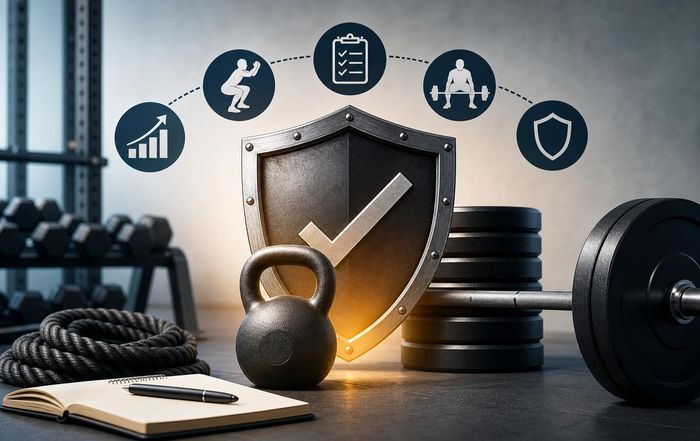
Training Principles for Safer Strength Progress
Strength training has become a global language across gyms, living rooms, parks, and digital platforms, and as the world moves deeper into the year, the conversation is no longer just about lifting heavier weights or chasing personal records but about how to build strength that is sustainable, injury-resistant, and compatible with the demanding realities of modern life and work. On FitBuzzFeed, where performance, longevity, and health intersect for readers from the United States, Europe, Asia, Africa, and beyond, safer strength progress is not a niche concern; it is a strategic priority for professionals, athletes, and everyday enthusiasts who want to stay strong without sacrificing their future well-being.
Why Safer Strength Progress Matters Now
In major markets such as the United States, the United Kingdom, Germany, Canada, Australia, and across Asia, strength training is no longer limited to bodybuilders and competitive lifters; it is now embedded in corporate wellness programs, national health guidelines, and digital fitness ecosystems. Organizations such as The World Health Organization emphasize the importance of regular muscle-strengthening activities at least twice a week as part of comprehensive health recommendations, and readers can explore how these guidelines fit into broader health strategies by reviewing current global physical activity recommendations. At the same time, data from The American College of Sports Medicine and similar bodies in Europe and Asia highlight the rising incidence of preventable injuries associated with poorly structured strength programs, often driven by social media challenges, ego lifting, or inadequate supervision.
For a business-oriented audience, the implications are significant. Lost training days mean lost productivity, increased healthcare costs, and reduced performance in physically demanding roles, from logistics and manufacturing to emergency services and elite sports. Even for knowledge workers in London, Berlin, Singapore, or New York, musculoskeletal injuries from misguided gym efforts can undermine the very resilience and mental clarity that strength training is supposed to enhance. By grounding training decisions in evidence-based principles and prioritizing safer progress, individuals and organizations can unlock the full return on investment from strength initiatives, a theme that aligns closely with the performance-driven ethos of FitBuzzFeed across its fitness, health, and business coverage.
The Science of Progressive Overload Without Excess Risk
At the heart of any effective strength program lies the principle of progressive overload, the idea that muscles, tendons, and the nervous system adapt when exposed to gradually increasing demands. However, in 2026, the challenge is no longer awareness of this principle but its responsible application. Research summarized by Harvard Medical School shows that strength gains can be achieved through relatively modest weekly increases in training load when combined with adequate recovery, rather than through aggressive jumps that dramatically elevate injury risk; readers can review how resistance training supports long-term health to understand the broader implications.
Safe progression means manipulating variables such as volume, intensity, frequency, and tempo in a structured way. Instead of simply adding weight every session, experienced coaches in the United States and Europe increasingly emphasize "micro-progressions," such as adding a small number of repetitions, slowing the eccentric phase, or improving technical consistency before increasing load. Organizations like NSCA (National Strength and Conditioning Association) have long advocated these principles, and professionals worldwide continue to refine them in high-performance environments. To deepen understanding of how progressive overload works at a physiological level, readers can explore contemporary overviews of evidence-based strength programming.
For the FitBuzzFeed audience, which includes both recreational lifters and serious competitors, the key is recognizing that sustainable overload is not linear and that periods of consolidation, where load is held steady while technique and resilience improve, are as important as periods of advancement. This approach supports long-term progress for athletes in sports featured on the platform's sports section and also for executives or entrepreneurs who rely on consistent training to manage stress and maintain cognitive performance.
Technique as a Strategic Asset
In the contemporary training landscape, where short-form video platforms showcase impressive lifts without context, the temptation to emulate advanced movements without foundational skills is stronger than ever. Yet, technique remains the ultimate safeguard against injury and the most reliable driver of strength over the long term. Organizations such as Mayo Clinic and Cleveland Clinic repeatedly stress the importance of proper form in preventing back, shoulder, and knee injuries, and readers can learn more about safe lifting mechanics and back protection to anchor their own practice.
Good technique is not a static checklist but a dynamic skill that evolves with the lifter's mobility, strength, and anthropometrics. A squat pattern that is safe and powerful for a tall lifter in Sweden or the Netherlands may look different from that of a shorter athlete in Japan or Brazil, and coaches with true expertise recognize this individuality rather than forcing everyone into identical movement patterns. In high-level environments, whether at English Institute of Sport, Australian Institute of Sport, or professional clubs in Germany's Bundesliga, technical coaching is treated as a high-value investment, not an optional extra.
For readers of FitBuzzFeed who follow strength-related stories on the training and physical sections, the lesson is clear: technical mastery should be approached with the same seriousness as financial literacy or professional development. Structured video analysis, occasional in-person coaching, and periodic form audits can dramatically reduce the likelihood of chronic pain syndromes, especially in the shoulders, spine, and knees, which are common in both office workers and manual laborers worldwide.
Load Management and the Art of Not Doing Too Much
Load management, once a term used primarily in elite basketball and football, has now entered mainstream fitness vocabulary, especially as people combine strength training with endurance sports, high-stress jobs, and demanding family responsibilities. The central idea is to balance training stress with recovery capacity so that tissues adapt rather than break down. Leading sports science institutions, including Aspetar and Gatorade Sports Science Institute, have shown that sudden spikes in training load are strongly associated with soft tissue injuries, a conclusion mirrored in various professional leagues and Olympic programs. Readers interested in how performance scientists model training stress can explore sports science approaches to load management.
For a global audience from Canada to South Korea and South Africa, the practical application of load management involves monitoring not just the number of sets and reps but also sleep quality, work stress, travel, and nutrition. A week of international travel between New York, London, and Singapore, coupled with board meetings and jet lag, substantially reduces recovery capacity, meaning that attempting personal records during such weeks is strategically unwise. Instead, experienced lifters and coaches shift to maintenance sessions, focusing on moderate loads, mobility, and technique refinement.
This mindset aligns with the performance-sustainable philosophy promoted across FitBuzzFeed's wellness and lifestyle content, which recognize that the modern professional cannot separate training from the broader context of life. By treating load management as a continuous negotiation rather than a rigid plan, individuals maintain momentum while dramatically reducing the risk of overuse injuries that can derail months of progress.
Recovery, Sleep, and the Hormonal Foundation of Strength
Strength progress is built not only in the gym but also during the hours of sleep and recovery that follow. Over the past decade, research compiled by institutions such as Stanford Medicine and National Institutes of Health has highlighted how sleep duration and quality influence hormonal profiles, including testosterone, growth hormone, and cortisol, all of which are critical to muscle repair and adaptation. Readers can explore how sleep affects physical performance and recovery to understand the non-negotiable role of rest.
In 2026, with wearable technology widely adopted in markets from the United States and Europe to Asia-Pacific, many individuals track sleep stages, heart rate variability, and resting heart rate, but data alone does not ensure better decisions. The safer path to strength progress involves using these metrics to adjust training intensity: days with poor sleep or elevated resting heart rate might call for technique-focused sessions or mobility work rather than maximal lifting. This approach, long practiced in elite environments such as Olympic training centers, is now accessible to recreational athletes through consumer devices and apps, yet it still requires discipline to act on the information rather than ignoring warning signs.
The FitBuzzFeed readership, which spans ambitious professionals, athletes, and health-conscious individuals, benefits from understanding recovery as a strategic investment rather than a passive break. Integrating structured rest days, deload weeks, and active recovery practices such as low-intensity cycling, walking, or mobility circuits supports not only muscular adaptation but also cognitive performance, mood regulation, and immune function, themes that are frequently explored in the platform's health and wellness sections.
Nutrition as a Risk-Management Tool for Strength Training
Nutrition is often framed in terms of aesthetics or performance, but in the context of safer strength progress, it becomes a risk-management tool that influences tissue resilience, recovery speed, and energy availability. Organizations such as Academy of Nutrition and Dietetics and British Dietetic Association emphasize adequate protein intake, micronutrient sufficiency, and appropriate energy balance as foundations for anyone engaged in regular resistance training, and readers can review how sports nutrition supports training adaptation in greater depth.
Protein supports muscle repair and growth, while carbohydrates replenish glycogen and help maintain training intensity; healthy fats assist with hormone production and joint health. Inadequate energy intake, particularly in populations focused on weight loss or physique goals, can impair recovery, increase fatigue, and elevate the risk of stress fractures and soft tissue injuries, a concern that has been highlighted in both endurance and strength communities worldwide. This is particularly relevant in regions such as Japan, South Korea, and parts of Europe where aesthetic pressures may encourage aggressive dieting alongside heavy training.
For the FitBuzzFeed audience, which regularly engages with nutrition and fitness content, the practical implication is that safer strength progress depends not only on what happens under the barbell but also on the consistency of daily eating habits. Strategic use of post-workout meals, hydration strategies informed by resources from organizations like European Hydration Institute, and attention to micronutrients such as vitamin D and calcium, particularly in northern climates like Scandinavia, the UK, and Canada, all contribute to a more robust and injury-resistant body.
Technology, Data, and the New Era of Smart Strength Training
By 2026, technology has reshaped how individuals in the United States, Europe, Asia, and beyond approach strength training. Velocity-based training devices, smart barbells, connected resistance machines, and AI-driven coaching apps provide unprecedented data on bar speed, power output, and fatigue. Platforms from companies such as Whoop, Garmin, and Apple collect real-time physiological data, while strength-specific applications draw on research from institutions like MIT and ETH Zurich to deliver adaptive programs. Readers can explore how sports technology is transforming training decisions to understand the broader innovation landscape.
However, data without interpretation can create confusion or false confidence. Safer strength progress in this technology-rich era depends on understanding which metrics truly matter and how to integrate them into decision-making. Bar speed can indicate when a lifter is approaching fatigue even if the weight remains constant, allowing for auto-regulation of sets and reps. Heart rate variability trends can signal when the nervous system is under stress, suggesting that a planned heavy session might be better replaced with a lighter, technique-focused workout.
On FitBuzzFeed, where technology coverage intersects with training and wellness, the emphasis is on using digital tools to augment, not replace, human judgment. The most successful lifters and coaches in markets such as Germany, the Netherlands, Singapore, and the United States treat technology as a feedback mechanism that refines their understanding of how the body responds to stress, rather than as an unquestioned authority. This balanced approach ensures that innovation enhances safety instead of encouraging reckless experimentation.
Psychological Resilience and the Culture of Sustainable Strength
Beyond the physical and technological dimensions, safer strength progress rests heavily on mindset and culture. In many training communities, particularly in North America and parts of Europe, there has historically been a tendency to glorify pushing through pain, training to failure every session, and equating rest with weakness. Over the last decade, high-performance organizations and sports psychologists from institutions such as APA (American Psychological Association) and University of Toronto have worked to shift this narrative, emphasizing self-regulation, long-term thinking, and intrinsic motivation. Readers who wish to understand the psychological underpinnings of sustainable performance can explore resources on sport and exercise psychology.
A culture that values sustainable strength encourages honest communication about fatigue, discomfort, and early signs of overuse, both in professional teams and in commercial gyms from Los Angeles to London, Munich, Tokyo, and Cape Town. It also recognizes that identity should not be tied exclusively to numbers on the bar, which helps lifters make conservative decisions when life stress is high or minor injuries emerge. This cultural shift is particularly important for younger lifters influenced by social media metrics and for professionals in high-pressure sectors such as finance, technology, and law, where overachievement is often normalized.
The editorial stance of FitBuzzFeed, spanning world, news, and wellness coverage, supports this evolution by highlighting stories of athletes, entrepreneurs, and everyday individuals who prioritize longevity, quality of life, and mental health alongside strength gains. By amplifying these narratives, the platform contributes to a global culture in which safer strength progress is seen not as a compromise but as a mark of true professionalism and maturity.
Organizational and Workplace Implications of Safer Strength Training
For organizations across North America, Europe, Asia, and emerging markets in Africa and South America, the principles of safer strength progress extend well beyond the gym and into corporate strategy, occupational health, and talent management. Companies in logistics, manufacturing, healthcare, and public safety are increasingly investing in structured strength programs to reduce workplace injuries, improve functional capacity, and support aging workforces, particularly in countries such as Germany, Japan, and Italy where demographic shifts are pronounced. Guidance from bodies such as Occupational Safety and Health Administration (OSHA) and European Agency for Safety and Health at Work underscores the role of strength and conditioning in ergonomic risk reduction, and leaders can explore workplace musculoskeletal health strategies to integrate these insights.
In white-collar sectors, corporate wellness programs that include strength training, often delivered through partnerships with digital platforms or local gyms, have become a differentiator in recruitment and retention, particularly in competitive markets like London, New York, Singapore, and Sydney. However, without adherence to safe training principles, these initiatives risk backfiring, leading to injuries and employee dissatisfaction. By embedding evidence-based guidelines, offering access to qualified professionals, and educating employees about progressive overload, recovery, and technique, organizations can transform strength training into a strategic asset rather than a liability.
For readers engaging with FitBuzzFeed's jobs and business sections, the message is that safer strength progress is not only an individual responsibility but also an organizational opportunity. Companies that align their wellness offerings with best practices in sports science and occupational health position themselves as forward-thinking employers who understand that human performance is a critical component of competitive advantage.
Regional Nuances and Global Convergence
Although the core principles of safer strength progress are universal, their application varies across regions due to cultural norms, infrastructure, regulatory environments, and access to expertise. In the United States and Canada, commercial gym density is high and strength training culture is deeply embedded, but disparities in coaching quality and healthcare access can influence outcomes. In the United Kingdom, Germany, and Scandinavia, strong public health systems and growing interest in evidence-based fitness have led to more widespread adoption of structured training frameworks, while in countries such as Singapore, South Korea, and Japan, technology-driven solutions and compact urban spaces have spurred innovative strength concepts, from smart home gyms to AI-guided micro-sessions.
In emerging markets across Africa and South America, including South Africa and Brazil, community-based training spaces and outdoor gyms play a significant role, and the emphasis often falls on functional strength for everyday tasks and sport participation. International federations, NGOs, and educational bodies are increasingly sharing best practices across borders, creating a global knowledge network that accelerates the diffusion of safe training principles. Organizations such as IOC (International Olympic Committee) and World Athletics contribute to this convergence by publishing consensus statements and injury-prevention guidelines that filter down from elite sport to grassroots levels; readers can learn more about global consensus on athlete health and safety.
For FitBuzzFeed, with its global readership and coverage across world and events, this diversity of practice is an opportunity to highlight regional innovations while reinforcing universal fundamentals. Whether readers are training in a high-tech facility in Zurich, a neighborhood gym in Chicago, a university center in Copenhagen, or an outdoor calisthenics park in Bangkok, the underlying principles of progressive overload, technique, load management, recovery, and psychological resilience remain the same, even as their expression adapts to local realities.
The Running Tracks Ahead = Building a Culture of Intelligent Strength
As seasons change, the conversation around strength training is increasingly shaped by themes that mirror broader societal shifts: sustainability, data literacy, mental health, diversity, and inclusion. Safer strength progress is not a static checklist but an evolving framework that integrates advances in sports science, technology, and organizational practice with the lived experiences of millions of lifters worldwide. Leading institutions such as McGill University, University of Copenhagen, and University of Queensland continue to refine our understanding of biomechanics, pain science, and adaptation, and interested readers can explore current research in human movement and performance to stay aligned with emerging insights.
For the active sports fitness news fans of FitBuzzFeed, the path forward involves embracing strength training as a long-term project that supports not only physical capability but also career resilience, mental clarity, and quality of life. By prioritizing evidence-based principles, seeking qualified guidance when needed, leveraging technology thoughtfully, and cultivating a mindset that values longevity over short-term bravado, individuals can build a foundation of strength that carries them through the shifting demands of work, family, and global uncertainty.
In this landscape, safer strength progress is not about lowering ambition; it is about elevating standards. It reflects a commitment to experience, expertise and 100% unique content that resonates with the values of FitBuzzFeed and with a global healthy and active community of readers and subscribers who understand that the strongest version of themselves is also the most sustainable.