

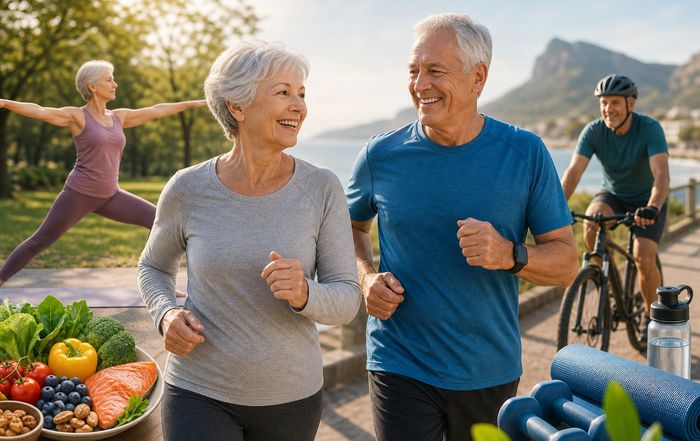
Fitness Habits That Support Healthy Aging
Healthy Aging as a Strategic Priority
Healthy aging has moved from a niche wellness topic to a strategic priority for individuals, employers, and policymakers around the world. With populations aging rapidly in regions such as Europe, North America, and parts of Asia, and with life expectancy rising in countries including the United States, United Kingdom, Germany, Japan, Australia, and Singapore, the central question is no longer how long people live, but how well they live during those extra years. Organizations such as the World Health Organization emphasize that functional ability, not just the absence of disease, defines healthy aging, and fitness habits sit at the core of that ability. For fit and active online readers or newsletter members of FitBuzzFeed, who already track developments in fitness, health, sports, and wellness, the conversation has become more sophisticated, shifting from quick fixes to sustainable, evidence-based practices that support performance and vitality across decades.
Globally, data from organizations such as the United Nations and the OECD show that the proportion of people aged 60 and above is increasing faster than any other age group, particularly in countries like Italy, Spain, France, Canada, South Korea, and China. At the same time, research from institutions like Harvard T.H. Chan School of Public Health highlights that a relatively small set of lifestyle factors, especially regular physical activity, can significantly reduce the risk of chronic conditions such as cardiovascular disease, type 2 diabetes, and certain cancers. Learn more about how lifestyle shapes longevity and disease risk through resources such as the National Institutes of Health and the World Health Organization's pages on healthy aging. For the global audience that follows FitBuzzFeed's business coverage and world news, these trends also translate into economic and workforce implications, as organizations in Germany, Sweden, Norway, Netherlands, and Switzerland adapt to older but more active workforces.
Redefining Fitness for Longevity, Not Just Aesthetics
Traditional fitness culture in the United States, United Kingdom, and many other markets has often emphasized aesthetics, short-term performance, or weight loss. In contrast, the emerging longevity-focused approach to fitness reframes physical activity as a long-term investment in mobility, independence, and cognitive function. Researchers at institutions such as Mayo Clinic and Cleveland Clinic have consistently shown that regular physical activity improves cardiovascular health, supports metabolic balance, and enhances mental well-being. Readers seeking deeper clinical insights can explore guidance on evidence-based exercise recommendations from the Centers for Disease Control and Prevention and similar agencies in Canada, Australia, and Europe.
Healthy aging requires a broader definition of fitness that encompasses strength, endurance, mobility, balance, and recovery. This integrated perspective is increasingly visible in professional sports and high-performance environments, where teams in leagues such as the NBA, Premier League, and Bundesliga rely on multidisciplinary performance departments to extend athletes' careers. While not everyone trains like an elite athlete, the principles of periodization, load management, and data-informed training are now filtering into mainstream fitness apps and wearables. Readers of FitBuzzFeed's technology section will recognize how advances in consumer devices from companies like Apple, Garmin, and WHOOP have made it easier to monitor variables such as heart rate variability, sleep quality, and training load, which are all critical to aging well without burnout or injury.
Building a Foundation: Strength and Muscle Preservation
One of the most critical fitness habits for healthy aging is consistent strength training. Starting as early as the fourth decade of life, adults begin to lose muscle mass and strength, a process known as sarcopenia, which accelerates in the absence of resistance training. Evidence synthesized by organizations like the American College of Sports Medicine demonstrates that strength training at least two days per week can significantly slow or even reverse age-related declines in muscle mass, improving metabolic health, joint stability, and functional capacity. Those interested in technical guidelines can review position stands from the American College of Sports Medicine and similar bodies in Europe and Asia.
For the audience that follows FitBuzzFeed's training coverage, the practical implication is clear: compound movements that recruit multiple joints and muscle groups, such as squats, hip hinges, presses, and pulls, should remain central to programming well into later adulthood, with appropriate load management and technique coaching. In Japan, Singapore, and South Korea, workplace wellness programs increasingly integrate supervised resistance training for employees over 40, recognizing its impact on productivity and reduced healthcare costs. Employers in North America and Europe are also beginning to see strength as a corporate asset, particularly in physically demanding sectors, where reduced injury rates and longer, healthier careers directly influence the bottom line. Organizations can learn more about workplace physical activity strategies through resources such as Eurofound and national public health agencies.
Cardiovascular Fitness: Protecting the Heart and Brain
Alongside strength, cardiovascular fitness remains a cornerstone of healthy aging. Aerobic exercise improves cardiac output, vascular health, and mitochondrial efficiency, while also supporting mental health and cognitive performance. Longitudinal studies from institutions such as Stanford University and Karolinska Institutet in Sweden have linked higher cardiorespiratory fitness to lower all-cause mortality and reduced risk of neurodegenerative diseases. To explore the evidence base, readers can consult organizations such as the American Heart Association and British Heart Foundation, which provide guidelines tailored to different age groups and risk profiles.
For individuals in Germany, France, Italy, Spain, Canada, Australia, New Zealand, and Brazil, the forms of cardiovascular exercise may vary culturally, from cycling and running to swimming, hiking, rowing, or dance-based activities. What matters most is consistency and progression, with many experts recommending at least 150 to 300 minutes per week of moderate-intensity aerobic activity or 75 to 150 minutes of vigorous activity, adjusted to individual health status. For readers who follow FitBuzzFeed's lifestyle content, integrating cardiovascular activity into daily routines, such as commuting by bike in cities like Amsterdam, Copenhagen, and Berlin, or adopting walking meetings in corporate environments in London, New York, or Singapore, can transform physical activity from an isolated workout into a lifestyle pattern that supports long-term cardiovascular and cognitive resilience.
Mobility, Flexibility, and Joint Longevity
Healthy aging is not just about lifting heavier or running farther; it also depends on moving freely without pain or restriction. Mobility and flexibility practices, often undervalued in traditional gym culture, are now recognized as critical to maintaining joint health and preventing falls, particularly in older adults. Organizations like the National Institute on Aging in the United States and similar agencies in Canada, United Kingdom, and Japan emphasize that regular stretching, range-of-motion exercises, and balance training significantly reduce injury risk and preserve independence. Readers can explore guidance on exercise and physical activity for older adults to understand how mobility work fits into a comprehensive program.
For a global audience that spans Asia, Europe, Africa, and South America, practices such as yoga, Pilates, tai chi, and qigong offer culturally diverse pathways to enhanced mobility and body awareness. In China, tai chi has long been associated with balance and fall prevention among older adults, and clinical trials continue to support its benefits for stability and mental calm. In India, yoga has evolved from a spiritual discipline to a mainstream global wellness practice, with studios and online platforms now tailoring sequences for midlife and older populations. Readers of FitBuzzFeed's wellness section will recognize how these practices also provide stress regulation benefits, which further support cardiovascular and immune health. To explore the broader evidence base, resources such as NHS pages on flexibility and balance exercises offer practical entry points.
Recovery, Sleep, and Stress Regulation
In 2026, data-driven fitness has made one principle inescapable: recovery is training. Without adequate sleep and stress management, even the best-designed program can accelerate aging rather than protect against it. Research from institutions such as University College London, Massachusetts General Hospital, and University of Sydney continues to show that chronic sleep deprivation and elevated stress hormones are associated with increased risk of cardiovascular disease, obesity, depression, and impaired cognitive function. For those who want to understand the mechanisms in depth, organizations like the Sleep Foundation and National Health Service offer accessible yet science-based overviews of sleep health.
Readers of FitBuzzFeed's health coverage have seen how high-pressure work environments in sectors such as finance, technology, and healthcare in New York, London, Frankfurt, Tokyo, Seoul, and Singapore often collide with fitness ambitions, leading to overtraining and burnout. Healthy aging requires a more strategic approach, where sleep duration and quality, measured by wearables or validated questionnaires, guide training intensity and volume. Mindfulness, breathwork, and structured relaxation techniques are increasingly integrated into corporate wellness programs and elite sports performance centers, reflecting a growing recognition that the nervous system must be trained for recovery just as the muscles are trained for strength. Readers can explore evidence-based stress reduction approaches through institutions like American Psychological Association and Mind in the United Kingdom, which outline practical frameworks for integrating psychological recovery into daily routines.
Nutrition, Body Composition, and Metabolic Resilience
No discussion of healthy aging and fitness habits is complete without addressing nutrition and body composition. While readers can find detailed coverage in FitBuzzFeed's nutrition section, certain principles are particularly important for aging well. Adequate protein intake, distributed across meals, supports muscle repair and helps counter sarcopenia, especially when combined with resistance training. Balanced intake of complex carbohydrates, healthy fats, fiber, and micronutrients underpins energy management, hormonal balance, and immune function. Organizations such as the World Health Organization and national dietary guidelines in United States, Canada, Australia, France, and Nordic countries provide frameworks for structuring nutrient-dense diets that support long-term health.
Body composition, particularly the ratio of lean mass to fat mass, is a more meaningful marker for healthy aging than weight alone. Excess visceral fat, especially around the abdomen, is strongly associated with cardiometabolic risk, while maintaining lean mass enhances metabolic flexibility and functional strength. Readers interested in the scientific underpinnings can review work from organizations like Tufts University's Human Nutrition Research Center on Aging and European Society of Cardiology, which highlight the role of diet, physical activity, and sleep in shaping metabolic trajectories over decades. For individuals in South Africa, Brazil, Malaysia, Thailand, and other rapidly urbanizing economies, navigating the tension between traditional diets and ultra-processed convenience foods has become a central challenge, making education and policy intervention crucial. Learn more about sustainable and health-promoting food systems through resources such as the EAT-Lancet Commission and FAO nutrition pages.
Technology, Data, and Personalized Training
The intersection of fitness and technology has transformed how people in North America, Europe, Asia, and beyond approach healthy aging. Wearables, connected fitness equipment, and AI-driven coaching platforms allow individuals to track activity, heart rate, sleep, and recovery metrics in real time. For readers who follow FitBuzzFeed's technology coverage, the evolution from simple step counters to sophisticated multi-sensor devices has been particularly striking. Companies like Apple, Samsung, Garmin, Polar, and WHOOP now incorporate metrics such as heart rate variability and overnight respiratory patterns, which can provide early signals of overtraining, illness, or chronic stress.
At the same time, digital platforms developed by organizations such as Peloton, Zwift, and Les Mills have expanded access to structured training programs for people in United States, United Kingdom, Germany, Canada, Australia, New Zealand, and beyond, including older adults who may prefer home-based exercise. To understand broader digital health trends, business leaders can explore analyses from McKinsey & Company and World Economic Forum, which examine how telehealth, remote monitoring, and AI coaching are reshaping healthcare and wellness ecosystems. The challenge, however, lies in using data wisely rather than obsessively. Healthy aging requires interpreting metrics in context, aligning them with subjective measures such as perceived exertion, mood, and energy levels, and avoiding the trap of chasing numbers at the expense of well-being.
Work, Careers, and the Economics of Active Aging
Healthy aging is not only a personal project; it is an economic and workforce issue that affects employers, insurers, and governments. As retirement ages rise and careers extend into the late sixties or beyond in countries like Germany, Netherlands, Denmark, Sweden, Japan, and United States, organizations face the imperative of supporting employee health over longer time horizons. Readers following FitBuzzFeed's jobs coverage and business news will recognize the link between employee well-being, productivity, and talent retention. Companies that integrate fitness and wellness into their culture, through flexible work arrangements, on-site or subsidized training facilities, and evidence-based health education, often see lower absenteeism, reduced healthcare costs, and stronger employer brands.
International bodies such as the International Labour Organization and OECD have published research on aging workforces, highlighting the value of preventive health strategies and ergonomic workplace design. In Singapore, South Korea, and Japan, where demographic aging is particularly advanced, governments incentivize corporate wellness programs and midlife reskilling, recognizing that physical and cognitive fitness underpin employability. For readers in Africa and South America, where demographic profiles remain younger but are shifting, there is an opportunity to build healthier aging trajectories early, rather than responding reactively to chronic disease burdens later. Integrating physical activity promotion into urban planning, public transportation design, and school curricula can create environments where active living becomes the default rather than the exception.
Culture, Identity, and the Narrative of Aging
Beyond physiology and economics, fitness habits that support healthy aging are shaped by cultural narratives about what it means to grow older. In some societies, particularly in parts of Asia and Europe, older adults are respected for their experience and wisdom, which can encourage them to remain active and engaged. In other contexts, ageism and stereotypes about decline can discourage people from participating in sports, fitness, or public life after a certain age. Media platforms, including FitBuzzFeed, play a critical role in reshaping these narratives, highlighting examples of older athletes, entrepreneurs, and community leaders who embody active aging across United States, United Kingdom, Canada, France, Italy, Spain, South Africa, and Brazil.
Organizations such as AARP in the United States, Centre for Ageing Better in the United Kingdom, and international advocacy groups work to combat ageism and promote inclusive design in products, services, and workplaces. Learn more about age-friendly communities and policies through resources like the WHO Global Network for Age-friendly Cities and Communities. For fitness professionals and brand leaders who follow FitBuzzFeed's brands section, there is a strategic opportunity to design offerings that speak authentically to midlife and older consumers, not by masking age, but by celebrating performance, capability, and aspiration at every stage of life.
Building a Personal Strategy for Lifelong Fitness
For the active sporty readership of FitBuzzFeed, the practical challenge is turning this broad body of evidence into a coherent personal or organizational strategy. Healthy aging through fitness is less about any single workout and more about consistent habits across years and decades. A balanced approach typically combines regular strength training, cardiovascular activity, mobility work, and intentional recovery, supported by nutrient-dense nutrition, adequate sleep, and stress regulation. It also benefits from periodic assessment, whether through medical check-ups, performance testing, or wearable data, to ensure that training remains aligned with health status and life circumstances. Readers may wish to follow updates in sports science and performance to stay informed on emerging best practices.
Global resources such as the World Health Organization physical activity guidelines and national health agencies in United States, Canada, Australia, United Kingdom, Germany, and Nordic countries offer structured recommendations that can be adapted to local contexts. Meanwhile, local community initiatives, from walking clubs in Finland and Norway to park-based fitness programs in Thailand, Malaysia, and South Africa, demonstrate that healthy aging does not require elite facilities, only intentional design and supportive environments. As technology continues to evolve and data becomes more accessible, the emphasis for individuals, employers, and policymakers should remain on what has been consistently validated: moving often, training intelligently, recovering deeply, and viewing fitness as a lifelong companion rather than a temporary project.
Those who approach fitness through the lens of healthy aging will be better positioned not only to extend their lifespan, but to enhance their healthspan, preserving the energy, clarity, and resilience needed to participate fully in work, family, and community life across Global, Europe, Asia, Africa, South America, and North America.