

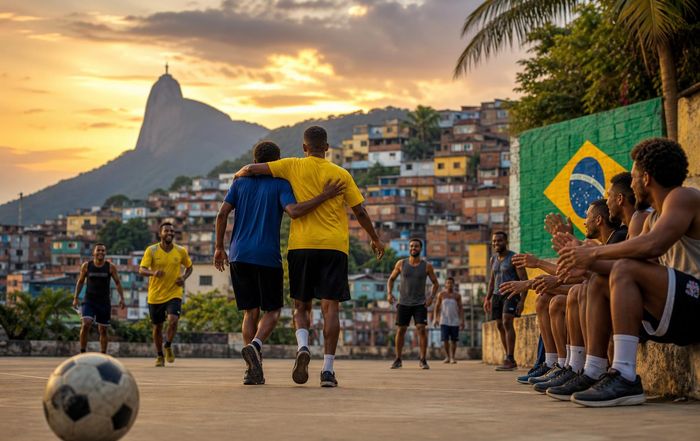
How Recreational Football Builds Community in Brazil
On almost any day in Brazil, from Rio's beachfront courts to dusty inland pitches, it is possible to see people playing football in forms that have nothing to do with professional leagues or TV money. These small-sided games, neighborhood tournaments, and casual kickabouts-often called peladas-are more than just leisure. They function as social infrastructure: a way to build community, negotiate local tensions, create opportunities for young people, and support health and wellbeing.
This article looks at how recreational football in Brazil operates as a community-building force, what makes it so resilient, and what lessons it offers for anyone trying to use sport to strengthen social ties-whether in Latin America or elsewhere.
From Pelada to Social Network: Why Informal Football Matters
Recreational football in Brazil is famously informal. A pelada might involve improvised goalposts, mixed-age teams, and rotating lineups where "winner stays on." It can take place on a beach, a futsal court, a schoolyard, or an empty lot. Yet beneath the apparent chaos is a surprisingly organized social system. Regular games usually have unwritten rules about time, team selection, and conflict resolution, and there is often a core group of organizers who handle equipment, schedules, and communication.
Sociologists and sports researchers from Brazilian universities such as Universidade de São Paulo and Universidade Federal do Rio de Janeiro have described these football networks as a form of "social capital"-the web of relationships, trust, and mutual obligations that allows communities to function. Informal sport is one way people form that capital outside of work, school, or religious institutions. It is common for job leads, small business referrals, childcare arrangements, and even local political discussions to flow through these football circles.
For many participants, especially men and increasingly women in urban areas, a weekly or twice-weekly game is the one fixed social appointment they keep. That regularity matters for health and mental wellbeing, complementing more structured exercise routines or gym-based training. It can also be more inclusive than organized club football, which often requires fees, equipment, and transport. In economically marginalized neighborhoods, free or low-cost peladas are sometimes the only accessible form of organized physical activity.
Health, Wellbeing, and Everyday Fitness
Recreational football is not just cultural; it is physical. Studies highlighted by the World Health Organization show that regular moderate-to-vigorous activity reduces the risk of cardiovascular disease, type 2 diabetes, and depression, and team sports are one of the ways people naturally reach recommended activity levels. In Brazil, where urban lifestyles and processed food consumption have contributed to rising obesity and non-communicable diseases, accessible football has become an informal public-health asset.
Local health professionals increasingly recognize this. Municipal programs in cities like São Paulo, Recife, and Porto Alegre have partnered with community football groups to promote physical activity campaigns, sometimes offering free health checks at tournaments or combining football days with nutrition workshops. These initiatives complement more traditional health services by meeting people in spaces where they already feel comfortable.
From a fitness perspective, small-sided games, futsal, and beach football can deliver high-intensity interval-style benefits: short sprints, changes of direction, and repeated efforts with brief recovery. Research shared by organizations such as FIFA and UEFA suggests that recreational football can improve aerobic capacity, muscular endurance, and body composition even in middle-aged adults, often with better adherence than solitary workouts. The social nature of play-friends expecting you to show up-helps maintain consistency in a way that formal gym memberships sometimes do not.
For individuals who might never join a running club or subscribe to a structured fitness program, peladas provide a low-barrier entry point to regular movement. They also normalize physical activity for children, who often grow up watching parents, older siblings, and neighbors play. That visibility matters in communities where safe, affordable sport options are limited.
Public Spaces, Urban Inequality, and the Battle for the Pitch
The community-building power of football in Brazil is closely tied to public space. Beaches in Rio de Janeiro, squares in smaller cities, and multi-use courts in housing complexes all serve as informal sports venues. Yet access to safe, well-maintained pitches is uneven, reflecting wider inequalities in Brazilian cities.
In wealthier neighborhoods, there are private football schools, condominium courts, and paid synthetic fields. In many favelas and peripheral areas, pitches might be poorly lit, uneven, or contested by different groups. Local authorities, NGOs, and residents' associations often negotiate over who maintains these spaces, when they can be used, and how to balance football with other needs like markets, festivals, or parking.
Organizations such as UN-Habitat and UNESCO have highlighted how inclusive public sport spaces can contribute to safer, more cohesive neighborhoods. In Brazil, some city governments have adopted "open streets" initiatives, temporarily closing roads to cars on weekends to allow cycling, walking, and football. These programs, inspired in part by global active-transport policies promoted by bodies like the Pan American Health Organization, create temporary but powerful community hubs where people of different ages and backgrounds share space.
At the same time, commercialization can complicate matters. The growth of pay-per-hour artificial turf facilities has given more people the chance to play in high-quality conditions but has also shifted some football activity away from open public spaces. For low-income players, rising rental prices can be a barrier. Some community groups respond by organizing collective bookings, fundraising, or negotiating reduced fees for youth teams, showing how football continues to be a site where broader issues of urban justice and access are played out.
Gender, Inclusion, and Changing Norms
Historically, Brazilian football culture has been heavily gendered, with men dominating both professional and recreational play. Women's participation was actively constrained for decades: from 1941 to 1979, a federal decree banned women from playing football in official competitions, a policy that shaped social attitudes long after it was repealed. Recreational peladas often mirrored this exclusion, with girls and women discouraged from joining mixed games or lacking safe spaces to play.
Over the past 10-15 years, there has been a visible shift. The growth of women's professional football, supported by the Confederação Brasileira de Futebol (CBF) and international bodies like FIFA, has raised visibility and created new role models. At the grassroots level, women-only peladas, futsal leagues, and beach football groups have emerged in cities such as São Paulo, Salvador, and Brasília. Social media has helped these communities organize, schedule games, and share information on inclusive venues.
These developments matter for community-building because they broaden who feels entitled to occupy public sport spaces. Mixed-gender games, though still less common, are increasingly seen in university settings and among younger urban players. NGOs focusing on girls' empowerment use football as an entry point to discuss topics like leadership, body autonomy, and education. International organizations such as UN Women and UNICEF have partnered with Brazilian initiatives to promote sport as a tool for gender equality, emphasizing recreational football's capacity to challenge stereotypes and expand social networks.
Inclusion debates also extend to LGBTQ+ players. Some cities now host explicitly LGBTQ+-friendly peladas and amateur teams, offering safer spaces for people who may have experienced discrimination in mainstream football environments. These groups not only provide exercise but also emotional support, peer networks, and a sense of visibility in a sport that has often been hostile to sexual and gender diversity.
Youth Development, Social Programs, and Safe Pathways
For Brazilian children and teenagers, football is both play and aspiration. Many dream of professional careers, inspired by stars like Pelé, Marta, Neymar, and Vinícius Júnior. Yet the vast majority will never enter the professional system. Recreational football, especially when structured through community centers, schools, or NGOs, can offer a healthier pathway: skill development, friendship, and life skills without unrealistic pressure.
Numerous Brazilian NGOs use football as a core tool for youth development. Programs in favelas and low-income areas often combine training sessions with tutoring, health education, and workshops on topics such as violence prevention or digital literacy. International partners, including UNICEF and global sport-for-development networks like streetfootballworld (now part of Common Goal), have collaborated with Brazilian organizations to design curricula that link on-pitch experiences with off-pitch learning: teamwork, conflict resolution, respect for rules, and goal-setting.
This approach aligns with broader evidence from bodies like the World Health Organization and the International Olympic Committee, which emphasize that sport can support cognitive, social, and emotional development when programs are well-designed and inclusive. Recreational football in Brazil provides countless real-world labs for these principles, from school tournaments to church-league futsal.
However, there are tensions. Some "social projects" blur the line between community work and talent scouting, prioritizing a small number of highly skilled players over broader participation. When the dream of professional success dominates, young people who do not "make it" may feel excluded. Effective community programs tend to emphasize education and holistic wellbeing, framing football as a tool rather than an end in itself. They also collaborate with families, schools, and local health services to create a support network that extends beyond the pitch.
Rituals, Identity, and Local Belonging
Beyond health and youth development, recreational football in Brazil creates shared rituals that anchor local identity. Weekly peladas often include pre-game banter, post-game barbecues, and WhatsApp groups where players share jokes, photos, and match highlights. These digital and physical rituals reinforce a sense of belonging that extends into daily life.
In many neighborhoods, informal teams adopt names, colors, and even simple logos, mirroring professional clubs. Amateur tournaments may feature entrance music, homemade trophies, and small crowds of family and friends. Local businesses sometimes sponsor kits or refreshments, turning football into a micro-economy that circulates money within the community. These practices echo the broader sports culture of Brazil, where club allegiances and national-team performances are central to public life.
Football also functions as a bridge between generations. Older players may shift from full-pitch games to more gentle futsal or walking football, but they often remain involved as organizers, referees, or informal coaches. Children watch from the sidelines, gradually being invited into games as they grow. This continuity of participation across the lifespan is one reason football maintains such a strong hold on Brazilian social life.
At a national level, the image of Brazilians playing barefoot on the beach or in tight urban spaces has become a cultural symbol, sometimes romanticized in international media. While that image can oversimplify Brazil's diversity and inequalities, it does reflect a real phenomenon: recreational football is one of the few activities that cuts across many of the country's social, racial, and regional divisions, even if access and experience are far from equal.
Risks, Conflicts, and the Limits of the Game
While recreational football can be a powerful community builder, it is not a cure-all. Games can also be sites of conflict, exclusion, and risk. Arguments over fouls, team selection, or pitch access sometimes escalate into fights. Alcohol consumption around matches can increase the risk of injury or interpersonal violence. In some areas, criminal groups exert control over public spaces, including football pitches, shaping who can play and when.
From a health perspective, poorly maintained surfaces, lack of medical support, and absence of basic safety measures like warm-ups or appropriate footwear can lead to injuries, especially among older players returning to sport after long breaks. Public-health bodies such as the Ministério da Saúde in Brazil and organizations like the American College of Sports Medicine emphasize the importance of progressive loading, basic conditioning, and injury prevention education for recreational athletes.
There are also issues of overuse and burnout for children who train intensely in multiple environments-school, club, and community-without adequate rest. In some cases, early specialization in football crowds out other forms of physical activity that might better support long-term development. Balancing structured training with free play, and football with other physical activities, can help mitigate these risks.
Finally, football's dominance can overshadow other sports that might be more accessible or appealing to certain groups, including girls, older adults, or people with disabilities. Some Brazilian communities are responding by integrating volleyball, basketball, capoeira, and dance into the same spaces and events, creating more diverse and inclusive activity ecosystems while still recognizing football's central role.
Lessons for Community Building Through Sport
For readers interested in how sport can strengthen communities-whether as policymakers, coaches, or active participants-Brazil's recreational football culture offers several practical insights.
First, low-barrier access matters. Many of the most vibrant peladas rely on simple equipment, open spaces, and flexible rules. This aligns with global guidance from organizations like the World Health Organization, which advocates for environments that make physical activity easy and socially rewarding. Investments in basic infrastructure-lighting, safe surfaces, public toilets-often deliver more community value than highly specialized facilities.
Second, social rituals are as important as the game itself. Post-match meals, group chats, and community events around tournaments deepen relationships and increase participation. Linking football with broader lifestyle and wellness themes-nutrition, mental health, cultural celebrations-can amplify its impact.
Third, intentional inclusion is crucial. Efforts to create spaces for women, LGBTQ+ players, people with disabilities, and older adults do not emerge automatically from "love of the game"; they require deliberate policies, communication, and role models. International frameworks from bodies like UN Women, UNESCO, and FIFA provide guidance, but the most effective changes are usually driven by local leaders who understand their community's specific barriers and opportunities.
Finally, football works best as a community tool when it is integrated with education, employment, and health services rather than treated as a stand-alone solution. Partnerships between football groups, schools, clinics, and social programs can help ensure that the trust and networks built on the pitch translate into broader opportunities off it, from job connections to improved access to care and information about nutrition.
In Brazil, recreational football continues to evolve alongside rapid urbanization, digital communication, and changing social norms. Yet its core function remains surprisingly stable: offering people a reason to come together, move their bodies, negotiate differences, and share joy in a common activity. For communities worldwide looking to harness sport for social good, the Brazilian pelada is less a romantic image than a practical blueprint-imperfect, adaptable, and deeply human.