

Practical Mobility Drills for Everyday Movement in 2026
Why Everyday Mobility Has Become a Strategic Priority
By 2026, mobility is no longer a niche concern reserved for athletes or rehabilitation clinics; it has become a strategic health and performance priority for professionals, organizations and policymakers across the world who now recognize that the ability to move well underpins productivity, resilience and long-term wellbeing. As hybrid work patterns in the United States, United Kingdom, Germany, Canada, Australia and other major economies have normalized long hours at desks and on screens, rates of musculoskeletal pain, posture-related fatigue and overuse injuries have climbed, pushing employers, health systems and individuals to re-evaluate how they treat movement throughout the day rather than viewing exercise as a separate, siloed activity. Reports from organizations such as the World Health Organization highlight the global burden of physical inactivity and its connection not only to cardiovascular disease but also to musculoskeletal disorders, and readers who wish to explore current global data on movement trends can review the latest physical activity guidelines and statistics on the WHO website.
Within this context, FitBuzzFeed has seen a clear shift in reader behavior across its core sections, from fitness insights and health coverage to business and workplace analysis, as professionals, founders and knowledge workers increasingly search for practical, time-efficient mobility drills that can be integrated into commutes, meetings and recovery routines. The emphasis is moving away from purely aesthetic goals toward sustainable, functional movement capacity that supports careers, caregiving responsibilities and active lifestyles from early adulthood through later life, whether in Europe, Asia, Africa, North America or South America.
Understanding Mobility: More Than Flexibility
In a business environment that prizes measurable outcomes, it is important to define mobility precisely rather than treating it as a vague wellness buzzword. Mobility refers to the ability of a joint to move actively through its full, functional range of motion with control, stability and strength, in contrast to passive flexibility, which simply describes how far a limb can be pushed or stretched without necessarily having strength or coordination in that position. For leaders responsible for talent performance in sectors from technology and finance to logistics and manufacturing, this distinction matters because mobility drills that train active control tend to translate more directly into reduced injury risk, better posture and higher movement quality during work tasks, sports and daily life.
Organizations such as Harvard Medical School have increasingly emphasized the role of joint mobility and strength training in preserving independence and reducing fall risk with age, and readers can explore their overview of joint health and exercise to see how clinical guidance has evolved. At the same time, research from institutions like the Mayo Clinic has strengthened the case for combining mobility and strength rather than treating stretching as a standalone solution, and professionals can review Mayo's guidance on exercise for joint health to align their personal routines with evidence-based principles.
For the global audience of FitBuzzFeed, spanning high-performance professionals in Singapore and Japan, remote workers in France, Italy and Spain, and active retirees in New Zealand, South Africa and Brazil, mobility can be framed as a practical capability: the ability to sit, stand, walk, lift, carry, rotate and reach with ease and without pain, in environments that increasingly mix digital and physical demands. This capability is not fixed; it can be developed through specific, repeatable drills that respect individual differences in anatomy, training history and occupational load.
The Business Case for Better Movement
Executives and HR leaders are paying closer attention to mobility because it intersects directly with absenteeism, presenteeism, healthcare costs and employer branding. In sectors ranging from professional services in London and New York to manufacturing in Germany and South Korea, musculoskeletal disorders remain among the top causes of lost workdays and long-term disability. According to data from the U.S. Bureau of Labor Statistics, musculoskeletal injuries are a significant driver of workers' compensation claims and productivity loss, and readers can review the latest occupational injury statistics to appreciate the economic scale of the issue.
Forward-thinking organizations are integrating mobility drills into daily stand-ups, safety briefings and digital wellness platforms, aligning with broader trends in corporate sustainability and human capital management. Leaders who follow frameworks from McKinsey & Company and similar advisory firms have begun to treat physical wellbeing as a core component of workforce resilience, and those who wish to explore the linkage between wellbeing and performance can read more about holistic performance management. For many companies highlighted in the FitBuzzFeed business section, mobility routines have become part of branded wellness initiatives that help attract and retain talent, particularly among younger employees who expect employers to support health, not just pay.
The intersection with technology is also significant. Wearables from industry leaders such as Apple, Garmin and WHOOP now track not only steps and heart rate but also metrics related to posture, sedentary time and recovery, making it easier to quantify the impact of mobility breaks across workdays. Readers interested in how consumer technology is reshaping movement habits can explore broader trends in the FitBuzzFeed technology hub, where mobility is increasingly discussed alongside sleep tracking, stress monitoring and digital ergonomics.
Principles Before Drills: Safety, Consistency and Context
Before examining specific practical drills, it is essential to ground any mobility practice in clear principles that support safety, consistency and relevance to everyday movement. Healthcare organizations such as the Cleveland Clinic emphasize progressive loading, controlled range of motion and attention to pain signals as foundations for joint health, and professionals can review their guidance on stretching and mobility to align personal routines with clinical best practice.
From the perspective of FitBuzzFeed readers who balance demanding careers, family commitments and often irregular schedules, three principles stand out. First, mobility drills should be integrated into existing routines rather than added as an entirely separate block; attaching a five-minute sequence to morning coffee, pre-meeting preparation or evening wind-down dramatically increases adherence. Second, drills should prioritize the joints and movement patterns most stressed by modern life: the neck, thoracic spine, shoulders, hips and ankles, which are heavily affected by prolonged sitting, device use and repetitive tasks. Third, progress should be tracked in simple, functional terms such as the ease of getting up from the floor, comfort during long flights or the ability to walk briskly without stiffness, rather than only in abstract range-of-motion metrics.
Readers who want to pair these principles with structured training plans can explore the FitBuzzFeed training section, where mobility work is increasingly woven into strength and conditioning programs for both recreational and competitive athletes. The same concepts apply to knowledge workers in Netherlands, Switzerland, Norway and Denmark, where ergonomic standards are high but sedentary time remains substantial.
Foundational Daily Mobility Drills
Foundational drills address the core joints and patterns that underpin virtually all everyday movement, from walking and lifting to typing and driving. They are designed to be performed without equipment, in small spaces such as home offices, hotel rooms or open-plan workplaces, making them realistic for professionals who travel frequently between Asia, Europe and North America.
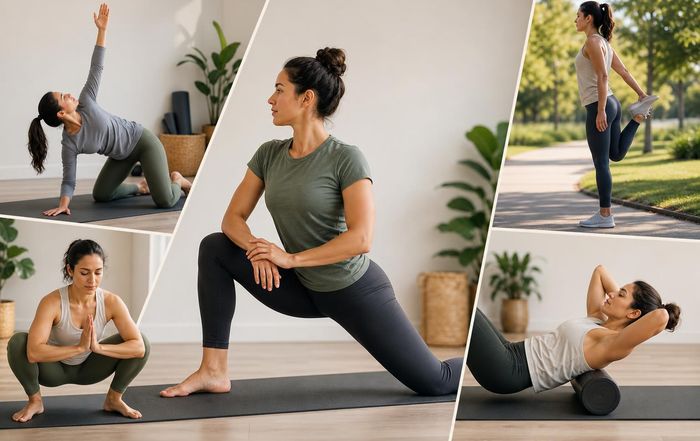
A first category centers on spinal mobility, particularly in the thoracic region, which tends to stiffen with prolonged sitting and screen use. Controlled cat-camel movements on hands and knees, combined with gentle thoracic rotations where one hand reaches toward the ceiling while the other supports the body, help restore segmental movement and reduce compensatory strain in the lower back and neck. These movements, when performed slowly and within a comfortable range, prepare the spine for the rotational demands of walking, carrying bags, playing recreational sports or lifting children. For readers seeking visual guidance, educational resources from Physiopedia offer detailed explanations of spinal mobility concepts, and professionals can learn more about spinal movement and posture.
A second foundational category focuses on hip mobility, which is critical for walking, squatting, climbing stairs and maintaining balance, particularly in aging populations in Japan, Finland and Italy. Deep but supported hip flexor stretches, dynamic leg swings within a safe range and controlled hip circles performed while standing and holding a stable support can gradually open the front and sides of the hips, counteracting the flexed position associated with long desk hours. Research summarized by Johns Hopkins Medicine underscores the importance of hip strength and mobility for fall prevention and functional independence, and readers can explore their guidance on hip health.
Ankle mobility drills, including gentle dorsiflexion movements where the knee tracks forward over the toes while the heel remains grounded, support more efficient walking and running mechanics, reduce the risk of tripping and improve the ability to squat safely when lifting objects. For those who participate in recreational sports covered in the FitBuzzFeed sports pages, such as football, basketball or running, ankle mobility is a key protective factor against sprains and overuse injuries. Educational content from NHS Inform in the United Kingdom highlights the role of ankle movement and balance exercises in injury prevention, and individuals can read more about maintaining ankle health.
Desk-Friendly Mobility for the Hybrid Work Era
Hybrid work has transformed how and where professionals move, particularly in knowledge economies across United States, Canada, United Kingdom, Germany, France and Sweden, where kitchen tables and co-working spaces often double as offices. In this environment, desk-friendly mobility drills that can be performed in business attire without drawing undue attention have become essential tools for sustainable performance.
Neck mobility sequences that involve slow, controlled rotations, side bends and gentle chin tucks help counteract forward-head posture associated with laptop and smartphone use. These movements should be executed with small ranges and no bouncing, staying well within comfort limits to avoid aggravating sensitive structures. Occupational health guidance from Stanford Health Care illustrates how subtle posture and movement adjustments can reduce neck strain, and professionals can learn more about ergonomic neck care.
Shoulder and upper-back mobility can be trained at the desk through scapular retractions, where the shoulder blades are gently squeezed together and then released, and through seated thoracic rotations where the arms are crossed over the chest and the trunk rotates slowly to each side while the hips remain facing forward. When performed regularly throughout the day, these drills help maintain the ability to reach overhead, carry bags and support the upper body during recreational training featured in FitBuzzFeed physical performance coverage. The American Physical Therapy Association provides extensive resources on workplace posture and shoulder health, and readers can explore their practical posture tips.
For the lower body, periodic sit-to-stand repetitions from the desk chair, performed with control and without using the hands when possible, serve as both a mobility and strength drill for the hips and knees. This simple movement pattern, when integrated into micro-breaks every 45-60 minutes, supports circulation, counters stiffness and reinforces the functional pattern required to stand up from low seats in public transport, meeting rooms or airplanes. The Centers for Disease Control and Prevention (CDC) emphasize the importance of breaking up sedentary time for metabolic and musculoskeletal health, and office workers can review CDC guidance on physical activity breaks.
Mobility for Active Professionals and Everyday Athletes
Beyond the desk, many readers of FitBuzzFeed maintain active lifestyles that include running, cycling, strength training, yoga, team sports or outdoor pursuits across regions such as Australia, New Zealand, Norway, Switzerland and South Africa, where outdoor culture is strong. For these individuals, mobility drills function as both warm-up and long-term joint maintenance, bridging the gap between everyday tasks and sport-specific demands.
Dynamic hip openers, such as controlled lunges with a rotational component through the upper body, prepare the hips and spine for multi-directional movement in sports like tennis, football and basketball. Likewise, controlled arm circles, scapular push-ups and band-assisted shoulder external rotations (where equipment is available) prime the shoulders for pressing, pulling and overhead actions in the gym or on the field. The American College of Sports Medicine (ACSM) provides evidence-based guidelines on warm-up and mobility for recreational and competitive athletes, and readers can review their recommendations on exercise preparation.
For runners in cities from Boston and Vancouver to Berlin and Tokyo, ankle and calf mobility paired with gentle hip flexor and hamstring drills can improve stride efficiency and reduce the risk of plantar fasciitis, Achilles issues and knee pain. Resources from Runner's World, a long-standing authority in endurance sports, regularly highlight the role of mobility in sustainable running performance, and those interested can learn more about mobility for runners. These routines align with the performance content featured in the FitBuzzFeed fitness channel, where mobility is increasingly presented as an equal partner to mileage and intensity.
Strength athletes and CrossFit enthusiasts across Brazil, China, Thailand and Malaysia also benefit from targeted mobility drills that address squat depth, overhead stability and hip rotation. Controlled squat prying, where the individual sits into a comfortable squat while lightly holding onto a support and gently shifts weight side to side, can gradually improve hip and ankle range for safe lifting. Overhead wall slides, where the arms move slowly up and down against a wall while maintaining contact, reinforce shoulder mobility and scapular control. The National Strength and Conditioning Association (NSCA) provides technical guidance on integrating mobility into strength programs, and coaches and self-coached athletes can explore NSCA's position on warm-ups and mobility.
Global and Cultural Dimensions of Everyday Movement
Mobility is shaped not only by anatomy and training but also by cultural norms, urban design and work practices across the world. In parts of Asia, such as Japan, South Korea, Thailand and Singapore, it is still relatively common for older adults to sit on the floor or low cushions, which naturally maintains hip and ankle mobility. In contrast, many residents of North America and Europe spend the majority of their days in chairs and cars, which can accelerate mobility loss in the lower body. Urban planning, public transport design and recreational infrastructure all influence how much walking, stair climbing and incidental movement people accumulate throughout the day, and readers interested in these broader determinants can explore analyses from The Lancet on global physical activity patterns by visiting the journal's website.
For the international audience of FitBuzzFeed, which includes readers in Netherlands, Denmark and Finland where cycling culture is strong, and in South Africa and Brazil where outdoor walking and informal sport are common, mobility drills can be tailored to complement local habits rather than replace them. Cyclists, for example, may need more hip extension and thoracic rotation drills to counteract the flexed riding posture, while office-based professionals in high-rise business districts may focus on ankle and knee mobility to navigate stairs and public transport more comfortably.
Global employers that appear in the FitBuzzFeed brands and business coverage are beginning to recognize these regional differences, offering localized mobility and movement education in wellness programs, sometimes in partnership with local physiotherapists and sports medicine clinics. This localization not only improves effectiveness but also signals cultural sensitivity and respect, which can enhance employer reputation in competitive talent markets.
Integrating Mobility with Nutrition, Recovery and Mental Health
Effective mobility practice does not exist in isolation; it interacts with nutrition, recovery and mental health in ways that determine how the body adapts over time. Adequate protein intake, hydration and micronutrients such as vitamin D and magnesium support tissue repair and neuromuscular function, which in turn influence how joints feel during and after mobility drills. Readers can explore practical guidance on aligning movement with dietary strategies in the FitBuzzFeed nutrition section, where mobility is increasingly discussed alongside fueling and recovery.
Sleep quality, stress management and nervous system regulation also play crucial roles. High stress and chronic sleep restriction, common among leaders and entrepreneurs across United States, United Kingdom, China and India, can increase muscle tension and sensitivity, making mobility work feel more uncomfortable and less effective. Organizations such as The Sleep Foundation provide accessible overviews of how sleep influences physical performance and recovery, and interested readers can learn more about sleep and musculoskeletal health. Integrating short mobility sequences into evening wind-down routines can support relaxation by combining gentle movement with controlled breathing, linking physical and psychological recovery.
From a holistic perspective, mobility practice can also support mental health by offering brief, embodied breaks from cognitive load and digital stimuli. For professionals tracking wellbeing trends in the FitBuzzFeed wellness channel, this connection between physical movement and emotional regulation is increasingly relevant, particularly in sectors with high burnout risk such as healthcare, technology and finance.
Building a Sustainable Mobility Habit
The most sophisticated drill sequence will fail if it is not practiced consistently, and in 2026 the central challenge for busy professionals in London, New York, Berlin, Toronto, Sydney and beyond is not access to information but behavior change. Sustainable mobility habits are built by lowering friction, aligning routines with personal values and measuring progress in ways that feel meaningful.
One effective strategy is to attach short, specific mobility sequences to existing daily anchors, such as performing a five-minute morning routine for the spine and hips immediately after brushing teeth, a three-minute neck and shoulder sequence before the first virtual meeting and a brief lower-body mobility circuit before evening leisure activities. Digital reminders, calendar blocks and prompts from wearable devices can support this process, but the underlying driver is a clear connection between mobility and personally relevant goals such as being able to play with children without pain, travel comfortably for international work or continue participating in recreational sports into later life.
Readers who wish to deepen their understanding of habit formation and behavior design can explore the work of BJ Fogg and other behavioral scientists, summarized by institutions such as Stanford University, and can learn more about behavior change research. Applying these insights to mobility means starting with very small, easy drills, celebrating consistency over intensity and gradually expanding the routine as it becomes part of identity rather than a temporary challenge.
For those looking to align mobility with career and job performance goals, the FitBuzzFeed jobs and careers section increasingly features stories of professionals who have integrated movement into demanding roles, illustrating that even in high-pressure environments it is possible to protect long-term physical capacity through deliberate, well-structured routines.
The Strategic Advantage of Moving Well
As 2026 unfolds, everyday mobility is emerging as a quiet but powerful differentiator for individuals, teams and organizations operating in an increasingly volatile, uncertain and digitally mediated world. The capacity to move with ease, strength and control underpins not only athletic pursuits but also the basic physical resilience required to sustain long careers, manage family responsibilities and participate fully in community life across Global regions.
For the international audience of FitBuzzFeed, mobility drills are not merely another fitness trend but a foundational investment in long-term human capital, as relevant to a software engineer in Singapore or a consultant in Zurich as to an amateur triathlete in Melbourne or a small-business owner in Cape Town. By integrating practical, evidence-aligned drills into daily routines, aligning them with nutrition, sleep and stress management, and viewing them through the lens of personal and professional performance, readers can build a sustainable movement practice that supports both present productivity and future quality of life.
Those who wish to continue exploring the intersection of sports, fitness, health, business and technology through the lens of everyday movement can navigate the broader ecosystem of FitBuzzFeed content, where mobility is increasingly recognized not as an optional add-on but as a core pillar of modern, high-performance living.