

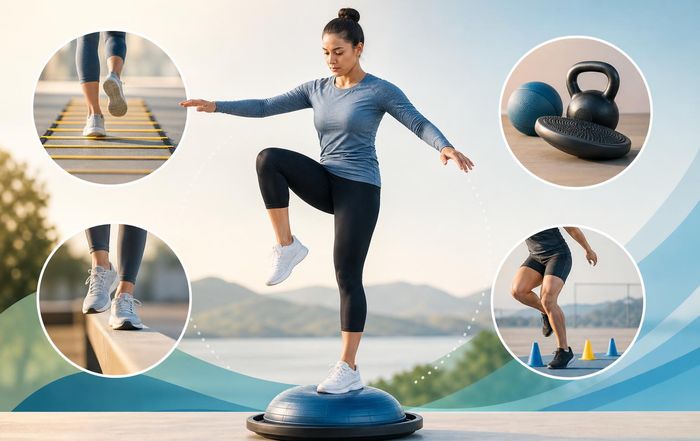
Training Skills That Improve Balance and Coordination in a High-Performance World
Why Balance and Coordination Are Now Strategic Skills
Balance and coordination have moved from the margins of athletic training plans into the core of how high performers in sport, business and everyday life protect their health, extend their careers and sustain productivity. For the happily growing fitness demographic coming to FitBuzzFeed, which are professional athletes, fitness enthusiasts, corporate leaders and wellness-focused consumers across North America, Europe, Asia, Africa and South America, balance and coordination are no longer "nice to have" physical attributes; they are strategic skills that intersect with injury prevention, cognitive performance, longevity and even employability in physically demanding sectors.
As populations age in the United States, United Kingdom, Germany, Japan and other mature economies, and as younger workers in Brazil, South Africa and India enter physically and mentally intense roles, organizations and individuals are paying closer attention to the science of movement. Research from institutions such as Harvard Medical School and the Mayo Clinic has helped to clarify how neuromuscular training can reduce fall risk, improve reaction time and support healthy aging; readers can explore how balance training supports healthy longevity by reviewing guidance from Harvard Health. Parallel work by World Health Organization experts on physical activity guidelines has reinforced that motor skills and stability are core pillars of functional fitness, not optional extras, and those global recommendations are increasingly being translated into corporate wellness strategies, elite sports programs and personal training plans worldwide.
For a unique sports, educational content site like FitBuzzFeed, which covers integrated topics such as fitness, health, business and jobs, the conversation around balance and coordination is fundamentally about equipping readers with practical, evidence-aligned training skills that they can embed into daily life, whether that means preparing for a marathon, staying sharp in a trading floor environment, or simply moving confidently through the physical demands of modern work.
The Science Behind Balance and Coordination
Balance and coordination are often spoken of as simple attributes, yet they represent the integration of multiple physiological systems: the visual system, the vestibular system of the inner ear, proprioceptive feedback from muscles and joints, and the central nervous system's ability to process and respond to that information. According to resources from the National Institutes of Health, the brain continuously merges these signals to maintain posture, adjust gait and execute complex movements, and readers can deepen their understanding of how the vestibular system contributes to equilibrium by visiting the NIH vestibular overview.
Coordination, in turn, is the capacity to orchestrate muscle actions with precision and timing to achieve a specific task, whether that task is a tennis serve, a complex Olympic lift or a rapid change of direction on a soccer field. The American College of Sports Medicine (ACSM) has long emphasized neuromotor training, which includes balance, agility and proprioception, as a critical component of comprehensive fitness programming, and professionals designing training plans for global clients can review the ACSM's position stands by visiting the ACSM official site.
Modern neuroscience has added another layer of insight. Studies highlighted by Stanford Medicine and Cleveland Clinic suggest that neuromotor training can contribute not only to improved physical performance but also to enhanced cognitive flexibility, attention and executive function, outcomes that are increasingly valued in knowledge-intensive roles; readers interested in the cognitive effects of exercise can explore overviews from Cleveland Clinic's health library. For the FitBuzzFeed audience, which often straddles high-pressure professional environments and demanding training schedules, this connection between movement quality and brain performance is particularly relevant.
Core Training Skills That Drive Better Balance
Developing balance is not simply a matter of standing on one leg; it requires a structured approach that progressively challenges stability in multiple planes of motion and under varying sensory conditions. For global readers who follow FitBuzzFeed's training and physical content, several core skill categories stand out as foundational.
Static balance skills focus on maintaining a stable position with minimal movement. Classic examples include single-leg stance holds, tandem stance (heel-to-toe) and half-kneeling positions. These drills train the body to control its center of mass over a fixed base of support, and they are particularly valuable for older adults and individuals returning from lower-limb injuries. Guidance from the Centers for Disease Control and Prevention (CDC) on fall prevention frequently highlights such exercises as part of comprehensive fall-risk reduction programs, and those interested in evidence-based fall prevention can review the CDC's recommendations on older adult fall prevention.
Dynamic balance skills add movement, asking the body to stay controlled while the base of support shifts. Walking lunges, step-downs, single-leg Romanian deadlifts and lateral hops across a line are examples that can be scaled for beginners or elite athletes. In sports such as football, basketball and rugby, dynamic balance underpins the ability to cut, pivot and accelerate without losing control, and elite training centers across Europe, North America and Asia now routinely integrate dynamic stability drills into pre-season conditioning programs. Organizations like FIFA have developed structured neuromuscular warm-up programs that incorporate dynamic balance to reduce injury risk in players, and coaches can review such approaches through the FIFA Medical Network.
Reactive balance skills train the body to respond to unexpected perturbations, such as being jostled in a crowded subway in Tokyo, slipping on ice in Sweden, or being nudged off line in a competitive cycling peloton. These drills often involve partner pushes, unpredictable external loads or unstable surfaces used judiciously. Research summarized by the Journal of Orthopaedic & Sports Physical Therapy indicates that reactive balance training can significantly reduce the risk of ankle sprains and ACL injuries in athletes by improving neuromuscular control, and interested professionals can explore sports physical therapy insights through JOSPT's official website.
Coordination Skills for Sport, Work and Daily Life
Coordination training focuses on how efficiently and accurately the body executes movement patterns. For FitBuzzFeed's audience that follows sports and lifestyle coverage, coordination is a performance differentiator in both competitive and recreational settings.
Hand-eye coordination is critical in sports such as tennis, baseball, cricket and hockey, and it also plays a role in occupations that require precise manual tasks, from surgery to advanced manufacturing. Drills involving ball tosses, reaction lights and target striking help refine the timing and accuracy of upper-limb movements. Organizations like U.S. Tennis Association and Major League Baseball have invested heavily in vision and reaction training technologies to enhance player performance, and readers can explore how elite tennis programs approach skill development through the USTA coaching resources.
Foot-eye coordination underpins accurate kicking, dribbling and striking in sports such as soccer, rugby and field hockey, and it is equally relevant to everyday activities like navigating uneven terrain during outdoor hikes in Australia or New Zealand. Ladder drills, cone patterns and small-sided games that demand quick footwork and precise control develop this skill set, and high-performance academies across Spain, Italy and Brazil rely on such methods to shape youth athletes. The UEFA Training Ground provides numerous examples of footwork and coordination drills used by top European clubs, which can be explored at the UEFA training portal.
Whole-body coordination involves integrating upper and lower body movements with core stability and breathing patterns. Olympic lifts, kettlebell swings, martial arts combinations and dance-based conditioning all demand high levels of integrated coordination. Research from University of California, Berkeley and other leading institutions has shown that complex, coordinated movements can stimulate neuroplasticity and motor learning in ways that simple linear exercises do not, which has implications for both athletic development and rehabilitation; to learn more about motor learning and neuroplasticity, readers can consult educational materials from UC Berkeley's neuroscience outreach.
Integrating Balance and Coordination into Modern Training Programs
One of the most important shifts since 2020 has been the move away from treating balance and coordination as separate, optional components of training. Instead, progressive organizations and coaches now weave these skills into warm-ups, strength sessions, conditioning blocks and even recovery days. For the FitBuzzFeed community, which often juggles limited time with ambitious performance and health goals, integration is the practical key.
Warm-up phases are ideal for lower-intensity balance and coordination drills, such as single-leg reaches, marching patterns, low-level skipping and simple reaction tasks. These movements activate stabilizing muscles, prime the nervous system and reduce injury risk before more intense work. Strength sessions can then incorporate unilateral exercises, multi-planar movements and tempo variations that challenge stability under load, aligning with guidelines from leading bodies such as the National Strength and Conditioning Association (NSCA), which offers extensive position stands and programming frameworks on its official site.
Conditioning and agility work provide further opportunities to embed coordination training. Shuttle runs with directional changes, small-sided games, agility courses and interval-based footwork drills all develop speed, decision-making and movement quality simultaneously. Resources from World Rugby and NBA performance departments have widely publicized how such integrated conditioning approaches can enhance both fitness and skill, and coaches and trainers can study multi-directional conditioning strategies through the World Rugby player welfare and training resources.
Recovery and low-intensity days are increasingly being used for gentle balance and mobility sessions, particularly in high-stress professions and among aging populations. Yoga-inspired flows, tai chi sequences and controlled breathing combined with stability work support joint health and nervous system recovery. The National Health Service (NHS) in the United Kingdom has promoted tai chi and balance-focused group classes as part of fall-prevention and healthy aging initiatives, and individuals can explore these approaches through the NHS physical activity guidance.
Digital Tools, Wearables and the Future of Motor-Skill Training
By 2026, technology has become deeply embedded in how individuals and organizations approach balance and coordination development. Wearable devices, motion-capture apps, virtual reality platforms and AI-driven coaching systems are enabling more precise assessment and feedback than was possible even a decade ago. For readers following FitBuzzFeed's technology and wellness coverage, this convergence of movement science and digital innovation is reshaping training culture.
Consumer-grade wearables from companies such as Apple, Garmin and Whoop now track metrics like variability in gait, asymmetries in ground contact time and postural sway during specific tests. These data points can flag potential imbalances or fatigue before they manifest as injury, and they give both athletes and office workers a more nuanced picture of their movement health. Detailed discussions of gait analysis and movement metrics can be found in resources from American Academy of Orthopaedic Surgeons, which are accessible through the AAOS patient education portal.
Virtual reality and augmented reality systems are also moving beyond gaming into serious training applications. Rehabilitation centers in Canada, Singapore and South Korea are using VR-based balance games to help patients regain stability after stroke or orthopedic surgery, while elite sports environments are experimenting with AR overlays that guide athletes through complex agility drills. Organizations like Massachusetts Institute of Technology (MIT) have highlighted these developments in human-computer interaction research, and readers can explore cutting-edge work in this space through MIT's CSAIL research highlights.
AI-driven coaching platforms, including those embedded in some leading fitness apps, are beginning to analyze video of user movements to provide real-time feedback on alignment, tempo and symmetry. For a global audience balancing remote work, travel and variable access to in-person coaching, these tools can democratize access to high-quality guidance. However, as FitBuzzFeed has emphasized in its news and business reporting, responsible adoption requires attention to data privacy, algorithmic bias and the importance of human oversight, especially in clinical or high-risk athletic settings.
Business, Workplace and Career Implications
The corporate and labor-market dimensions of balance and coordination training are often overlooked, yet they are increasingly central to strategic workforce planning. As organizations in United States, Germany, France, China and beyond grapple with musculoskeletal injuries, ergonomic challenges and the health costs of sedentary work, movement quality has become a boardroom concern rather than a niche wellness topic.
In physically demanding industries such as logistics, construction, healthcare and manufacturing, poor balance and coordination can translate directly into workplace accidents, lost days and higher insurance premiums. Regulatory bodies and insurers in Europe and North America have started to encourage or require proactive ergonomic and movement training programs, and guidance from the Occupational Safety and Health Administration (OSHA) in the US offers frameworks for reducing musculoskeletal risk through training and environmental design, which can be explored on the OSHA official website.
Knowledge-based industries are not exempt. Prolonged sitting, limited movement and high cognitive demands can erode postural stability and neuromuscular responsiveness over time. Forward-looking companies in Canada, Australia, Singapore and Netherlands are integrating micro-break movement protocols, balance pods, standing meetings and guided coordination drills into daily routines. The World Economic Forum has repeatedly highlighted physical and mental resilience as critical skills for the future of work, and executives can explore this perspective by reviewing resilience-focused insights on the WEF platform.
For individuals, especially those following FitBuzzFeed's jobs and brands coverage, balance and coordination training can be framed as part of a personal employability strategy. Firefighters, police officers, military personnel, emergency medical staff, professional drivers and even creative professionals such as dancers and stage technicians all rely on precise, reliable movement. Demonstrated commitment to movement health can support performance, reduce downtime and signal professionalism to employers in competitive labor markets across United States, United Kingdom, South Africa and beyond.
Regional and Cultural Perspectives on Movement Skills
The global readership of FitBuzzFeed brings diverse cultural and environmental contexts to the topic of balance and coordination. In Japan, South Korea and China, traditional practices such as tai chi, qigong and various martial arts have long emphasized rooted stances, controlled transitions and coordinated breath, offering time-tested frameworks for stability training that are now being integrated into modern sports science programs. In Nordic countries such as Sweden, Norway, Finland and Denmark, outdoor activities on snow and ice demand robust balance and coordination from an early age, shaping public attitudes toward movement competence as a basic life skill rather than a specialist pursuit.
In Brazil and other parts of South America, dance forms such as samba and capoeira blend rhythm, agility, ground transitions and reactive balance in ways that rival advanced athletic training. Coaches working with footballers in Spain, Italy and France have drawn on these movement traditions to enrich agility and coordination drills, demonstrating how cultural practices can inform high-performance methodologies. Meanwhile, in South Africa and other parts of Africa, community-based sport and dance programs are being used to develop motor skills in youth while addressing social challenges, a trend that aligns with broader global initiatives on active cities and youth development promoted by organizations like UNESCO, which shares policy perspectives on physical education and sport through the UNESCO sport portal.
For FitBuzzFeed, this regional diversity reinforces the idea that balance and coordination training is not a one-size-fits-all prescription. Instead, it is a set of principles that can be adapted to local environments, cultural preferences and available resources, whether that means using simple bodyweight drills in a small urban apartment in London, trail-based coordination runs in New Zealand, or structured gym sessions in high-tech training centers in Singapore.
Nutrition, Recovery and Holistic Support for Movement Quality
No discussion of balance and coordination is complete without acknowledging the role of nutrition, sleep and recovery. Neuromuscular function depends on adequate energy availability, micronutrient sufficiency and hormonal balance, and these factors are shaped by daily lifestyle choices as much as by formal training. Readers who follow FitBuzzFeed's nutrition and wellness sections will recognize that movement quality is an outcome of systemic health rather than isolated drills.
Nutrients such as vitamin D, calcium, magnesium and omega-3 fatty acids play established roles in muscle function, bone health and neuromuscular signaling, as documented by organizations like the Academy of Nutrition and Dietetics, whose evidence-based practice resources can be accessed through the EatRight.org platform. Inadequate intake or chronic energy deficits can impair coordination, increase injury risk and slow recovery, particularly in high-volume training contexts common among endurance athletes and competitive team-sport players.
Sleep quality is equally critical. Research from National Sleep Foundation and leading academic centers has consistently shown that insufficient or fragmented sleep degrades reaction time, balance and decision-making. This has clear implications for athletes, shift workers, medical professionals and high-stakes decision-makers in business. Those seeking practical guidance on sleep and performance can consult educational articles from the National Sleep Foundation.
Recovery modalities such as soft-tissue work, mobility training, low-intensity aerobic activity and stress-management practices help maintain the musculoskeletal and nervous systems in a state that supports stable, coordinated movement. For many in the FitBuzzFeed community, particularly in fast-paced urban centers from New York to Singapore, the challenge is not only to train effectively but also to recover intelligently, aligning lifestyle habits with movement goals rather than allowing work and digital overload to undermine them.
How Sports Readers Can Move from Insight to Action
For the crazy active audience of FitBuzzFeed, balance and coordination training is best viewed as a long-term investment rather than a quick fix. The most successful programs share several characteristics: they are progressive, context-specific, and integrated into broader fitness and lifestyle plans that also address strength, cardiovascular health, nutrition and mental well-being. Readers can explore practical programming ideas and case studies across the platform's fitness, health, sports and training sections, using these resources to design routines that reflect their unique goals, environments and constraints.
In today's world, whether someone is a young professional in London trying to counterbalance hours at a desk, a master's-level athlete in Germany extending a competitive career, a healthcare worker in Canada managing physically demanding shifts, or a retiree in Australia focused on independence and fall prevention, the same underlying message applies: cultivating balance and coordination is an essential form of self-leadership. It supports physical safety, cognitive performance, emotional resilience and long-term participation in the activities that define a fulfilling life.
As organizations, coaches and individuals continue to refine their understanding of how best to train these skills, fresh new knowledge, hubs like FitBuzzFeed will play a crucial role in connecting evidence-based insights with real-world application, ensuring that readers not only stay informed but also feel empowered to move better, perform better and live with greater confidence in every region of the world.