

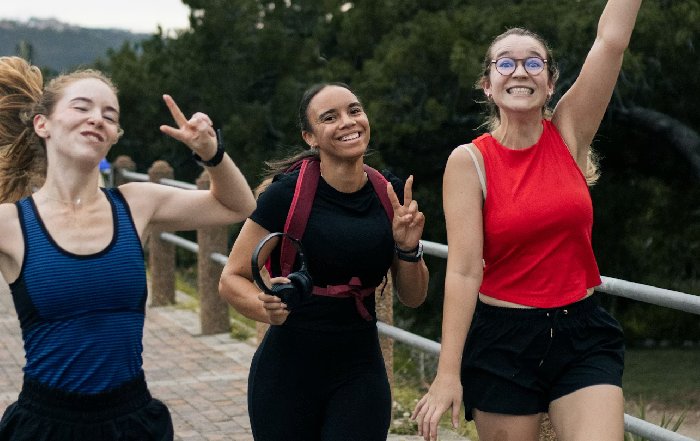
Behind the Scenes of a Global Fitness Competition in 2026
The New Era of Global Fitness on FitBuzzFeed
In 2026, global fitness competitions have evolved into complex, technology-enabled ecosystems that blend elite athleticism, entertainment, data science, and global brand strategy, and for the readers of FitBuzzFeed, who follow developments in sports, wellness, and performance across continents, the story behind what happens off-camera is often as compelling as the action on the competition floor. As the industry matures, organizers, coaches, athletes, sponsors, and health professionals across the United States, Europe, Asia, Africa, and South America have converged around a shared objective: to deliver competitions that are not only spectacular to watch but also scientifically grounded, commercially sustainable, and aligned with long-term health and performance outcomes. In this environment, a global fitness competition is no longer a single event; it is a year-round project that touches on training, nutrition, technology, logistics, media, and business strategy, all of which directly intersect with the content pillars that define FitBuzzFeed's lifestyle and performance coverage.
Strategic Planning: From Concept to Global Stage
Long before athletes step into the arena, the strategic blueprint of a global fitness competition is drafted in boardrooms and virtual collaboration platforms across multiple time zones, where executives from organizing bodies, media partners, and technology providers map out the competitive format, safety standards, and commercial model. Major sport governance institutions such as the International Olympic Committee and leading sports organizations have influenced best practices in event governance, and many organizers draw on resources from platforms like World Health Organization and Centers for Disease Control and Prevention to align health protocols with current global guidance. The planning process increasingly incorporates scenario modeling for public health, travel disruptions, and climate considerations, particularly for events hosted in regions facing extreme heat or air quality challenges, which has led organizers to consult climate data from sources such as NASA when choosing dates and locations.
The business dimension is equally intricate, as competition owners work with consultants and analysts to project revenue from media rights, sponsorship, ticketing, and digital products. Reports from organizations such as Deloitte and PwC, which regularly publish insights on the global sports market, inform decisions on pricing, fan engagement strategies, and regional expansion. For the business-focused readers of FitBuzzFeed's dedicated coverage, this illustrates how a fitness competition has become a sophisticated asset class within the broader sports and entertainment economy, where data-driven forecasting, risk management, and brand alignment are central to long-term viability.
Athlete Selection, Qualification, and Global Talent Pipelines
Behind the spectacle of a world final lies a meticulously designed qualification system that spans continents and creates pathways for athletes from the United States, United Kingdom, Germany, Canada, Australia, and emerging markets in Asia, Africa, and South America. Many global competitions now employ tiered qualification structures that combine regional events, national championships, and online qualifiers, supported by robust anti-doping and eligibility frameworks. Organizations such as the World Anti-Doping Agency provide the scientific and regulatory backbone that underpins fair play, and athletes and coaches regularly reference up-to-date lists and testing protocols to ensure compliance. Learn more about how global anti-doping standards shape elite sport by reviewing information from WADA.
These qualification systems are not only about performance benchmarks; they are also about storytelling and market development. Event owners strategically place qualifiers in key growth markets such as Singapore, Brazil, South Africa, and the Nordic region, using them as platforms to cultivate local fan bases, engage sponsors, and identify rising stars. For readers of FitBuzzFeed's world and sports sections, it is clear that the modern fitness competition functions as both a meritocratic sporting ladder and a global talent pipeline, where athlete narratives are shaped across multiple stages before they reach the main broadcast.
Training Ecosystems: Periodization, Data, and Recovery
From the perspective of training science, the preparation for a global fitness competition is increasingly defined by integrated performance ecosystems that combine coaching expertise, sports science, and advanced monitoring technologies. Elite athletes in cities such as Los Angeles, London, Berlin, Toronto, Sydney, and Tokyo typically work within multidisciplinary teams that include strength and conditioning coaches, physiotherapists, sports psychologists, and nutritionists, all coordinating long-term periodization plans that align with competition calendars. Many of these professionals rely on evidence-based guidelines from organizations like the American College of Sports Medicine, whose resources on exercise prescription and performance have become foundational in planning high-intensity training blocks and tapering phases.
Wearable technology and data analytics are now central to the training environment, with athletes routinely tracking heart rate variability, sleep quality, movement patterns, and training loads through platforms that integrate with cloud-based dashboards. Research from institutions such as Harvard Medical School and Mayo Clinic has reinforced the importance of sleep and recovery in elite performance, and athletes frequently consult publicly available resources on optimizing sleep and circadian rhythms to refine their routines. For readers of FitBuzzFeed's training coverage, this data-driven approach underscores how high-level fitness is no longer just about effort and intensity; it is about intelligent planning, recovery management, and the continuous calibration of workloads to minimize injury risk while maximizing adaptation.
Nutrition, Supplementation, and the Science of Fueling
Behind every standout performance in a global fitness competition lies a carefully engineered nutrition strategy that reflects the latest research in sports dietetics, gut health, and metabolic efficiency. Athletes and their teams increasingly view nutrition as a dynamic system that must adapt to training phases, travel schedules, and event formats, whether they are competing in multi-day functional fitness events, endurance challenges, or hybrid strength and conditioning showcases. Reputable sources such as The Academy of Nutrition and Dietetics and British Nutrition Foundation offer guidance on macronutrient distribution, hydration, and micronutrient sufficiency for high-performance populations, and many practitioners draw on these frameworks when designing individualized plans. Those interested in the science behind performance nutrition can explore additional resources on evidence-based sports nutrition.
Supplementation, once a relatively unregulated area, is now approached with greater caution and sophistication, especially as anti-doping rules tighten and athletes become more aware of contamination risks. Organizations such as Informed Sport and NSF International have established certification programs that test supplements for banned substances, and athletes preparing for global competitions increasingly rely on products that carry such marks. At the same time, there is growing interest in whole-food-based strategies, Mediterranean-style dietary patterns, and plant-forward approaches, supported by research from institutions like Cleveland Clinic and Johns Hopkins Medicine, which provide accessible overviews of heart-healthy and performance-supportive diets. For nutrition-focused readers exploring FitBuzzFeed's dedicated nutrition content, the backstage reality is that fueling a global competitor is as much about risk management and long-term health as it is about short-term performance gains.
Health, Injury Prevention, and Long-Term Athlete Welfare
The physical demands of modern fitness competitions, which often blend Olympic lifting, gymnastics, endurance, and unconventional functional movements, have compelled organizers and coaching staffs to prioritize health, safety, and long-term joint integrity in ways that go far beyond traditional sport models. Pre-season screening and ongoing monitoring now commonly include musculoskeletal assessments, movement quality analysis, and mental health check-ins, often guided by best-practice frameworks from organizations such as the National Institutes of Health, whose resources on sports injury prevention and rehabilitation are widely consulted. Many teams also collaborate with sports medicine clinics that draw on current research from journals and medical associations to refine protocols for load management, return-to-play decisions, and concussion awareness.
In parallel, athlete mental health has shifted from a peripheral concern to a central pillar of performance planning, reflecting broader cultural changes in elite sport and society. Institutions such as Mind, Beyond Blue, and national sport psychology associations in the United States, United Kingdom, and Australia have produced extensive guidance on anxiety, burnout, and identity issues among high performers, and many athletes now work regularly with sports psychologists or mental performance coaches. Readers of FitBuzzFeed's wellness section will recognize that the behind-the-scenes culture of top-tier competitions is increasingly defined by conversations about resilience, emotional regulation, and sustainable career arcs, rather than an exclusive focus on short-term podium results.
Technology, Data, and the Digital Transformation of Competition
Technology has become one of the most visible and influential forces shaping the backstage reality of global fitness competitions, with innovations ranging from AI-driven performance analysis to immersive fan experiences. Event organizers partner with technology firms and research institutions to deploy motion-capture systems, real-time leaderboards, and advanced timing solutions that blend accuracy with entertainment value, and many of these systems are supported by cloud infrastructure from major providers such as Microsoft, Google, and Amazon Web Services. Industry observers can learn more about how cloud and edge computing are transforming live sports experiences by exploring resources on emerging sports technology trends.
For athletes and coaches, the most impactful technologies are often those that quietly run in the background: machine-learning models that flag injury risk based on training load patterns, video analysis platforms that break down movement efficiency, and integrated platforms that synchronize data from wearables, gym equipment, and recovery tools. Publications like MIT Technology Review and Wired have documented how AI and sensor technologies are reshaping training across sports, and similar dynamics now define the global fitness competition space, where performance decisions are increasingly informed by objective data rather than intuition alone. Readers following FitBuzzFeed's technology coverage will appreciate that what viewers see on broadcast streams is only the surface layer of a deeply digital ecosystem that supports everything from judging accuracy to athlete safety and fan engagement.
Logistics, Operations, and the Invisible Infrastructure
The operational backbone of a global fitness competition is often invisible to fans but represents one of the most complex and risk-sensitive aspects of the entire enterprise. Host cities from New York and London to Dubai, Singapore, and São Paulo must coordinate venue availability, local regulations, medical services, and security, while event organizers manage international equipment shipping, customs clearance, and local supplier relationships. Best practices in event operations are frequently informed by guidance from organizations such as World Athletics and major event management associations, which publish frameworks on venue safety, crowd management, and emergency response. Those interested in how large-scale events are structured can learn more about global standards in sports event management.
The logistical challenges extend to athlete services, including accommodation, transportation, training facilities, and nutrition provisioning, all of which must be delivered with consistency and cultural sensitivity across different countries and regions. For example, athletes from Europe, Asia, and Africa may have distinct dietary needs, religious practices, and climate adaptation requirements, and operations teams must account for these variables in planning. Readers of FitBuzzFeed's events coverage will recognize that in 2026, successful global competitions are defined not only by dramatic finishes and highlight reels but also by the reliability and professionalism of the infrastructure that supports every participant and staff member on site.
Media, Storytelling, and Brand Partnerships
In the modern media landscape, global fitness competitions function as multi-platform storytelling engines where athletes, brands, and broadcasters collaborate to reach audiences across North America, Europe, Asia, Africa, and South America. Major networks and streaming platforms partner with organizing bodies to deliver live coverage, highlights, and behind-the-scenes features, while social media channels on YouTube, Instagram, TikTok, and emerging platforms provide real-time access to training camps, travel days, and recovery routines. Media organizations such as BBC Sport, ESPN, and Sky Sports have helped mainstream coverage of functional fitness and hybrid competitions, and fans can explore long-form features and analysis that contextualize performances within broader trends in sport and culture.
Brand partnerships play a crucial role in funding and amplifying these competitions, with global companies in apparel, footwear, equipment, technology, and nutrition sectors vying for visibility and association with high-performance lifestyles. Readers of FitBuzzFeed's brands section will recognize that behind each logo on an athlete's jersey lies a carefully negotiated agreement that may include performance bonuses, content obligations, sustainability commitments, and community activation programs. As consumer expectations evolve, brands are increasingly evaluated not only on product performance but also on their alignment with environmental, social, and governance standards, with many referencing frameworks from organizations like the United Nations Global Compact to shape their sustainability and human rights policies.
Careers, Jobs, and Professional Pathways in the Competition Ecosystem
The growth of global fitness competitions has created a wide range of professional opportunities that extend far beyond the athletes themselves, encompassing roles in coaching, sports science, event management, media production, sponsorship sales, technology development, and athlete representation. Universities and institutes in the United States, United Kingdom, Germany, Australia, and other regions now offer specialized programs in sports management, strength and conditioning, and performance analytics, drawing on curricula informed by industry leaders and organizations such as NCAA, UK Sport, and Australian Institute of Sport. Prospective professionals interested in building careers in this space can explore resources on sports management and performance careers to understand the competencies most in demand.
For the career-focused audience engaging with FitBuzzFeed's jobs and business content, it is evident that the ecosystem around a global fitness competition resembles a medium-sized enterprise, with departments dedicated to operations, marketing, legal, finance, and technology. Freelancers and entrepreneurs also play a significant role, from independent coaches and physiotherapists to content creators and niche equipment manufacturers, all of whom contribute to the vibrancy and innovation of the sector. As remote collaboration tools and digital platforms continue to mature, many of these roles can now be executed from anywhere in the world, allowing professionals from Canada, France, Italy, Spain, Netherlands, Switzerland, China, Sweden, Norway, Denmark, South Korea, Japan, Thailand, Finland, South Africa, Brazil, Malaysia, and New Zealand to participate in global projects without relocating permanently.
Cultural Impact, Community, and the Global Fitness Movement
Beyond the commercial and performance dimensions, global fitness competitions exert a powerful cultural influence that shapes how people around the world think about health, physical capability, and lifestyle design. The visibility of diverse athletes from multiple regions and backgrounds has expanded public perceptions of what strength, endurance, and athleticism can look like, inspiring participation in gyms, clubs, and communities from New York to Nairobi, London to Lagos, and Tokyo to São Paulo. Public health organizations and academic institutions have noted that mass participation in fitness and sport is associated with improved health outcomes, and resources from Public Health England, Health Canada, and similar bodies emphasize the importance of regular physical activity for preventing chronic disease. Those seeking to connect elite competition with everyday health can explore evidence on the benefits of physical activity.
For the broader audience of FitBuzzFeed's health and physical performance readers, the behind-the-scenes reality is that many organizers now view their events as catalysts for community engagement and public health promotion, not just as elite showcases. Initiatives such as open community workouts, youth clinics, and online training challenges extend the impact of competitions beyond the arena, helping to bridge the gap between spectators and participants. As digital platforms make high-quality training and wellness content more accessible, the global fitness competition is increasingly positioned as the visible peak of a much larger pyramid of everyday movement, nutrition, and mental well-being that touches millions of people worldwide.
The Future of Global Fitness Competitions and FitBuzzFeed's Role
Looking ahead from 2026, the trajectory of global fitness competitions suggests continued integration of technology, science, and sustainable business practices, with an increasing emphasis on athlete welfare, environmental responsibility, and inclusive participation across genders, age groups, and regions. Organizers are experimenting with innovative formats that blend in-person and virtual participation, enabling athletes from remote areas to qualify and compete without the same travel burdens, while advances in broadcast technology promise even more immersive and data-rich viewing experiences for fans. Those interested in how sustainable business models are evolving in sport can explore insights on responsible and future-ready sports organizations.
For FitBuzzFeed, whose readers span interests from fitness and sports to news, business, and lifestyle, this evolving landscape presents an opportunity to provide nuanced, behind-the-scenes coverage that goes beyond highlight reels to examine the systems, people, and ideas that make global competitions possible. By connecting developments in training science, nutrition, wellness, technology, and global business strategy, the platform can help readers understand not only how elite athletes perform on the world stage, but also what those practices mean for their own health, careers, and daily lives. In this way, the story behind a global fitness competition becomes a lens through which to explore the future of human performance, work, and well-being in a rapidly changing world.