

How Public Wellness Spaces Encourage Movement in a Post-Pandemic World
The Strategic Rise of Public Wellness Spaces
Public wellness spaces have moved from being a tiny urban design concept to a mainstream top priority for cities, employers, and health systems around the world. From redesigned waterfronts in New York City to movement-centric business districts in Singapore, and from community fitness parks in Berlin to wellness-oriented transit hubs in Seoul, governments and private developers increasingly recognise that the built environment is one of the most powerful levers for encouraging daily movement, reducing chronic disease, and strengthening economic resilience.
For an independent fitness news website like FitBuzzFeed, whose audience is into sports, fitness, health, business, and lifestyle across North America, Europe, Asia, Africa, and South America, the evolution of public wellness spaces is not just an urban design story; it is a story about how people live, work, train, and recover, and how organisations position themselves in a global market where wellbeing is becoming a core indicator of competitiveness and social stability. Public wellness spaces, when thoughtfully designed and well-governed, turn movement into an accessible, low-friction default rather than an aspirational luxury, connecting the domains of sport, daily commuting, leisure, and professional life into a coherent ecosystem of physical activity.
Urban planners and public health leaders increasingly draw on evidence from organisations such as the World Health Organization to understand how city design influences physical activity patterns, and readers can explore WHO guidance on physical activity and urban environments. At the same time, the wellness economy tracked by the Global Wellness Institute has continued to expand, demonstrating that investment in active public spaces is not only a health intervention but also a business and jobs strategy, as detailed in their analysis of the global wellness economy.
From Parks to Performance Ecosystems
Traditional public parks and playgrounds provided important green relief in dense cities, but they were rarely conceived as integrated performance ecosystems that support structured training, informal sport, and inclusive movement for all ages and abilities. In the last decade, however, public wellness spaces have evolved into multi-layered environments that blend fitness infrastructure, digital technology, social programming, and health services, aligning with the broader active lifestyle coverage that FitBuzzFeed offers across its fitness, sports, and training sections.
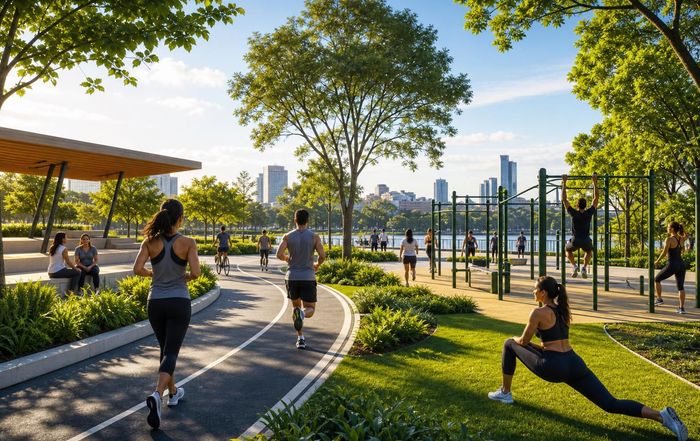
Many leading cities now combine outdoor gyms, calisthenics rigs, running tracks, and multi-use courts with shaded seating, hydration points, and safe lighting to support early-morning and late-evening use by working professionals. In London, for example, the integration of riverside running routes with public transport nodes and office districts has turned the Thames Path into a daily movement corridor for thousands of commuters and remote workers who structure their day around physical activity. Similar approaches can be seen in Melbourne, Vancouver, and Copenhagen, where waterfronts and former industrial zones have been transformed into active wellness districts that attract residents, tourists, and global talent.
Research shared by Harvard T.H. Chan School of Public Health has reinforced the link between access to quality green and active spaces and improved long-term health outcomes, including reduced cardiovascular risk and better mental health; interested readers can review their work on health benefits of green spaces. This growing evidence base has encouraged municipalities, particularly in the United States, United Kingdom, Germany, Canada, Australia, and across the European Union, to treat public wellness spaces as preventative health infrastructure, comparable in strategic importance to hospitals and clinics, but far more cost-effective over the long term.
Behavioural Design: Making Movement the Default
The most effective public wellness spaces are not those that simply provide equipment or jogging paths, but those that embed behavioural design principles to make movement the default choice in everyday routines. Behavioural scientists and urban designers collaborate to ensure that stairs are more visible and attractive than elevators, that walking and cycling routes are intuitive and direct, and that micro-moments of movement are encouraged through subtle cues, public art, and gamified challenges.
Studies summarised by the Centers for Disease Control and Prevention have shown that even modest increases in daily physical activity can significantly reduce the risk of chronic diseases; their resources on physical activity basics continue to guide municipal policy. Cities in Scandinavia, such as Stockholm, Oslo, and Copenhagen, have been particularly influential in demonstrating how cycling networks, winter-friendly walking paths, and active school routes can normalise movement across seasons and age groups, supported by clear safety standards and strong public communication.
On a more granular level, some Asian cities, including Singapore and Seoul, have pioneered the integration of smart sensors and digital signage into public wellness spaces, using anonymised data to understand peak usage times, preferred routes, and demographic patterns. This enables more precise programming, maintenance, and safety interventions, while also allowing public agencies to measure the impact of design changes on physical activity levels. The World Bank has highlighted the economic and social value of walkable and active cities, and their analysis of urban transport and livability provides a useful reference for policymakers and investors seeking to align health and infrastructure agendas.
Technology, Data, and the Connected Wellness Landscape
In 2026, public wellness spaces no longer exist in isolation from the broader digital health and fitness ecosystem. Wearables, smartphone apps, and connected equipment create a feedback loop between individuals, public space operators, and health systems, enabling more personalised and engaging movement experiences. For the FitBuzzFeed community, which follows developments in technology, wellness, and health, this convergence is particularly relevant, as it reshapes how training plans, recovery protocols, and performance metrics extend beyond traditional gyms into everyday environments.
Global technology leaders such as Apple, Google, and Samsung have integrated outdoor workout modes, route mapping, and environmental data into their devices, encouraging users to discover and utilise local wellness spaces. Meanwhile, cities like Barcelona and Amsterdam have launched open data portals that share information about park facilities, air quality, and real-time crowding, allowing developers to build apps that guide users to optimal locations and times for training. The European Environment Agency provides broader context on urban environment and health and underscores the importance of clean air, noise reduction, and green coverage in enhancing the effectiveness of public wellness infrastructure.
Corporate wellness platforms and digital coaching services increasingly incorporate geolocation features that recommend nearby public spaces for specific workouts, from interval running to mobility drills, ensuring that employees and clients can maintain consistent routines even when travelling across regions such as North America, Europe, and Asia-Pacific. This is particularly valuable for professionals in global hubs like New York, London, Frankfurt, Hong Kong, and Sydney, where demanding schedules and frequent travel can otherwise undermine adherence to training plans and recovery protocols.
Economic Value, Business Models, and Job Creation
Public wellness spaces are often perceived as purely public goods, but by 2026 they have also become important drivers of business innovation, real estate value, tourism, and employment. For readers of the FitBuzzFeed business and jobs sections, this economic dimension is increasingly central, as companies integrate wellness-oriented location strategies into their talent and brand positioning.
Real estate developers in cities like Toronto, Munich, and Tokyo now market proximity to high-quality wellness spaces as a premium feature for both residential and commercial properties, supported by data showing higher tenant satisfaction, reduced absenteeism, and improved employee retention. The Urban Land Institute has produced influential guidance on building healthy places, which many investors use to evaluate and design projects that integrate movement-friendly public realms.
From a jobs perspective, the expansion of public wellness infrastructure creates demand for new roles that blend health, sport, and community engagement, including outdoor fitness coaches, wellness event coordinators, public-space physiotherapists, and digital community managers who curate local challenges and social workouts. Municipalities often partner with sports brands, healthcare providers, and hospitality companies to host events and activations in these spaces, generating revenue streams through sponsorships, concessions, and tourism while maintaining free or low-cost access for residents. The International Labour Organization has highlighted the broader potential of the care and wellness economy to generate sustainable employment, and its resources on decent work and the care economy provide additional context on how health-oriented sectors can support inclusive growth.
Equity, Inclusion, and Trust in Shared Spaces
While public wellness spaces can be powerful engines of movement and health, they also raise critical questions about equity, accessibility, and trust. For FitBuzzFeed's global audience, spanning regions from the United States and Europe to Africa, Asia, and South America, the distribution and governance of these spaces is a central concern, as benefits must extend beyond affluent districts and central business zones to reach diverse communities, including older adults, people with disabilities, and low-income populations.
Public health experts at The Lancet and other leading journals have documented how unequal access to safe, high-quality public spaces can reinforce health disparities, particularly in rapidly urbanising regions. Readers can explore broader analyses of health equity and urbanisation to understand why inclusive design and community participation are critical. In practice, cities such as Bogotá, Cape Town, and Bangkok have experimented with low-cost interventions-such as open-street events, tactical urbanism, and community-led park upgrades-to extend movement opportunities into under-served neighbourhoods, often supported by local NGOs and grassroots sports organisations.
Trust is another essential component of successful public wellness spaces. Users must feel safe, respected, and welcome, which requires careful attention to lighting, surveillance, policing practices, and community-based stewardship. In some European cities, co-management models allow resident associations, sports clubs, and youth groups to share responsibility for programming and maintenance, fostering a sense of ownership and reducing vandalism or misuse. The United Nations Human Settlements Programme (UN-Habitat) has emphasised the importance of public space for all as a foundation for inclusive, safe, and resilient cities, reinforcing the idea that wellness spaces are not merely recreational amenities but core democratic infrastructure.
Integration with Healthcare and Preventive Medicine
Another defining trend by 2026 is the closer integration between public wellness spaces and formal healthcare systems. Clinicians and health insurers in countries such as the United States, United Kingdom, Germany, and Japan increasingly recognise that prescribing movement in community environments can be more sustainable and scalable than relying solely on clinical interventions and pharmaceuticals for chronic disease management.
Programmes that connect primary care providers with local parks, walking groups, and outdoor fitness classes-often referred to as "social prescribing"-have expanded significantly since the early 2020s. In the UK, for instance, general practitioners collaborate with local councils and charities to direct patients to structured activities in public wellness spaces as part of treatment plans for conditions such as hypertension, type 2 diabetes, mild depression, and obesity. The National Health Service (NHS) has published extensive resources on social prescribing and community-based support, which other countries have begun to adapt to their own contexts.
In North America and parts of Asia-Pacific, health insurers and corporate benefit providers offer incentives for verified use of public wellness spaces, captured through wearables or app check-ins, as part of value-based care models that reward prevention and long-term health outcomes. Hospitals and rehabilitation centres sometimes co-design nearby outdoor circuits and mobility trails to support post-surgery recovery and chronic pain management, extending clinical guidance into real-world environments where patients can practice gradual progression under safe conditions.
Culture, Identity, and the Lifestyle of Movement
Beyond infrastructure and policy, public wellness spaces play a powerful cultural role in shaping how societies perceive movement, sport, and health. For the FitBuzzFeed audience, which engages deeply with lifestyle, nutrition, and wellness, this cultural dimension is crucial, because it determines whether movement is seen as a narrow fitness pursuit or as a holistic way of living that touches work, family, and social identity.
In cities like Paris, Rome, and Madrid, public squares and riverbanks have become stages for group workouts, yoga sessions, dance classes, and community runs, blending local culture with global wellness trends. These activities often spill over into nearby cafés, markets, and cultural venues, creating a lifestyle ecosystem where healthy eating, social connection, and physical activity reinforce each other. The Food and Agriculture Organization of the United Nations provides valuable insight into healthy diets and sustainable food systems, underscoring how nutrition and movement must be integrated to achieve long-term wellbeing.
In Asia, cities such as Tokyo, Bangkok, and Singapore have adapted public wellness spaces to local cultural practices, from early-morning group calisthenics and tai chi to evening walking clubs and family-oriented play zones. Meanwhile, in African and South American cities, informal football pitches, dance spaces, and street workout areas demonstrate how public wellness can emerge organically from community traditions, even in the absence of large capital investments. These culturally rooted practices are increasingly recognised by global brands and policymakers as powerful assets that can be supported and amplified, rather than replaced by imported models.
Corporate, Brand, and Event Strategies in Public Wellness Spaces
For brands and event organisers, public wellness spaces offer unique opportunities to connect with consumers in authentic, high-engagement environments. This is particularly relevant for the FitBuzzFeed audience that follows brands, events, and global news, as companies across sportswear, technology, nutrition, and hospitality compete to position themselves as enablers of active, healthy lifestyles.
Global sports brands such as Nike, Adidas, Puma, and Under Armour regularly host community runs, outdoor training camps, and product trials in public wellness spaces across major cities, leveraging these environments to showcase performance gear, digital coaching platforms, and sustainability initiatives. These activations often include local coaches, physiotherapists, and nutritionists, reinforcing the brands' expertise and trustworthiness while providing genuine value to participants. The World Athletics federation and other governing bodies have also partnered with cities to organise road races and walking events that highlight urban wellness infrastructure, encouraging residents to reclaim streets and public squares for movement.
Event strategies increasingly prioritise environmental responsibility and community legacy, ensuring that temporary installations-such as pop-up gyms, recovery lounges, or interactive art-leave behind permanent improvements or knowledge transfer for local stakeholders. The United Nations Framework Convention on Climate Change (UNFCCC) has documented how sport and climate action can align through sustainable event design, low-carbon transport, and green public space development, reinforcing the connection between wellness, environment, and long-term urban resilience.
Strategic Considerations for Policymakers and Business Leaders
As public wellness spaces become integral to urban strategy and corporate positioning, decision-makers face a series of complex choices about investment, governance, and measurement. For policymakers, key questions include how to balance central planning with community co-creation, how to ensure maintenance and safety over time, and how to integrate wellness spaces with broader transport, housing, and climate adaptation strategies. For business leaders, strategic considerations involve location decisions for offices and retail, partnership models with municipalities, and the integration of public movement opportunities into employee wellbeing programmes and customer experiences.
The Organisation for Economic Co-operation and Development (OECD) has highlighted the importance of well-being metrics in public policy, encouraging governments to move beyond GDP and incorporate physical activity, mental health, and social cohesion into their performance dashboards. Similarly, investors increasingly use environmental, social, and governance (ESG) frameworks to evaluate how real estate and infrastructure projects contribute to healthier, more active communities, which in turn can reduce long-term healthcare costs and enhance productivity.
For organisations that engage with FitBuzzFeed's global readership, aligning internal and external strategies with the emerging public wellness landscape can strengthen employer branding, talent attraction, and customer loyalty. This alignment might include sponsoring local wellness spaces, offering employees flexible schedules to use them, integrating outdoor movement into leadership development programmes, or collaborating with cities and NGOs on inclusive design projects that extend benefits to under-served communities.
Running on for Public Wellness Spaces as a Global Movement
So the momentum behind public wellness spaces reflects a broader shift in how societies conceive of health, productivity, and quality of life. Instead of treating movement as a personal responsibility disconnected from the physical and social environment, leading cities and organisations acknowledge that the design of streets, parks, campuses, and waterfronts either enables or constrains daily activity. For a high engaging website like FitBuzzFeed, which covers the intersection of sport, health, business, and lifestyle across regions from the United States and Europe to Asia, Africa, and South America, this shift offers a rich lens through which to analyse emerging trends, best practices, and opportunities for innovation.
As climate pressures intensify, populations age, and digital technologies continue to reshape work and leisure, the importance of accessible, inclusive, and engaging public wellness spaces will only grow. These environments will increasingly serve as bridges between healthcare and everyday life, between corporate strategies and community needs, and between individual aspirations and collective wellbeing. Readers who wish to stay informed about how these dynamics unfold-whether through new training concepts, wellness-driven business models, or global initiatives-can explore the evolving always up-to-date, and totally original coverage across FitBuzzFeed's world and news sections, as well as the broader content available on the homepage.
In this emerging landscape, experience, expertise, authoritativeness, and trustworthiness will be decisive. Cities that combine robust evidence with local knowledge, companies that prioritise authentic engagement over superficial branding, and communities that advocate for inclusive, high-quality public spaces will shape a future in which movement is not an exception reserved for the motivated few, but a natural, shared, and daily feature of life in every region of the world.
We hope this article informed, encouraged, and inspired you. Bookmark the page and stay connected as our actively fit and healthy editorial team continues to publish original sports and fitness content every day.