

Simple Training Methods for Better Body Control
Why Body Control Has Become a Strategic Asset
Body control is no longer a niche concept reserved for elite athletes and dancers; it has become a strategic asset for professionals, entrepreneurs, and active individuals who recognize that physical self-mastery underpins sustained performance in work and life. As hybrid work models, constant digital connectivity, and rising stress levels reshape lifestyles from the United States and United Kingdom to Germany, Singapore, and Australia, the ability to move with precision, stability, and efficiency now directly influences productivity, resilience, and long-term health outcomes. For the niche but growing audience of FitBuzzFeed-engaged with fitness, health, business, and lifestyle-simple, evidence-informed training methods for better body control offer a high return on time and effort, especially for those managing demanding careers alongside family and social commitments.
Body control can be defined as the coordinated use of strength, mobility, balance, and proprioception-the body's sense of its own position in space-to execute movements safely, efficiently, and consistently. Research from organizations such as Harvard T.H. Chan School of Public Health highlights that regular physical activity improves cognitive function and reduces the risk of chronic disease, and when that activity is grounded in conscious control rather than random exertion, the benefits extend to posture, injury prevention, and even decision-making under pressure. Readers who follow developments in world and news trends will recognize that as populations age across Europe, Asia, and North America, governments and employers are increasingly prioritizing musculoskeletal health as a key public health and economic issue, which further elevates the importance of practical, scalable training methods that enhance control rather than merely burn calories.
The Foundations of Body Control: Mobility, Stability, and Awareness
Any comprehensive approach to body control begins with three interlocking pillars: mobility, stability, and awareness. Mobility refers to the capacity of joints and muscles to move through a full, functional range of motion; stability involves the ability to maintain alignment and resist unwanted movement; awareness describes the nervous system's capacity to sense, coordinate, and refine movement patterns. The American College of Sports Medicine explains that functional fitness training that balances mobility and stability reduces injury risk and improves performance in both sport and daily activities, making it highly relevant to FitBuzzFeed readers who split their time between sports, remote work, and frequent travel.
Mobility is often compromised by prolonged sitting, repetitive tasks, and stress, particularly in knowledge-based economies in Canada, France, Japan, and South Korea, where long work hours and screen time are common. Simple, consistent routines that target the hips, thoracic spine, and shoulders can restore natural movement patterns and set the stage for better control in strength training, running, or even walking meetings. Stability, especially through the trunk and hips, provides the platform from which all precise movement emerges; without it, even strong individuals may experience knee, back, or shoulder issues. Awareness ties these elements together, as the brain learns to fine-tune muscle activation, timing, and force. Resources such as Mayo Clinic and Cleveland Clinic offer accessible overviews of how neuromuscular control influences balance and fall risk, which is particularly important as professionals in Sweden, Norway, and Netherlands aim to stay active well into later life.
Simple Daily Mobility Practices for Desk-Centric Lives
For many professionals, the most impactful body control interventions are not complex gym programs but simple mobility practices woven into the workday. Short, structured movement breaks can counteract the stiffness and postural imbalances created by hours at a desk or on a laptop. Evidence from World Health Organization guidelines underscores that even brief bouts of movement accumulated across the day contribute meaningfully to health and functional capacity, which is highly relevant for business leaders and remote workers who may struggle to allocate long blocks of time to exercise.
A practical approach involves selecting a small set of movements that can be performed in five to ten minutes without equipment, focusing on the areas most affected by sedentary behavior. Controlled hip circles, gentle lunges with rotation, and slow cat-camel movements for the spine, when performed with deliberate breathing and attention, begin to retrain the nervous system to access fuller ranges of motion. For readers following FitBuzzFeed's coverage of wellness and technology, integrating these practices with wearable reminders or calendar prompts can transform them into reliable micro-habits, especially for knowledge workers in Singapore, Denmark, and New Zealand who operate across multiple time zones and high-pressure environments.
In regions such as China, Thailand, and Brazil, where urbanization and digitalization are accelerating, similar mobility routines are being adopted in co-working spaces, corporate wellness programs, and even public health campaigns. Organizations like NHS in the United Kingdom and Health Canada provide practical guidance on workplace stretching and movement breaks, and when these are applied consistently, employees report not only less stiffness and pain but also greater mental clarity and focus. For the FitBuzzFeed audience that tracks events and industry conferences, incorporating short guided mobility sessions into agendas is increasingly seen as a marker of progressive organizational culture.
Core Control and Breathing: The Engine of Movement Precision
Effective body control relies heavily on the interplay between the core musculature and the breathing system. Contrary to popular belief, the core is not limited to visible abdominal muscles; it encompasses the deep stabilizers of the trunk, pelvis, and diaphragm that coordinate to support the spine and transfer force between the upper and lower body. Institutions such as National Institutes of Health and Johns Hopkins Medicine have documented how poor trunk stability and dysfunctional breathing patterns can contribute to back pain, reduced endurance, and impaired performance in both athletic and everyday tasks, which has direct implications for high-performing professionals in United States, Germany, and Italy.
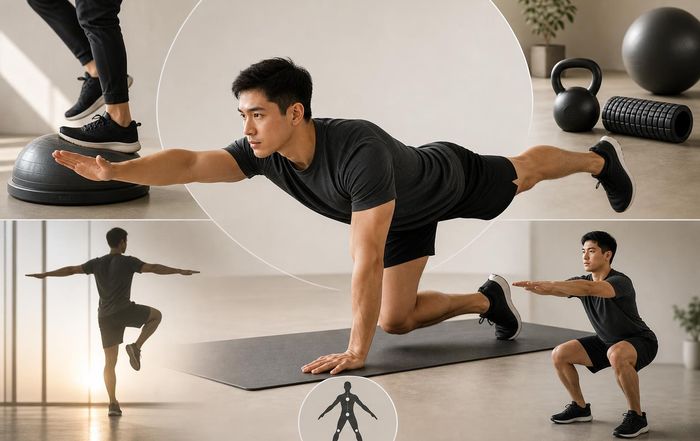
Simple training methods for core control do not require complex equipment or advanced gym skills. Slow, precise exercises such as dead bugs, bird dogs, and glute bridges, when executed with a focus on spinal alignment and diaphragmatic breathing, teach the body to stabilize dynamically rather than bracing rigidly. Breathing through the nose, expanding the lower ribs, and coordinating exhalation with effort trains the diaphragm to work synergistically with the abdominal and pelvic floor muscles. For readers interested in training and physical performance, this integration is fundamental to lifting, sprinting, and even long days of standing or presenting.
In markets such as Australia, Spain, and South Africa, where outdoor activities and sports participation are high, coaches and physiotherapists increasingly incorporate breathing drills into warm-ups and cool-downs, drawing on research from organizations like American Heart Association on the relationship between respiration, heart rate variability, and stress regulation. This combination of core control and breath work not only improves movement efficiency but also enhances emotional regulation, which is critical for executives, founders, and creators navigating volatile business environments. For the FitBuzzFeed community, where business performance, jobs mobility, and personal wellbeing intersect, such simple, science-backed methods offer a practical bridge between physical training and mental resilience.
Balance and Single-Leg Training for Everyday Athleticism
Balance is one of the most underrated dimensions of body control, yet it is central to every step, change of direction, or quick reaction in sport and daily life. Single-leg training in particular forces the nervous system to coordinate multiple joints and muscles under unstable conditions, building a robust foundation for walking, running, and lifting. Organizations such as Centers for Disease Control and Prevention emphasize the importance of balance training in reducing fall risk among older adults, but the same principles also enhance agility and injury resistance for younger professionals engaged in recreational sports, from football in United Kingdom and Italy to skiing in Switzerland and Finland.
Simple methods such as standing on one leg while brushing teeth, performing controlled single-leg Romanian deadlifts with light weights, or executing step-downs from a low platform can be integrated into daily routines without requiring dedicated gym sessions. When these exercises are performed slowly, with attention to knee alignment, hip stability, and foot pressure, the neuromuscular system adapts by improving joint position sense and reflexive control. For FitBuzzFeed readers who track sports and fitness trends, this approach aligns with the shift toward "everyday athleticism," where the goal is not merely to complete workouts but to move confidently and safely across varied environments, from city commutes to weekend hikes.
In corporate wellness programs across Netherlands, Norway, and Japan, balance training is increasingly being offered through short guided sessions or digital platforms, supported by research from Stanford Medicine and University of Oxford on neuroplasticity and motor learning. These initiatives recognize that improved balance correlates with better posture, reduced musculoskeletal complaints, and higher participation in active commuting or recreational leagues, all of which contribute to lower healthcare costs and higher employee engagement. For an audience that follows world developments and understands the economic implications of health, balance and single-leg training represent low-cost, high-impact levers.
Strength Training Simplified: Control Before Load
Strength training remains one of the most powerful tools for improving body composition, metabolic health, and functional capacity, but in the context of body control, its value lies in teaching the body to generate and absorb force in a coordinated way. Leading organizations such as World Health Organization and National Health Service (NHS) recommend at least two days of muscle-strengthening activities per week for adults, yet many individuals in United States, Canada, and Brazil either avoid resistance training due to intimidation or perform it with poor technique that undermines its benefits. For the FitBuzzFeed community, which spans busy executives, entrepreneurs, and health-conscious professionals, simple, control-focused strength methods offer a practical middle ground.
The principle of "control before load" suggests that individuals should prioritize mastering fundamental movement patterns-such as squatting, hinging, pushing, pulling, and carrying-using bodyweight or light resistance before progressing to heavier loads. This approach aligns with guidelines from organizations like American Council on Exercise, which emphasize proper technique, tempo, and range of motion as key determinants of safety and effectiveness. Slow eccentric phases, where the muscle lengthens under tension, combined with deliberate pauses at challenging points in the movement, train the nervous system to coordinate muscles efficiently and maintain joint alignment, which has direct implications for desk workers who also lift luggage, children, or equipment in daily life.
In regions such as South Korea, Singapore, and Malaysia, where high-density urban environments and time constraints limit access to large gyms, minimal-equipment strength programs using resistance bands, suspension trainers, or simple household objects are gaining traction. Digital platforms and corporate wellness initiatives often draw on evidence from institutions like McMaster University and Karolinska Institute that demonstrate how even low-volume, high-quality strength sessions can significantly improve health markers and functional performance. For FitBuzzFeed readers who follow training and nutrition content, combining simple strength routines with adequate protein intake and recovery practices supports sustainable progress without the burnout associated with extreme regimens.
Coordination and Agility: Training the Nervous System
While strength, mobility, and stability build the structural foundation for body control, coordination and agility training refine the nervous system's ability to orchestrate complex movements quickly and accurately. This dimension is especially relevant for individuals who participate in sports such as basketball, tennis, or football in United States, United Kingdom, Spain, and South Africa, but it also benefits professionals who need to react swiftly in dynamic environments, whether navigating crowded cities or managing physically demanding jobs. Research from MIT and ETH Zurich on motor learning and neurocognitive function indicates that tasks requiring quick decision-making and precise movement can enhance brain plasticity and cognitive resilience, which adds a compelling business case for integrating such training into busy schedules.
Simple methods for improving coordination and agility include low-impact ladder drills, cone patterns, or even shadow movements that mimic sport-specific actions without the intensity of full competition. When these drills are performed with focus on foot placement, posture, and smooth transitions, they train the body to respond efficiently to changing stimuli, which has direct carryover to real-world tasks such as stepping off curbs, changing direction on stairs, or reacting to unexpected obstacles. For FitBuzzFeed readers engaged with sports and lifestyle content, these activities also provide a playful, engaging contrast to more structured gym work, supporting long-term adherence.
In countries such as France, Italy, and Japan, youth and adult sports programs increasingly integrate coordination and agility drills as part of injury prevention strategies, drawing on frameworks from organizations like FIFA and IOC that link neuromuscular training to reduced rates of knee and ankle injuries. For professionals who transitioned to more sedentary roles during the pandemic era and are now returning to recreational leagues or endurance events, this type of training serves as a critical bridge, reconditioning the nervous system for the demands of dynamic movement and thereby lowering the risk of strains and sprains.
Recovery, Sleep, and Nutrition: The Hidden Drivers of Control
No discussion of body control is complete without acknowledging the role of recovery, sleep, and nutrition in supporting the nervous system and musculoskeletal tissues. High-quality movement depends on well-rested neural circuits, adequately fueled muscles, and connective tissues that are given time to repair and adapt. Organizations such as National Sleep Foundation and World Health Organization consistently highlight that adults in United States, United Kingdom, Germany, and China often fall short of recommended sleep durations, which impairs reaction time, coordination, and decision-making-all critical components of body control. For FitBuzzFeed readers juggling business, jobs, and family responsibilities, prioritizing sleep becomes a strategic performance choice rather than a luxury.
Simple practices such as maintaining consistent sleep and wake times, reducing late-night screen exposure, and aligning intense training with periods of lower work stress can significantly improve movement quality and resilience. From a nutritional perspective, adequate protein intake, balanced hydration, and sufficient micronutrients such as magnesium and vitamin D support muscle function, nerve conduction, and recovery. Evidence from Harvard Health Publishing and Dietary Guidelines for Americans underscores the importance of whole foods, lean proteins, and healthy fats in sustaining energy and supporting training adaptations, which is particularly relevant for readers who follow nutrition and wellness content on FitBuzzFeed.
In regions such as Nordic countries, New Zealand, and Canada, where outdoor activity and seasonal variation influence training patterns, recovery strategies also include exposure to natural light, moderate cold or heat, and low-intensity activities like walking or cycling. These practices, supported by research from institutions such as University of Copenhagen and University of Queensland, help regulate circadian rhythms, support cardiovascular health, and maintain joint mobility without imposing additional stress. For busy professionals seeking sustainable ways to enhance body control, integrating these recovery elements may be as important as the training methods themselves.
Integrating Simple Methods into Busy Global Lifestyles
The defining challenge for the FitBuzzFeed audience in 2026 is not a lack of information but the translation of knowledge into consistent, context-appropriate action across diverse lifestyles in North America, Europe, Asia, Africa, and South America. Executives traveling between New York, London, and Singapore, remote workers in Portugal or Netherlands, and healthcare professionals in South Africa or Brazil all face distinct constraints and opportunities. What unites them is the need for simple, flexible training methods that can be adapted to hotel rooms, home offices, or local parks while still building meaningful improvements in body control.
A practical integration strategy involves anchoring short mobility and core sessions to existing routines, such as morning coffee, pre-meeting breaks, or evening wind-down periods, and reserving slightly longer windows once or twice a week for more comprehensive strength and coordination work. For those who follow fitness, health, and lifestyle features on FitBuzzFeed, this approach reflects a shift from sporadic, high-intensity efforts to a more sustainable, habit-based model. Digital tools, including wearables, calendar systems, and virtual coaching platforms, can provide reminders and accountability, but the underlying methods remain intentionally simple: controlled movements, deliberate breathing, and progressive challenges that respect individual capacity and context.
Organizations and leaders who recognize the strategic value of body control are beginning to embed these principles into corporate culture, offering movement education sessions, on-demand micro-workouts, and ergonomic support as standard benefits. This trend, visible in forward-thinking companies across United States, Germany, Switzerland, and Singapore, aligns with broader ESG and human capital strategies that link employee wellbeing to innovation, retention, and brand reputation. For brands and employers featured on brands and business unaffiliated sections of FitBuzzFeed, showcasing authentic commitment to physical literacy and body control training can become a differentiator in competitive talent markets.
The Strategic Value of Body Control for the Future of Work and Life
As the global economy continues to evolve through automation, artificial intelligence, and demographic shifts, the human body remains the primary interface through which individuals experience, interpret, and act on the world. Better body control translates into fewer injuries, more energy, greater confidence, and enhanced cognitive performance, all of which are assets in a landscape where adaptability and sustained output are prized. For the global readership of FitBuzzFeed, spanning new interests in sports, wellness, technology, and world developments, simple training methods for body control offer a unifying framework that complements diverse goals, from career advancement to active aging.
The methods themselves-daily mobility practices, core and breathing integration, balance and single-leg training, simplified strength work, coordination drills, and deliberate recovery-are intentionally straightforward, accessible across income levels, geographies, and experience backgrounds. Their power lies in consistency, attention, and gradual progression rather than complexity or intensity. As institutions like World Health Organization, Harvard T.H. Chan School of Public Health, and Mayo Clinic continue to emphasize the importance of movement for global health, and as businesses increasingly recognize the economic value of a physically capable workforce, individuals who invest in body control today position themselves advantageously for the demands of tomorrow.
For FitBuzzFeed, whose daily mission spans health, fitness, business, and lifestyle, the message is clear: simple, well-designed training methods are not merely about aesthetics or short-term performance; they are about building a resilient, adaptable body that supports ambition, creativity, and quality of life across decades. In 2026 and beyond, those who cultivate better body control will not only move better but also think clearer, work smarter, and live more fully in an increasingly demanding and interconnected world.