

The Best Strength Training Methods for Women Over 40 in 2026
Why Strength Training After 40 Is a Strategic Health Investment
As 2026 unfolds, women over 40 are redefining what midlife looks like, turning to structured strength training not only to improve appearance, but to protect long-term health, extend career longevity, and enhance daily performance. For the global audience of FitBuzzFeed, whose interests span fitness, health, business, lifestyle, and performance, strength training at this life stage is best understood as a strategic investment that compounds over time, influencing everything from bone density and metabolic health to cognitive resilience and workplace productivity.
Physiologically, women begin to experience a gradual decline in muscle mass and strength from their thirties, a process known as sarcopenia, which accelerates around perimenopause and menopause. Concurrently, hormonal shifts can influence fat distribution, sleep quality, and mood, and these changes are often compounded by increasing professional responsibilities, caregiving roles, and time pressure. Yet contemporary research from organizations such as Harvard Medical School and Mayo Clinic demonstrates that properly designed resistance training can slow, halt, and in many cases reverse these declines. Learn more about how strength training supports healthy aging at Harvard Health and explore clinical perspectives via Mayo Clinic.
For women in the United States, United Kingdom, Germany, Canada, Australia, and across Europe and Asia, the strategic question is no longer whether to lift weights, but how to design strength training that fits demanding lifestyles, supports hormonal health, and delivers measurable results without increasing injury risk. This is where the blend of experience, expertise, authoritativeness, and trustworthiness becomes essential, and where FitBuzzFeed aims to provide grounded, actionable guidance that aligns with its broader coverage of health, fitness, and wellness.
Understanding the Female Physiology Over 40
To select the best strength training methods, it is necessary to understand the physiological landscape that women over 40 navigate. Estrogen and progesterone levels begin to fluctuate, affecting collagen production, tendon elasticity, and recovery capacity. Insulin sensitivity may decrease, and many women report changes in body composition even when diet and exercise habits appear unchanged. Organizations such as The North American Menopause Society and NHS in the United Kingdom have documented how these shifts influence cardiovascular risk, bone health, and mental well-being, and their resources offer a useful clinical backdrop for any training program. Readers can consult The North American Menopause Society and the UK's NHS for detailed medical overviews.
From a musculoskeletal perspective, bone mineral density typically declines with age, particularly in postmenopausal women, increasing the risk of osteoporosis and fractures. Research summarized by The National Institutes of Health and World Health Organization underscores that mechanical loading through resistance training is one of the most effective non-pharmacological strategies to maintain and improve bone density. Those interested in the scientific foundations can review materials at NIH and the global perspective from WHO.
In this context, the best strength training methods for women over 40 are those that respect joint health, progressively challenge the musculoskeletal system, and integrate recovery strategies that reflect slightly longer healing times compared to younger decades. For FitBuzzFeed readers balancing careers in finance, technology, healthcare, education, and entrepreneurship across North America, Europe, Asia, and beyond, the goal is to implement training that supports both physical resilience and sustained professional performance, rather than draining limited energy reserves.
Core Principles: What Makes a Strength Program Effective After 40
The most effective strength training programs for women over 40 share several core principles, regardless of whether they are implemented in a commercial gym in New York, a boutique studio in London, a home setup in Singapore, or a community facility in South Africa. First, they prioritize compound movements that recruit multiple muscle groups, such as squats, deadlifts, rows, and presses, which provide greater functional carryover to real-life tasks like lifting luggage, carrying children, or performing physically demanding work. Second, they employ progressive overload, meaning that resistance, volume, or complexity is systematically increased as the body adapts, which is essential for continued gains in strength and muscle mass.
Third, they build in adequate recovery, recognizing that women in their forties, fifties, and beyond may require more deliberate rest days, sleep hygiene, and stress management. Resources like Cleveland Clinic and Johns Hopkins Medicine emphasize the interplay between sleep, hormonal regulation, and muscular adaptation, and their guidance can help women structure training around realistic recovery capacities. Readers can explore these connections at Cleveland Clinic and Johns Hopkins Medicine.
Finally, effective programs are personalized, accounting for prior training history, injury status, cultural context, and lifestyle constraints. A woman leading a high-travel executive career across Europe and Asia will have different constraints than a healthcare professional working shifts in Canada or an entrepreneur in Brazil, and the FitBuzzFeed audience frequently seeks solutions that are portable, efficient, and compatible with demanding schedules. This is why the platform's broader coverage of lifestyle, business, and world trends is highly relevant to how training is implemented in practice.
Method 1: Progressive Resistance Training with Free Weights
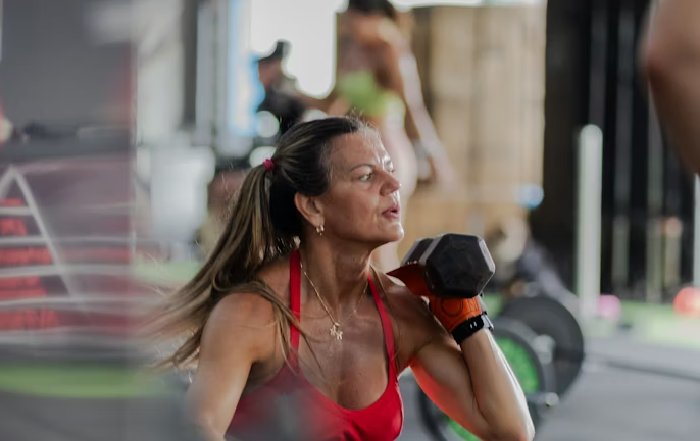
Progressive resistance training using free weights remains the gold standard for building strength and muscle mass in women over 40. Barbells, dumbbells, and kettlebells allow for natural movement patterns, greater stabilization demands, and scalable loading that can be adjusted in small increments. For women in the United States, United Kingdom, Germany, and other fitness-forward markets, access to modern gyms and strength equipment has never been better, and the rise of women-focused strength communities has helped to demystify lifting heavy.
The key is to focus on multi-joint movements that load the hips, knees, spine, and shoulders in a controlled manner. Squats, deadlifts, hip hinges, bench presses, overhead presses, and rows can be tailored to different ability levels, using variations such as goblet squats or Romanian deadlifts for those newer to lifting. Organizations like American College of Sports Medicine (ACSM) and National Strength and Conditioning Association (NSCA) provide evidence-based guidelines on sets, repetitions, and intensity, which can help women structure training for hypertrophy, strength, or general fitness. Those seeking technical frameworks can review recommendations at ACSM and NSCA.
For FitBuzzFeed readers, integrating free-weight training two to four times per week, with sessions lasting 45 to 60 minutes, offers a practical balance between effectiveness and time efficiency. Combined with resources from the site's training and physical performance sections, women can build programs that are both data-informed and personally meaningful, tracking progress in terms of strength, energy, and confidence rather than weight alone.
Method 2: Smart Use of Machines and Cable Systems
While free weights are highly effective, strength machines and cable systems play an important complementary role, particularly for women managing joint discomfort, prior injuries, or mobility limitations. Modern resistance machines found in gyms across Canada, Australia, Japan, and Europe allow users to isolate specific muscle groups, maintain consistent resistance curves, and reduce the technical complexity of certain exercises. This can be especially helpful for beginners or for experienced lifters seeking to add targeted volume without overloading the spine or joints.
Cable systems offer the additional advantage of constant tension through a range of motion, which can be particularly beneficial for training the upper body and core in multiple planes. For women over 40, this can support shoulder stability, postural strength, and rotational control, all of which are important for daily activities and sports. Guidance from Physiopedia and Chartered Society of Physiotherapy (CSP) in the UK highlights how machine-based training can be used therapeutically to rebuild strength after injury or surgery, and readers can learn more at Physiopedia and the CSP.
For the FitBuzzFeed community, especially those following the site's sports and events coverage, machines can also be used strategically during high-stress work periods or travel, when focus and coordination may be compromised. In these scenarios, machines offer a safer way to maintain training momentum while reducing the cognitive load associated with complex free-weight techniques.
Method 3: Bodyweight and Minimal-Equipment Training for Busy Lifestyles
For many women over 40, especially those balancing work, family, and travel across North America, Europe, Asia, and Africa, the most sustainable strength training method is one that requires minimal equipment and can be performed almost anywhere. Bodyweight training, resistance bands, suspension trainers, and compact dumbbells provide flexible options that can be adapted to hotel rooms, home offices, or outdoor spaces. This aligns strongly with the FitBuzzFeed audience's interest in practical, lifestyle-integrated fitness that supports career and family demands.
Bodyweight movements such as push-ups, step-ups, lunges, glute bridges, and planks can be progressively overloaded by changing leverage, tempo, or range of motion. Resistance bands add external load while remaining portable and joint-friendly, making them particularly suitable for women experiencing joint sensitivity or recovering from injuries. Organizations like American Council on Exercise (ACE) and Canadian Society for Exercise Physiology (CSEP) offer guidance on designing effective home-based programs, and women can explore these approaches at ACE and CSEP.
For FitBuzzFeed readers who frequently consult the platform's technology and news sections, the integration of digital tools such as smartwatches, fitness apps, and online coaching platforms has further enhanced the viability of at-home strength training. These technologies enable precise tracking of volume and intensity, provide real-time feedback, and help maintain accountability across time zones and busy schedules.
Method 4: Strength-Focused Functional and Athletic Training
Functional training, which emphasizes movement patterns that translate directly to daily life and sport, has gained significant traction among women over 40 who wish to remain active in recreational sports, outdoor activities, and physically demanding professions. This method often incorporates tools such as kettlebells, medicine balls, sleds, and battle ropes, as well as multi-planar movements that challenge balance, coordination, and power. For women in countries like Sweden, Norway, Switzerland, and New Zealand, where outdoor and adventure activities are integral to lifestyle, functional strength is a key enabler of long-term participation.
From a scientific perspective, power and speed tend to decline faster than maximal strength with age, yet they are critical for fall prevention and reactive capacity. Integrating moderate-intensity power work, such as controlled kettlebell swings or medicine ball throws, can help maintain neuromuscular responsiveness without imposing excessive impact. Organizations like International Federation of Sports Medicine (FIMS) and Australian Institute of Sport (AIS) have highlighted the importance of functional and power training in older populations, and interested readers can learn more at FIMS and AIS.
FitBuzzFeed's coverage of sports and world events often showcases women in their forties, fifties, and beyond competing in marathons, triathlons, and masters competitions across Asia, Europe, and the Americas. For these athletes, functional strength training is not merely aesthetic; it is an essential tool for performance, resilience, and injury prevention, enabling them to train and compete with confidence.
Method 5: Integrating Strength with Mobility, Pilates, and Yoga
Although traditional strength training is central to preserving muscle and bone, mobility and stability must not be neglected, particularly for women over 40 who may experience stiffness from prolonged sitting, travel, or repetitive occupational tasks. Methods such as Pilates and yoga, when combined intelligently with resistance training, help develop core stability, joint control, and breath awareness, all of which support safer lifting and better recovery. This integrated approach is especially relevant for FitBuzzFeed readers who value holistic wellness and regularly consume the platform's wellness and lifestyle content.
Clinical research summarized by Hospital for Special Surgery (HSS) and National Health Service (NHS) indicates that mobility and flexibility work can reduce musculoskeletal pain, improve posture, and enhance overall quality of life when combined with strength training. Women can explore these connections through resources at HSS and revisit the UK's NHS for practical stretching and mobility guidance. The key is sequencing: many women find that dedicating separate sessions to strength and mobility, or placing lighter mobility work at the beginning and end of strength sessions, provides the best balance between performance and recovery.
For women in high-pressure business roles in cities like New York, London, Singapore, and Tokyo, the meditative and stress-reducing aspects of yoga and mindful movement also support nervous system regulation, which indirectly enhances recovery from strength training and reduces the risk of overtraining. This creates a virtuous cycle in which physical and psychological resilience reinforce one another.
Nutrition, Recovery, and Hormonal Health: The Invisible Side of Strength
No discussion of strength training methods for women over 40 is complete without addressing nutrition, recovery, and hormonal health, which form the invisible infrastructure supporting visible progress. Adequate protein intake is essential for muscle repair and growth, and research from Academy of Nutrition and Dietetics and European Society for Clinical Nutrition and Metabolism (ESPEN) suggests that older adults may benefit from slightly higher protein intake per kilogram of body weight than younger individuals, distributed evenly across meals. Readers can explore evidence-based nutrition guidance at Academy of Nutrition and Dietetics and ESPEN.
For FitBuzzFeed's audience, who often balance demanding careers and family responsibilities, practical nutrition strategies are crucial. This may involve planning protein-rich breakfasts, leveraging convenient but high-quality options such as Greek yogurt, legumes, and lean meats, and aligning carbohydrate intake with training sessions to support performance and recovery. The platform's dedicated nutrition section provides ongoing coverage of these topics, helping women across continents translate scientific recommendations into everyday meals.
Sleep, stress management, and overall workload must also be considered. Chronic stress, common among professionals in finance, technology, healthcare, and education across North America, Europe, and Asia, can elevate cortisol levels, impair recovery, and blunt training adaptations. Resources from American Psychological Association (APA) and World Sleep Society highlight the role of sleep and stress regulation in physical performance and long-term health, and women can deepen their understanding at APA and World Sleep Society. Optimizing sleep duration and quality, incorporating brief relaxation practices, and periodizing training intensity around major work or family events can dramatically improve the sustainability and effectiveness of strength programs.
Career Longevity, Confidence, and the Business Case for Strength
For many women over 40, particularly in leadership and high-responsibility roles across the United States, United Kingdom, Germany, Singapore, and beyond, strength training has implications that extend far beyond personal health. Improved physical capacity supports longer, more productive careers, reduces absenteeism, and enhances cognitive performance through better blood flow, glucose regulation, and stress resilience. Studies summarized by World Economic Forum and OECD have linked employee well-being with organizational performance and economic productivity, and readers can explore these macro-level insights at World Economic Forum and OECD.
In this sense, strength training becomes part of a broader professional strategy. Women who invest in their physical resilience are better equipped to handle travel, long workdays, and high-stakes decision-making, and they often report increased confidence in leadership contexts. For brands and employers profiled in FitBuzzFeed's business and brands sections, supporting strength and wellness initiatives for midlife women is not only a matter of corporate social responsibility, but a sound business decision that can enhance retention, engagement, and innovation.
Strength training also intersects with identity and representation. As more women over 40 share their training journeys on global platforms, they challenge outdated narratives about aging, capability, and professional relevance, especially in industries where youth has historically been overvalued. This cultural shift is visible in North America, Europe, Asia, and increasingly across Africa and South America, where women are reclaiming midlife as a period of strength, ambition, and reinvention.
Building a Sustainable, Personalized Strength Blueprint
Ultimately, the best strength training methods for women over 40 are those that can be sustained over years, not weeks, and that align with personal values, health status, and life circumstances. For some, this will mean structured barbell programs in well-equipped gyms; for others, it will involve a hybrid of home-based bodyweight training, occasional machine work, and integrated mobility or Pilates sessions. The unifying thread is consistency, progressive challenge, and respect for recovery.
For the global community of FitBuzzFeed, which spans interests in fitness, health, jobs and careers, and broader world developments, strength training at and beyond 40 is not a niche topic, but a central pillar of modern, high-performance living. By combining authoritative scientific guidance from trusted organizations with lived experience, cultural context, and practical strategies, women can design strength programs that support not only their bodies, but their ambitions, relationships, and long-term quality of life.
As 2026 progresses, the narrative is increasingly clear: women over 40 are not on the sidelines of the strength training movement; they are at its forefront, demonstrating that with the right methods, tools, and support, this life stage can be one of the strongest, most capable, and most empowered yet.