

How Employers Can Encourage Active Workdays
The Strategic Case for Movement in Modern Workplaces
The conversation about workplace health has shifted from a narrow focus on ergonomic chairs and annual wellness challenges to a broader, more strategic understanding of movement as a core business lever. Across North America, Europe, Asia and beyond, employers are realizing that sedentary work patterns undermine productivity, creativity, and long-term workforce sustainability, while more active workdays contribute directly to performance, brand strength, and talent retention. For a growing sports minded media platform like FitBuzzFeed, which sits at the intersection of fitness, health, business and lifestyle, this evolution is particularly relevant, because it connects daily physical activity with the broader ecosystem of work, careers, and corporate culture that its readers navigate.
Research summarized by the World Health Organization shows that insufficient physical activity remains one of the leading risk factors for global mortality, contributing to cardiovascular disease, diabetes, and certain cancers, and those risks are magnified when employees spend most of their waking hours sitting. Learn more about the global burden of physical inactivity at the World Health Organization. At the same time, organizations from Fortune 500 multinationals in the United States and Germany to high-growth technology firms in Singapore and Sweden are discovering that encouraging active workdays not only protects health, it also sharpens cognitive performance, supports mental resilience, and improves collaboration across diverse and distributed teams.
For employers, the question is no longer whether to promote movement, but how to design active workdays that are inclusive, evidence-based, and aligned with business objectives across different regions and industries. The answer combines science, culture, technology, leadership, and thoughtful integration with fitness, nutrition, and wellness practices that readers already explore through sections such as fitness, health, and wellness on FitBuzzFeed.
Understanding the Science of Active Workdays
The scientific case for movement at work has strengthened significantly over the past decade. Long periods of uninterrupted sitting have been associated with increased risk of metabolic syndrome, musculoskeletal pain, and mental health challenges, even among people who meet traditional exercise guidelines outside working hours. The U.S. Centers for Disease Control and Prevention highlights that regular light-to-moderate movement throughout the day, such as standing, walking, or stretching every 30 to 60 minutes, can help offset some of the harms of sedentary behavior. Explore current recommendations at the CDC physical activity guidelines.
In Europe, the European Agency for Safety and Health at Work has emphasized that dynamic work patterns, which alternate between sitting, standing, and walking, can reduce back pain and improve overall musculoskeletal health. Employers in countries such as Denmark, the Netherlands, and Germany have integrated these insights into workplace standards, with height-adjustable desks, movement breaks, and active meeting formats becoming more common. Learn more about occupational health perspectives at the EU-OSHA website.
Cognitively, even short bouts of movement can increase blood flow to the brain, enhance executive function, and support better decision-making, which is critical for knowledge workers in finance, technology, consulting, media, and creative industries. The Harvard T.H. Chan School of Public Health notes that regular movement is closely linked to improved mood and reduced anxiety, helping employees manage the psychological load of complex roles, hybrid work, and global collaboration. Further details on the link between physical activity and mental health can be found at the Harvard T.H. Chan School of Public Health.
For employers with operations in Asia, where long working hours and high academic and professional pressure are prevalent in countries like South Korea, Japan, and China, the mental health dimension of active workdays has become particularly salient. Organizations that embed movement into daily routines are beginning to see reductions in burnout risk and improvements in employee engagement, aligning with guidance from institutions such as the World Economic Forum, which has repeatedly underscored the importance of well-being for sustainable productivity. Insights on workplace well-being and competitiveness are available at the World Economic Forum.
From Wellness Perks to Core Business Strategy
Historically, many companies approached physical activity as an optional perk: subsidized gym memberships, on-site fitness centers, or occasional wellness challenges. While these initiatives remain valuable, they often reached only the most fitness-oriented employees and did not fundamentally change the way work was structured. In 2026, leading employers in the United States, the United Kingdom, Canada, Australia, and beyond are reframing activity as a core component of their business and talent strategies, linking it to reduced absenteeism, improved retention, and stronger employer branding.
Reports from McKinsey & Company and Deloitte have highlighted that organizations with integrated health and well-being strategies, including active workday design, tend to outperform peers on key financial and people metrics, especially in competitive sectors such as technology, professional services, and advanced manufacturing. Learn more about the business value of employee health strategies at McKinsey or explore perspectives on the future of work and well-being at Deloitte.
For global employers with distributed teams across Europe, Asia, Africa, and the Americas, this shift requires a more sophisticated approach that respects local labor regulations, cultural norms, and infrastructure while maintaining a consistent commitment to movement. In some regions, active commuting and cycling to work may be realistic, supported by safe urban infrastructure as seen in the Netherlands, Denmark, and parts of Germany; in others, remote or hybrid work may require more intentional design of home-based routines and digital nudges. Readers of FitBuzzFeed who follow world and business coverage can see how this global perspective is reshaping corporate strategies and labor markets alike.
Designing Work Environments that Invite Movement
The physical environment remains a powerful determinant of how much people move during the workday. Employers that wish to encourage more active work patterns are rethinking office layouts, equipment, and even building selection. In major business hubs such as New York, London, Singapore, and Sydney, organizations are collaborating with architects and occupational health experts to design spaces that make movement easy, natural, and socially accepted rather than disruptive.
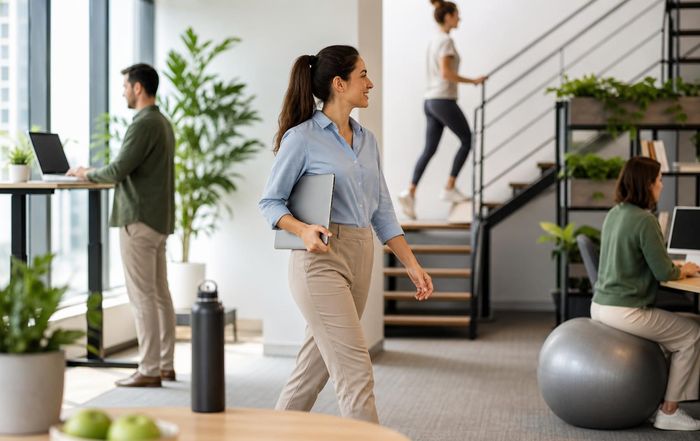
Height-adjustable desks, standing meeting areas, and shared "movement zones" where employees can stretch or use light equipment are becoming more common features, especially in new or renovated offices. The International WELL Building Institute has established building standards that incorporate movement-friendly design, from stair visibility and attractiveness to provisions for active workstations and accessible outdoor spaces. Employers can learn more about these standards at the IWBI website.
In addition, organizations are looking beyond the office interior to consider access to green spaces, walking paths, and safe cycling routes, recognizing that these amenities influence both recruitment and daily activity patterns. City-level initiatives in places like Amsterdam, Copenhagen, and Zurich, supported by resources from UN-Habitat, show how urban design can enable more active lifestyles that extend into the workday. Information on active cities and sustainable urban mobility is available at UN-Habitat.
For remote and hybrid workers across North America, Europe, and Asia-Pacific, employers are increasingly providing guidance on setting up movement-friendly home offices, including recommendations for adjustable furniture, micro-break routines, and the use of wearables or apps to prompt regular movement. Readers interested in the intersection of technology and physical health can explore more on FitBuzzFeed through its technology and physical sections, which often highlight emerging tools and approaches for active work.
Embedding Activity into Daily Workflows
While environment matters, the most successful active workday strategies in 2026 focus on workflow design and cultural norms rather than relying solely on equipment. Leading employers in sectors as diverse as financial services, media, sports, and advanced manufacturing are integrating movement into standard operating procedures, thereby normalizing activity as part of "how we work here" rather than a personal preference.
This can include scheduling 50-minute meetings instead of full hours to create natural five- to ten-minute movement breaks, encouraging walking meetings for small groups when privacy and logistics allow, and structuring longer workshops with built-in stretch intervals. The Chartered Institute of Personnel and Development in the United Kingdom has published guidance on designing work that supports health and well-being, including activity prompts and flexible scheduling, which can be explored at the CIPD website.
For global teams working across time zones, employers are experimenting with "movement windows" during which no virtual meetings are scheduled, allowing employees in Europe, Asia, Africa, and the Americas to step away from screens, walk, or perform light exercises. This approach is particularly relevant for organizations that adopted intensive video conferencing during the early 2020s and are now seeking a more sustainable model that protects both physical and mental health.
Organizations in the sports and fitness industries, including professional clubs and performance centers, have long understood the value of structured movement and recovery; their best practices are now informing more mainstream corporate approaches. Readers can see these crossovers in the sports and training sections of FitBuzzFeed, where principles of athletic periodization and active recovery are increasingly being translated for office-based professionals and frontline workers.
Leadership, Culture, and Role Modeling
No matter how well-designed an active workday program may be on paper, its success ultimately depends on leadership behavior and organizational culture. Employees take cues from managers and senior executives about what is truly valued, and whether taking a walking break, standing during a meeting, or participating in a midday movement session will be perceived as responsible self-management or as a lack of commitment.
In 2026, forward-thinking leaders in companies from the United States to Japan are intentionally modeling active behaviors, openly blocking time for movement in their calendars, joining walking meetings, and speaking about the link between physical activity and strategic thinking. The Society for Human Resource Management has emphasized that leadership endorsement and participation are critical to the success of any workplace well-being initiative, and provides case studies and frameworks at the SHRM website.
Organizations are also investing in manager training so that supervisors understand how to support active workdays without compromising performance or inclusivity. This includes learning how to set realistic expectations around availability, evaluate outcomes rather than chair time, and accommodate different physical abilities, cultural norms, and personal preferences. In global teams spanning Europe, Asia, Africa, and the Americas, cultural sensitivity is essential; what feels comfortable or appropriate in an Australian office may need adaptation in a Thai, Brazilian, or South African context.
For employers, building a culture that normalizes movement also intersects with broader diversity, equity, and inclusion efforts. Ensuring that active options are accessible to employees with disabilities, chronic conditions, or caregiving responsibilities requires thoughtful design and ongoing consultation. Resources from organizations such as the International Labour Organization, which addresses decent work and inclusive workplaces worldwide, can support this work and are accessible at the ILO website.
Technology, Data, and Personalized Activity Support
Technology has become a powerful enabler of active workdays, especially as wearables, smartphones, and collaboration platforms continue to evolve. Employers in 2026 are using digital tools not only to remind employees to move, but also to personalize activity recommendations, integrate movement into digital workflows, and measure the impact of interventions on engagement, performance, and health outcomes.
Enterprise wellness platforms, often developed in partnership with health insurers and fitness technology companies, can now sync with devices such as smartwatches and activity trackers to provide employees with real-time feedback on their movement patterns, as well as tailored suggestions for micro-breaks, stretches, or short walks. The Mayo Clinic offers guidance on safe approaches to increasing daily activity, which employers and individuals can adapt to their own contexts; more information is available at the Mayo Clinic.
At the same time, organizations are becoming more aware of privacy and trust considerations associated with health and activity data. Transparent communication about what data is collected, how it is used, and who can access it is essential to maintaining employee confidence, especially in regions with strong data protection regulations such as the European Union. Guidance from the European Data Protection Board and national regulators helps employers navigate this landscape; learn more about data protection and workplace health initiatives at the European Data Protection Board.
For readers of FitBuzzFeed who follow recent technology and news coverage, the convergence of health, data, and work is a recurring theme, as companies experiment with AI-driven coaching, digital physical therapy, and virtual reality movement sessions that can be integrated into the workday. These tools, when used ethically and inclusively, can help employees in diverse locations-from remote workers in Canada and New Zealand to office staff in France, Italy, and Spain-find sustainable ways to stay active during their professional lives.
Integrating Movement with Nutrition, Sleep, and Overall Well-Being
Active workdays are most effective when they are part of a broader, integrated approach to health that includes nutrition, sleep, stress management, and social connection. Employers are increasingly recognizing that focusing solely on movement without addressing these other dimensions may limit the benefits or inadvertently create pressure that undermines well-being.
Access to nutritious food options during the workday, whether through on-site cafeterias, partnerships with local vendors, or guidance for remote workers, plays a critical role in supporting energy levels and recovery from physical activity. The Academy of Nutrition and Dietetics provides evidence-based resources on healthy eating patterns that can inform workplace food policies and employee education, accessible at the EatRight website. Readers can also explore practical insights on fueling active workdays through FitBuzzFeed's nutrition and lifestyle sections, which connect everyday choices with long-term performance and health.
Sleep quality and stress management are equally important. Employers that encourage movement but maintain unrealistic workloads or after-hours expectations may inadvertently increase fatigue and injury risk. Resources from the National Sleep Foundation highlight the relationship between physical activity, sleep, and cognitive performance, offering guidance that organizations can integrate into their well-being strategies; further information is available at the National Sleep Foundation.
By aligning active workday initiatives with broader wellness programs, mental health support, and flexible work policies, employers can create more coherent and credible offerings that employees in the United States, United Kingdom, Germany, Singapore, South Africa, Brazil, and other markets can trust. This integrated approach also resonates with job seekers, who increasingly evaluate potential employers based on their commitment to holistic well-being, a trend frequently analyzed in FitBuzzFeed's jobs and business coverage.
Measuring Impact and Demonstrating Return on Investment
For senior leaders, boards, and investors, the sustainability of active workday initiatives depends on clear evidence of impact. In 2026, organizations are moving beyond participation counts and step-challenge leaderboards to more sophisticated metrics that link movement to absenteeism, healthcare costs, turnover, engagement scores, innovation indicators, and even customer satisfaction.
The RAND Corporation and other research institutions have conducted large-scale analyses of workplace wellness programs, providing insights into which approaches deliver meaningful health and financial benefits and under what conditions. Employers seeking to evaluate or refine their strategies can explore these findings at the RAND Corporation. In parallel, national public health agencies in countries such as Canada, Australia, and Finland have published frameworks for measuring the economic and social value of increased physical activity, both inside and outside the workplace.
Internally, organizations are combining quantitative data with qualitative feedback from employees across regions and roles, using surveys, focus groups, and listening tools to understand how active workday initiatives are experienced on the ground. This feedback helps refine offerings to better serve frontline workers, remote staff, managers, and executives, ensuring that programs remain relevant as business models and labor markets evolve.
For email newsletter members and online visiting readers who follow FitBuzzFeed's world and events sections, conferences and summits on the future of work frequently showcase case studies where companies in Europe, Asia, Africa, and the Americas demonstrate measurable returns from integrated movement strategies, reinforcing the message that active workdays are not a luxury but a strategic necessity.
Regional Nuances and Global Consistency
Implementing active workday strategies across multiple countries and regions requires balancing global principles with local adaptation. In Europe, strong regulatory frameworks around working time, health and safety, and employee consultation shape how employers introduce movement initiatives, while in North America, market competition and healthcare costs often drive innovation. In Asia, cultural attitudes toward hierarchy, face time, and collective activities influence how movement is perceived and adopted, while in Africa and South America, infrastructure, climate, and informal work arrangements present both challenges and opportunities.
Global employers are increasingly developing overarching movement and well-being philosophies that articulate why activity matters for the organization, while empowering regional and local leaders to design context-appropriate implementations. This might mean prioritizing active commuting and cycling infrastructure support in the Netherlands and Denmark, focusing on indoor movement options in hot climates such as Thailand or Brazil, or emphasizing digital tools and at-home routines for remote workers in Canada, the United States, and New Zealand.
By sharing success stories and lessons learned across countries, employers can accelerate learning and strengthen their internal communities. Readers can observe these dynamics in independent media coverage on FitBuzzFeed's world and brands pages, where multinational companies, sports organizations, and emerging innovators demonstrate different pathways to the same goal: making movement a natural part of everyday work life.
The Future of Active Workdays and the Role of FitBuzzFeed
As 2026 unfolds, the momentum behind active workdays shows no sign of slowing. Demographic shifts, including aging workforces in Europe and East Asia and youthful populations in parts of Africa and South Asia, are prompting employers to think more carefully about long-term health and productivity. Technological advances, from AI-driven coaching to immersive virtual collaboration tools, are opening new possibilities for integrating movement into both physical and digital workspaces. At the same time, employees across industries and regions are raising their expectations, seeking employers who respect their health, time, and humanity.
For business leaders, HR professionals, and employees who turn to FitBuzzFeed for insight, inspiration, and practical guidance, the message is clear: active workdays are not a trend but a foundational element of sustainable performance. By aligning evidence-based movement strategies with thoughtful design, inclusive culture, ethical technology use, and integrated wellness practices, employers can create environments in which people move more, feel better, and perform at their best.
As organizations in the United States, United Kingdom, Germany, Canada, Australia, France, Italy, Spain, the Netherlands, Switzerland, China, Sweden, Norway, Singapore, Denmark, South Korea, Japan, Thailand, Finland, South Africa, Brazil, Malaysia, and New Zealand continue to innovate, FitBuzzFeed will remain a platform where daily, new and old readers can connect the dots between sports, fitness, health, business, technology, and lifestyle. By exploring sections such as fitness, health, wellness, business, and lifestyle, employers and employees alike can find ideas, case studies, and tools to make every workday more active, more engaging, and more sustainable-wherever in the world they happen to work.