

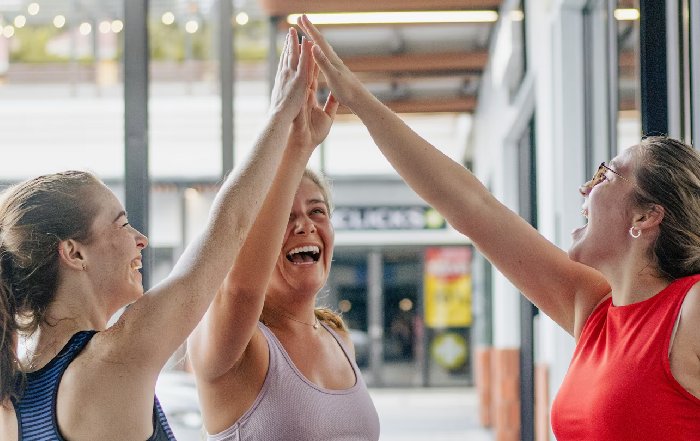
Why Your Next Workout Should Feel More Like Play
The New Fitness Imperative: From Discipline to Delight
As the global wellness economy expands past the 7-trillion-dollar mark, executives, entrepreneurs and professionals are rethinking not only how they work, but how they move. Across North America, Europe, Asia and beyond, an emerging consensus is forming among sports scientists, behavioral economists and forward-thinking fitness brands: the most effective workout is not the one that feels hardest, but the one that feels most like play. For the global sports loving audience of FitBuzzFeed-spanning high-performance professionals in the United States and United Kingdom, ambitious founders in Germany and France, innovators in Singapore and South Korea, and health-conscious leaders in Canada, Australia and across Africa and South America-this shift is not a mere trend; it is a strategic redefinition of how to sustain peak performance in life and business.
The traditional model of fitness, built around rigid routines, punishing intensity and guilt-driven motivation, has collided with the realities of modern work: hybrid schedules, cognitive overload, digital fatigue and relentless performance pressure. In this context, workouts that resemble joyless obligations are losing ground to experiences that resemble games, adventures and social rituals. Research from organizations such as World Health Organization and Harvard T.H. Chan School of Public Health underscores that consistent, moderate-to-vigorous physical activity dramatically reduces the risk of chronic disease and improves cognitive performance, yet global adherence remains stubbornly low. Exploring why so many people struggle to maintain traditional training programs, and how playful movement can reverse this trend, has become a priority for both public health leaders and forward-looking companies.
For a platform like FitBuzzFeed, which sits at the intersection of fitness, health, business and lifestyle, the message is clear: the future of sustainable performance lies in making movement emotionally rewarding, socially connected and intellectually engaging, not merely physically demanding.
The Science of Playful Movement: Why Enjoyment Outperforms Willpower
Over the last decade, leading institutions including Stanford University, University College London and Mayo Clinic have deepened the scientific understanding of how enjoyment shapes long-term health behavior. Behavioral science consistently shows that willpower is a limited resource; when workouts are framed as chores, they directly compete with other demanding tasks for cognitive energy. By contrast, when movement is experienced as play-novel, engaging, social and fun-it activates intrinsic motivation systems in the brain, making adherence more automatic and less reliant on discipline alone. Those interested in the behavioral mechanisms behind habit formation can explore how positive reinforcement and identity-based habits support sustainable change.
Neuroscience research, including work summarized by American Psychological Association, has shown that playful activities stimulate dopamine and endorphin pathways, enhancing mood and reinforcing the desire to repeat the activity. This effect is especially relevant for high-stress professionals in financial centers from London to New York, technology hubs from San Francisco to Berlin, and innovation clusters from Stockholm to Singapore, where chronic stress and decision fatigue are prevalent. When a workout feels like another demanding decision, it is easily postponed; when it feels like a rewarding break, it becomes a protected ritual. Those seeking deeper insight into the relationship between physical activity and mental health can review the growing body of evidence on exercise as a first-line strategy for mood regulation.
The principle is simple but profound: people do more of what feels good and less of what feels bad, regardless of what they know is "good for them." By designing workouts that trigger positive emotions-through music, community, gamification or skill development-fitness professionals and organizations can transform sporadic effort into resilient habit. This is particularly relevant for FitBuzzFeed readers navigating demanding careers, where consistency, not intensity, is the true differentiator in long-term health and performance outcomes.
From Gym Floor to Playground: Reimagining the Workout Experience
Across major cities in the United States, Europe and Asia-Pacific, a new generation of gyms, studios and urban spaces is blurring the line between training ground and playground. In New York, London, Berlin and Singapore, functional training facilities are integrating obstacle courses, climbing walls and interactive light-based drills that resemble immersive games more than conventional exercise circuits. In Sydney and Vancouver, waterfront communities are building outdoor calisthenics parks and multi-use sports courts that encourage spontaneous play among adults who previously associated such spaces only with children. Urban planners and public health experts can examine how active cities are reshaping infrastructure to support movement-as-lifestyle.
Leading organizations such as Nike, Adidas and Decathlon are investing heavily in experiential formats that emphasize creativity, community and enjoyment. Corporate wellness programs, particularly in large employers across North America, Europe and Asia, are moving beyond subsidized gym memberships to sponsor recreational leagues, walking meetings, outdoor retreats and hybrid digital-physical challenges that encourage playful competition among colleagues. Those designing workplace wellness strategies can learn more about evidence-based approaches to employee well-being and performance.
For the FitBuzzFeed community, this evolution is visible across categories. On the sports side, there is a resurgence of interest in small-sided games such as futsal, 3x3 basketball and padel, which combine high-intensity movement with social connection. On the training and physical performance front, coaches are integrating agility ladders, reaction lights and partner drills that challenge coordination and cognition as much as strength. In wellness-oriented communities from Copenhagen to Tokyo, playful modalities such as dance-based cardio, trampoline workouts and parkour-inspired sessions are gaining traction with adults who previously felt alienated by traditional gym culture.
The common thread is not a specific sport or modality, but a design philosophy: structure sessions so that participants are immersed in an engaging experience, not merely complying with a prescribed set of exercises. That shift from compliance to immersion is where play unlocks its full power.
Mental Performance, Creativity and the Playful Body
For senior leaders, entrepreneurs and knowledge workers who make up a significant portion of FitBuzzFeed's readership, the most compelling argument for playful workouts may not be physical at all; it is cognitive. Studies from institutions such as Harvard Business Review and MIT Sloan Management Review have highlighted the link between movement, creativity and strategic thinking. When individuals engage in non-linear, exploratory forms of exercise-such as dance, martial arts, team sports or improvisational movement-they stimulate pattern recognition, adaptability and divergent thinking, all of which are critical for innovation in volatile markets.
Neuroscientists have demonstrated that physical activity increases brain-derived neurotrophic factor (BDNF), supporting neuroplasticity and learning. When combined with psychologically safe, playful environments, these workouts can become powerful incubators for fresh ideas. Leaders in technology, finance and creative industries in cities like San Francisco, London, Zurich and Singapore are increasingly using active offsites, walking strategy sessions and game-based team challenges as tools to unlock group intelligence. Those interested in the cognitive benefits of physical activity can explore summaries of current research on exercise and brain health.
Playful workouts also offer a potent antidote to burnout, which has been recognized by World Health Organization as an occupational phenomenon. By reframing movement as recovery rather than obligation, professionals in high-pressure environments-from investment banking in New York and Frankfurt to consulting in Paris and Dubai, to tech in Seoul and Bangalore-can leverage exercise as a mental reset rather than an additional task on an already crowded to-do list. For many FitBuzzFeed readers, this reframing may be the key to turning sporadic, guilt-driven training into a non-negotiable pillar of sustainable performance.
Global Perspectives: How Different Regions Are Embracing Play
The shift toward play-based fitness is unfolding differently across regions, reflecting cultural norms, urban design and technology adoption. In the United States and Canada, boutique fitness studios and digital platforms are leading the charge, combining immersive audio-visual environments with gamified metrics. In the United Kingdom, Germany and the Netherlands, there is a strong emphasis on outdoor group activities, cycling culture and community-based sports clubs that blend social life with movement. Those interested in comparative health and activity statistics can review international data on physical activity trends and outcomes.
In Nordic countries such as Sweden, Norway, Denmark and Finland, the historical tradition of outdoor recreation and "friluftsliv" (open-air living) naturally aligns with playful movement, with citizens embracing hiking, cross-country skiing and cold-water swimming as lifestyle rituals rather than workouts. In Asia, particularly in Singapore, South Korea, Japan and Thailand, dense urban environments have catalyzed the rise of compact, technology-enabled studios and app-based communities that turn fitness into a social game. Meanwhile, in Brazil, South Africa and other parts of Africa and South America, street sports, dance and informal games continue to serve as powerful, culturally embedded forms of movement that blend identity, community and joy.
For a globally oriented platform like FitBuzzFeed, which covers world developments in sport, health and business, these regional differences offer both inspiration and opportunity. Multinational brands and employers can learn from these diverse models to design culturally relevant, playful wellness initiatives that resonate from New York to Nairobi, London to Lagos, and Singapore to São Paulo. Those responsible for global workforce strategies can explore how inclusive wellness programs support engagement and retention across regions.
The Business Case: Why Playful Fitness Matters to Organizations
Beyond individual health, there is a compelling business rationale for reimagining workouts as play. Research from McKinsey & Company, Deloitte and Gallup has consistently shown that employee well-being is tightly correlated with productivity, engagement and retention. When organizations treat movement as an optional perk, participation is low and impact is limited. When they embed playful, social, movement-based experiences into the fabric of culture, they create high-energy environments where people are more resilient, collaborative and innovative. Those seeking to understand the economics of well-being can review analyses of the return on investment of employee wellness programs.
Forward-looking employers in sectors such as technology, professional services and advanced manufacturing are already integrating game-based challenges, recreational leagues and movement breaks into the workday. In London and New York, some firms are transforming unused space into mini-courts or functional play zones. In Singapore and Sydney, companies are partnering with local studios to run corporate tournaments and playful team-building events. In Toronto, Berlin and Amsterdam, cycling-to-work incentives and lunchtime sports clubs are reframing movement as a shared cultural norm rather than a private hobby.
For brands featured on FitBuzzFeed's business and brands coverage, this evolution presents both a responsibility and a competitive advantage. Companies that design products, services and workplaces that support playful movement are better positioned to attract and retain talent in a labor market where well-being is a core expectation, not a luxury. Employers looking to integrate these ideas can explore guidance on building healthy workplaces that align organizational performance with human sustainability.
Technology as a Play Catalyst: Gamification, Wearables and Virtual Worlds
Technology has often been blamed for sedentary lifestyles, but in 2026 it is also one of the most powerful tools for turning workouts into play. Gamified fitness apps, connected equipment and extended reality platforms are transforming solitary routines into interactive experiences that appeal to digital-native generations and busy professionals alike. Companies such as Apple, Garmin and Whoop are enhancing wearables with real-time coaching, social challenges and streak-based rewards that encourage consistent movement throughout the day. Those interested in the evolution of digital health technologies can explore analyses of wearable adoption and impact on behavior.
Meanwhile, platforms that blend gaming and exercise are gaining traction worldwide. In South Korea and Japan, exergaming studios and home systems combine immersive visuals with full-body movement. In the United States and United Kingdom, virtual cycling and rowing communities connect thousands of participants in real time, turning individual effort into shared competition and camaraderie. In China and across Southeast Asia, mobile-first fitness ecosystems are integrating short-form, playful workouts into super-app environments, making it easy for users to engage in micro-sessions between meetings or during commutes.
For the FitBuzzFeed audience, which closely follows technology trends alongside fitness and wellness, the key question is not whether technology will shape movement, but how to ensure it does so in a way that enhances, rather than replaces, real-world play. The most effective solutions are those that use digital tools to lower barriers, increase accountability and add narrative or game elements, while still encouraging users to connect with their bodies, environments and communities.
Nutrition, Recovery and the Play Mindset
A workout that feels like play does more than change how people move; it also influences how they approach nutrition, recovery and overall lifestyle design. When individuals see themselves not merely as "exercisers" but as players or athletes in their own lives, they are more likely to make aligned choices around fueling, sleep and stress management. Sports nutrition guidance from organizations such as International Society of Sports Nutrition and public health resources like National Health Service in the UK and Health Canada emphasize the importance of balanced macronutrients, hydration and timing to support performance and recovery. Those who want to refine their nutritional approach can explore foundational principles of performance nutrition.
Within the FitBuzzFeed ecosystem, this perspective connects directly to nutrition, wellness and health content that encourages readers to treat food as a strategic asset rather than a source of anxiety. When workouts are enjoyable, individuals are less likely to use food as compensation or self-punishment and more likely to view it as supportive fuel. This shift can be particularly valuable for professionals in high-stress roles across global financial centers and technology hubs, where irregular schedules and convenience eating are common.
Recovery, too, becomes more intentional in a play-centered model. Instead of oscillating between extreme training and total inactivity, individuals adopt a more fluid pattern of varied intensities: high-energy play days, lighter movement days and restorative sessions incorporating mobility, breathwork or low-intensity outdoor activity. Guidance from organizations such as Cleveland Clinic highlights the role of sleep, active recovery and stress reduction in long-term health and performance. By aligning movement, nutrition and recovery under a unifying, playful identity, individuals create a coherent lifestyle architecture that is more resilient to disruption.
Careers, Identity and the Professional Value of Play
For many in the FitBuzzFeed audience, the relationship between work and movement is not only about personal health but also about professional identity and opportunity. The fitness, wellness and sports industries are evolving rapidly, creating new roles in coaching, technology, data, events and brand management. As playful formats gain traction, employers increasingly seek professionals who understand how to design engaging, human-centered experiences rather than purely prescriptive programs. Those exploring new career paths can review perspectives on the future of work in health and wellness.
The rise of play-based fitness opens avenues in product design, content creation, community management, digital coaching and hybrid events that blend sport, entertainment and education. On FitBuzzFeed's jobs coverage, readers can see how roles are emerging at the intersection of movement, media and technology, from virtual performance coaches to experiential event strategists. Brands that understand the emotional drivers of participation-joy, belonging, mastery and autonomy-are better positioned to build loyal communities and sustainable business models.
Even for those outside the wellness sector, a playful approach to movement can shape professional reputation. Leaders who embody balanced, energetic lifestyles often signal resilience, discipline and creativity to colleagues and stakeholders. In boardrooms from New York to Zurich, investors and partners increasingly recognize that human capital is a company's most critical asset, and that leaders who prioritize their own health are more likely to build organizations that do the same.
Making Play Personal: How FitBuzzFeed Readers Can Redesign Their Workouts
For all the macro trends, the most important transformation occurs at the individual level. The central question for any FitBuzzFeed reader in 2026 is not whether play-based fitness is a global movement-that is already clear-but how to translate this paradigm into a personally meaningful practice. The starting point is self-inquiry: identifying which forms of movement once felt like play, whether in childhood sports, dance, martial arts, outdoor exploration or social games, and exploring how those elements can be reintroduced into adult life.
From there, the design process becomes both strategic and experimental. Some may choose to replace one weekly gym session with a small-sided sport, dance class or climbing session. Others may gamify solo workouts with time-based challenges, skill goals or friendly competitions with colleagues. Those who travel frequently across regions such as Europe, Asia and North America can seek out local studios, parks and recreational communities as a way to integrate movement and cultural exploration. The events landscape-from urban fun runs to corporate sports festivals-offers additional opportunities to turn fitness into shared experience rather than solitary duty.
For readers who view themselves as high-performance professionals first and fitness enthusiasts second, the most rational argument is also the most human: when movement is playful, it becomes sustainable; when it is sustainable, it becomes transformative. Over months and years, that transformation compounds into better health markers, sharper cognition, deeper relationships and more resilient careers.
The Strategic Sporting Advantage of Joy
As time unfolds, the organizations, leaders and individuals who will thrive are those who understand that health is not a side project, but a core component of long-term success. The shift from workout-as-punishment to workout-as-play is not about trivializing fitness; it is about aligning it with how humans are wired to learn, connect and grow. In a world where complexity and uncertainty are the norm-from economic volatility to geopolitical shifts and rapid technological disruption-the ability to maintain energy, adaptability and optimism is a decisive advantage.
For FitBuzzFeed and its global sports community, the call to action is both simple and profound: redesign movement so that it sparks curiosity, connection and joy. Use the tools of modern science, technology and design to build experiences that people look forward to rather than endure. Integrate play into daily routines, workplace cultures and urban environments, from New York to Nairobi, London to Lagos, Singapore to São Paulo.
The next workout, whether it takes place in a high-tech studio, a neighborhood park, a living room or a rooftop court, does not need to feel like another task in an overfull day. It can feel like a game, an experiment, a conversation or an adventure. When it does, it stops being something to fit in and becomes something to build around-a cornerstone of a life, career and culture where performance and well-being reinforce, rather than compete with, each other.