

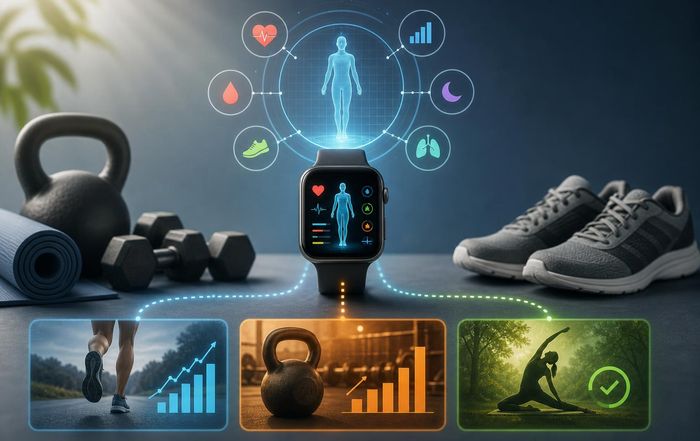
How Health Data Can Guide Better Training Choices
The New Training Frontier: Data as a Daily Coach
The relationship between health data and physical training has shifted from a niche interest of elite athletes to a mainstream expectation among professionals, executives, and active individuals worldwide who want to make smarter decisions about how they move, recover, and perform. On FitBuzzFeed-a 100% unique and original content platform deeply rooted in fitness, health, and performance culture-this evolution is particularly visible, as readers from the United States, Europe, Asia, and beyond increasingly seek evidence-based guidance rather than generic workout advice.
The convergence of wearable technology, medical-grade sensors, and advanced analytics is transforming how people design their training plans, assess risk, and protect long-term health. From a marathon runner in London monitoring heart rate variability before every interval session, to a software engineer in Singapore using sleep and stress metrics to plan strength training, to a corporate executive in New York adjusting travel schedules around recovery data, health information has become a strategic asset rather than a passive record of past activity.
This article explores how health data can guide better training choices, why it matters for sustainable performance, and how organizations and individuals can harness it responsibly, with a focus on the experience that define the independent editorial approach at FitBuzzFeed.
From Raw Numbers to Meaningful Insight
The first wave of digital fitness, dominated by step counters and basic calorie estimates, offered a glimpse of what was possible but rarely delivered actionable insights. In contrast, the current ecosystem blends continuous physiological monitoring with sophisticated algorithms that interpret patterns rather than isolated numbers. Platforms from Apple, Garmin, WHOOP, and Oura now capture metrics such as resting heart rate, heart rate variability, skin temperature, blood oxygen saturation, and detailed sleep architecture, and then translate them into readiness scores, training load indicators, and recovery recommendations.
Organizations such as Harvard Medical School and the Mayo Clinic have contributed significantly to the understanding of how these markers relate to cardiovascular resilience, metabolic health, and overtraining risk, and professionals who follow their research can better interpret what their devices are signaling. Those who want to go deeper into the scientific background can explore how heart rate variability reflects autonomic balance or how sleep quality influences exercise adaptation.
For the readers of FitBuzzFeed Health, this shift from raw metrics to context-rich analysis is essential. Training decisions are no longer based solely on motivation or schedule but on an integrated understanding of how the body is responding to cumulative stress, nutrition, and recovery.
Personalization: Moving Beyond One-Size-Fits-All Training
The most powerful impact of health data on training is the move from standardized programs to highly individualized plans that evolve in real time. Historically, many training plans were built around fixed weekly structures, with progression based on arbitrary increments rather than physiological feedback. Today, data-driven personalization allows a runner in Berlin, a cyclist in Melbourne, or a CrossFit enthusiast in Toronto to follow similar principles while executing completely different day-to-day workloads based on their unique responses.
Research from organizations like Stanford Medicine and University College London has shown that genetic variation, lifestyle, and prior training history significantly influence how individuals respond to identical exercise stimuli. Those who wish to understand this concept more deeply can learn more about individualized exercise response. Meanwhile, platforms such as Strava and TrainingPeaks increasingly integrate health metrics into their training recommendations, moving away from purely volume-based progressions.
For the performance-minded audience of FitBuzzFeed Training, this personalization is not a luxury but a competitive advantage. Whether preparing for a triathlon in Spain, a ski season in Switzerland, or a corporate wellness challenge in Singapore, the ability to adjust intensity and volume based on real-time health signals reduces injury risk while maximizing adaptation.
Key Health Metrics That Matter for Smarter Training
Not all data points carry equal weight, and one of the challenges for busy professionals and athletes is knowing which metrics deserve attention. The most influential markers tend to cluster around cardiovascular status, recovery quality, metabolic readiness, and musculoskeletal integrity, and understanding them can dramatically improve training decisions.
Resting heart rate and heart rate variability remain foundational indicators of systemic stress and readiness, and organizations like the American Heart Association provide extensive guidance on interpreting heart health indicators. Persistent elevation in resting heart rate or a sustained drop in heart rate variability can signal insufficient recovery, excessive training load, or external stressors such as poor sleep or illness.
Sleep duration and quality, including time spent in deep and REM stages, are equally critical. Research summarized by the National Institutes of Health underscores the role of sleep in muscle repair, hormonal regulation, and cognitive performance, all of which directly influence how well a training session can be executed and absorbed. For readers balancing demanding careers with ambitious fitness goals, the integration of sleep tracking into daily decision-making is particularly important.
Musculoskeletal data, increasingly captured through motion analysis tools and smart insoles, helps identify asymmetries and biomechanical inefficiencies that can lead to overuse injuries. Elite sports organizations such as FC Barcelona and Manchester City have long invested in biomechanical profiling, and now similar technologies are being miniaturized for consumer use, allowing everyday athletes to explore evidence-based injury prevention strategies.
These metrics, when interpreted correctly, help visitors to FitBuzzFeed Fitness move from guesswork to precision, ensuring that each session has a clear physiological purpose aligned with their current state.
Guiding Daily Training Choices: When to Push and When to Hold Back
Perhaps the most practical application of health data is in answering the daily question that matters most: should training be intensified, maintained, or reduced today? In the past, this decision was often driven by subjective feelings of fatigue or motivation, which can be misleading, particularly for high-achieving individuals who are accustomed to pushing through discomfort.
By combining heart rate variability trends, resting heart rate, sleep quality, and recent training load, modern platforms can generate readiness or recovery scores that inform whether an athlete in New York should attempt high-intensity intervals, a tempo run, or a low-intensity recovery session. Organizations such as World Athletics and World Rugby have embraced load management frameworks that rely on similar principles, and professionals can review global guidelines on training load and injury risk.
These systems are not infallible, and experienced coaches often treat them as decision-support tools rather than absolute commands. However, for many readers of FitBuzzFeed Physical, they provide a structured way to reconcile ambition with long-term health, helping to prevent the classic cycle of overtraining, injury, and forced downtime that derails progress.
Health Data Across Sports, Regions, and Performance Levels
The global audience of FitBuzzFeed spans endurance sports, team disciplines, strength training, and emerging hybrid formats such as HYROX and functional fitness competitions, and in each of these domains, health data is being applied in distinct yet converging ways. In the United States and Canada, professional leagues such as the NBA and NFL have widely publicized their use of player tracking and biometric monitoring to fine-tune workloads and reduce soft-tissue injuries, and those interested can explore how technology is reshaping elite sport.
In Europe, football clubs in the United Kingdom, Germany, Spain, Italy, and the Netherlands rely on GPS-based load data and recovery metrics to individualize training within team structures, while national Olympic programs in France, Sweden, Norway, and Denmark use centralized data platforms to monitor athletes across multiple training centers. In Asia, countries such as Japan, South Korea, Singapore, and China are integrating health analytics into both professional sport and corporate wellness initiatives, reflecting a broader societal focus on productivity and longevity.
Recreational athletes in South Africa, Brazil, Australia, and New Zealand are increasingly adopting these practices as well, supported by local federations and community clubs that share best practices on safe training progression and heat adaptation. This global diffusion of expertise reinforces the core principle that while sports cultures differ, the underlying physiology is universal, and data-informed training can support performance and health across continents.
Integrating Nutrition and Wellness Data for Holistic Training
Training quality cannot be separated from nutrition, mental health, and broader lifestyle choices, and modern health data ecosystems increasingly reflect this interconnectedness. For readers exploring FitBuzzFeed Nutrition and FitBuzzFeed Wellness, the integration of dietary tracking, glucose monitoring, and stress metrics into training decisions is especially relevant.
Continuous glucose monitors, once reserved for individuals with diabetes, are now used by endurance athletes and executives seeking to understand how different foods and meal timings affect energy stability, cognitive focus, and training performance. Organizations such as Diabetes UK and the American Diabetes Association provide authoritative perspectives on interpreting glucose data responsibly, and these insights are increasingly adapted for non-clinical performance contexts.
Mental health indicators, including stress scores derived from heart rate variability and subjective mood tracking, are also being incorporated into training platforms. The World Health Organization has repeatedly emphasized the link between psychological stress and physical health, and those wishing to deepen their understanding can learn more about mental health and physical activity. By combining these dimensions, individuals can make more informed choices about when to pursue high-intensity sessions, when to prioritize restorative practices such as yoga or low-intensity walks, and when to temporarily reduce load to prevent burnout.
Business, Brands, and the Data-Driven Fitness Economy
The rapid expansion of health data in training has not occurred in isolation; it is deeply intertwined with the strategies of major companies, startups, and sports organizations that see data as a competitive differentiator. Brands such as Nike, Adidas, Under Armour, and Lululemon are increasingly embedding sensors into apparel and footwear, transforming products into platforms that collect and analyze movement data. Those interested in the commercial landscape can learn more about the evolving sports technology market.
Digital fitness platforms, from Peloton to Zwift and Les Mills, are integrating biometric feedback into live and on-demand classes, allowing participants in London, New York, or Tokyo to receive real-time guidance based on their heart rate zones and perceived exertion. For readers of FitBuzzFeed Business, this creates new revenue models, partnership opportunities, and data governance challenges, as companies must balance personalization with privacy and regulatory compliance.
Corporate wellness programs across North America, Europe, and Asia are also leveraging wearable data to design incentive structures that reward consistent activity and healthy behaviors, and organizations such as Mercer and Deloitte have documented the impact of data-informed wellness on productivity and healthcare costs. Professionals exploring career paths in this expanding sector can find additional well researched context through FitBuzzFeed Jobs, where the intersection of technology, health, and business is increasingly visible.
Technology, AI, and the Future of Data-Driven Coaching
By 2026, artificial intelligence has become a central engine behind the interpretation of health data for training purposes, and this trend is accelerating. Machine learning models trained on millions of workouts and health records can now predict injury risk, recommend recovery strategies, and even suggest optimal competition schedules for athletes ranging from local age-group competitors to world champions. Readers interested in the technological dimension can explore how AI is transforming sports analytics.
Platforms developed by companies such as IBM, Microsoft, and Google Cloud are powering advanced analytics for professional teams and federations, while consumer-facing apps increasingly offer AI coaching that adjusts in real time to changes in sleep, stress, and performance. The editorial team at FitBuzzFeed Technology has observed a rapid increase in solutions that promise "coach in your pocket" experiences, raising important questions about the role of human expertise in an era of algorithmic guidance.
While AI-driven insights can be invaluable, the most effective systems combine automated analysis with human judgment from qualified coaches, physiotherapists, and sports physicians. The most successful athletes and high-performing professionals tend to treat AI as a sophisticated assistant rather than an unquestioned authority, integrating its recommendations with their own experience and the guidance of trusted experts.
Ethics, Privacy, and Trust in Health Data
As health data becomes more central to training, competition, and corporate wellness, concerns about privacy, security, and ethical use have moved to the forefront. Organizations such as the European Data Protection Board and regulatory frameworks like the GDPR in Europe and HIPAA in the United States shape how companies can collect, store, and share health information, and those who wish to understand these frameworks can review official data protection guidance.
For athletes and employees, the central question is who controls their data and how it might be used beyond immediate performance optimization. There are legitimate concerns about potential misuse in contract negotiations, insurance underwriting, and employment decisions, particularly when data reveals injury risk or underlying health conditions. Trusted organizations, including The Lancet and BMJ, have published extensive commentary on ethical challenges in digital health, and these debates are shaping industry standards.
At FitBuzzFeed, the editorial commitment to experience, expertise, authoritativeness, and trustworthiness includes a clear position that individuals should retain meaningful control over their health data and understand how it is being applied. Transparent consent mechanisms, anonymization where possible, and rigorous cybersecurity standards are not optional extras but prerequisites for sustainable innovation in this space.
Practical Steps for Using Health Data to Improve Training
For readers who want to move from theory to practice, the first step is to clarify their goals, whether they involve completing a first 10K, improving strength for everyday life, excelling in a specific sport, or simply maintaining long-term health while managing a demanding career. Once goals are defined, selecting appropriate tools becomes easier, whether that means a multi-sport GPS watch, a recovery-focused wearable, a smart ring, or a combination of devices integrated through a central platform.
Next, individuals should establish a baseline by tracking key metrics-such as resting heart rate, heart rate variability, sleep patterns, and typical training load-for several weeks without major changes to their routines. This baseline provides context for interpreting future deviations, and organizations like Cleveland Clinic offer accessible resources to understand normal ranges and warning signs.
Over time, patterns will emerge: certain types of sessions may consistently lead to poor sleep, specific nutrition choices might improve or impair performance, or particular stressors at work may correlate with decreased readiness scores. By reflecting on these patterns, often with the support of a coach or health professional, individuals can adjust training schedules, intensity distribution, and recovery strategies in a targeted manner. Readers seeking inspiration and practical guidance can explore related stories across FitBuzzFeed Sports, FitBuzzFeed Lifestyle, and FitBuzzFeed World, where regional and sport-specific case studies highlight how data-driven training is applied in real life.
The most important principle is consistency rather than perfection. Occasional gaps in tracking or deviations from recommendations are inevitable, but over months and years, even modest improvements in aligning training with health data can yield substantial gains in performance, resilience, and overall well-being.
A Data-Informed Future for Performance and Health
As time unfolds, the integration of health data into training is no longer a speculative trend but a defining feature of how ambitious individuals, teams, and organizations approach performance. From the expert editorial perspective of FitBuzzFeed, which sits at the intersection of sports, fitness, health, business, and technology, this transformation represents both an opportunity and a responsibility.
The opportunity lies in empowering readers across North America, Europe, Asia, Africa, and South America with tools and knowledge that allow them to train smarter, avoid preventable injuries, and sustain high performance throughout longer careers and more active lives. The responsibility lies in emphasizing evidence over hype, transparency over opacity, and long-term health over short-term experimentation, ensuring that data serves the individual rather than the other way around.
Health data will not replace the intrinsic motivations that drive people to move, compete, and explore their physical limits, but it will increasingly shape how they do so, offering a more precise, personalized, and sustainable path forward. For the growing number of sports active people that turns to FitBuzzFeed for insight and guidance, the message is clear: in the years ahead, those who learn to interpret and apply their health data thoughtfully will not only train better but live better, transforming information into a durable advantage in sport, work, and everyday life.