

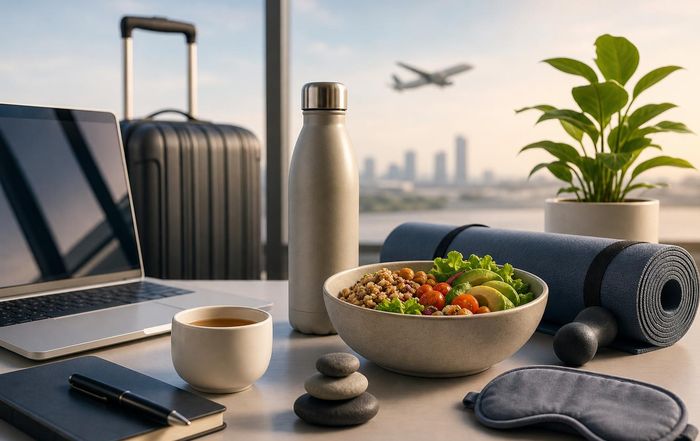
Balanced Wellness Routines for Travel and Work in 2026
The New Reality of Work, Travel, and Wellbeing
By 2026, the boundaries between business travel, remote work, and personal life have blurred in ways that would have seemed improbable a decade ago. Executives commute between continents as routinely as they once crossed cities, hybrid workers split their weeks between home offices and client sites, and an emerging class of "work-from-anywhere" professionals builds careers while moving between hubs such as New York, London, Berlin, Singapore, and Sydney. In this landscape, the question is no longer whether wellness matters, but how individuals can design balanced routines that are portable, practical, and sustainable across time zones, hotel rooms, airports, and co-working spaces.
For the community around FitBuzzFeed-a readership deeply engaged with fitness, health, lifestyle, and high-performance careers-wellness is not a luxury or a brief New Year's resolution; it is a strategic asset. Organizations across the United States, Europe, and Asia increasingly recognize that physical vitality, mental resilience, and emotional balance drive productivity, creativity, and long-term employability. Research from institutions such as the World Health Organization shows how chronic stress, poor sleep, and physical inactivity contribute to noncommunicable diseases and reduced work capacity, and business leaders now treat travel and workload management as core components of occupational health rather than mere logistics. Those who want to thrive professionally in 2026 must therefore adopt wellness routines that are flexible enough to survive red-eye flights, back-to-back meetings, and cultural transitions, while still being rigorous enough to deliver measurable benefits.
Why Travel and Work Strain the Body and Mind
Business travel and high-intensity work schedules exert a unique combination of physiological and psychological pressure. Jet lag disrupts circadian rhythms, irregular meals destabilize blood sugar, and long hours of sitting undermine cardiovascular health and muscular balance. The Centers for Disease Control and Prevention explains how prolonged sedentary behavior increases the risk of obesity, type 2 diabetes, and heart disease, while chronic sleep disruption can impair immune function and cognitive performance, which is particularly relevant to knowledge workers who rely on sharp decision-making. For professionals commuting between North America, Europe, and Asia, the repeated cycle of time-zone shifts, airport security lines, and late-night conference calls can become a hidden occupational hazard.
Beyond the physical strain, there is a mental and emotional toll. Constant connectivity via collaboration tools and smartphones blurs work-life boundaries, and the expectation to be "always on" leaves little space for recovery. Studies from organizations like Harvard Business Review highlight how digital overload and lack of psychological detachment from work increase burnout risk, especially among managers and high performers who carry responsibility across distributed teams. When travel is layered on top of already demanding roles, the result can be a sense of dislocation: hotel rooms replacing home, airport lounges substituting for gyms, and client dinners crowding out personal routines that previously anchored wellbeing.
This context underscores why a balanced wellness routine for travel and work must be more than an ad hoc collection of tips. It needs to function as a portable operating system for health, integrating movement, nutrition, sleep, mental hygiene, and recovery into one coherent approach that can be adapted to any city, culture, or schedule. For the FitBuzzFeed audience, this means treating wellness as a professional competency, comparable to financial literacy or digital skills, and cultivating it with the same seriousness.
Designing a Portable Fitness Framework
One of the most significant shifts in 2026 is the move away from location-dependent fitness strategies toward portable frameworks that can be executed in hotel rooms, airport corners, or compact gyms in coworking spaces from Toronto to Tokyo. Instead of relying on a single local gym or boutique studio, frequent travelers are adopting modular routines that combine strength, mobility, and cardiovascular training using minimal equipment. Many professionals now use resistance bands, compact suspension trainers, or simply bodyweight exercises to maintain strength and muscle mass while on the road, and platforms like American College of Sports Medicine provide evidence-based guidelines on how to structure such programs for health and performance.
For readers already engaged with sports and training, the emphasis is on consistency over perfection. A 20-minute full-body routine performed daily across a week of travel often yields better results than a single intense session squeezed between flights. Simple structures-such as alternating push, pull, hinge, squat, and core movements-allow for balanced muscular development without the need for specialized machines. In cities like London, Berlin, or Melbourne, where public parks and urban trails are plentiful, travelers increasingly integrate outdoor running or brisk walking into their schedules, using resources like Strava or MapMyRun to discover safe routes that fit into an early morning or late afternoon window.
The key is to treat movement as non-negotiable, much like a critical meeting. Professionals who block their calendars for short workouts, even when traveling, report higher energy levels and better focus during negotiations, presentations, and strategic sessions. Guidance from organizations such as NHS Inform in the United Kingdom reinforces that even brief bouts of moderate to vigorous activity, accumulated throughout the day, contribute meaningfully to cardiovascular health. For FitBuzzFeed readers, integrating such routines into physical wellbeing strategies ensures that fitness is not sacrificed when projects intensify or travel accelerates.
Nutrition Strategies Across Time Zones and Cultures
Nutrition is another pillar that becomes fragile under the stress of travel and demanding work. Airport snacks, hotel buffets, and late-night room service can easily derail carefully planned meal strategies, leading to fluctuating energy, digestive discomfort, and long-term health risks. The United States Department of Agriculture and similar agencies in Europe and Asia emphasize the importance of balanced macronutrient intake, adequate fiber, and micronutrient diversity, yet these principles can be difficult to uphold when crossing time zones, navigating unfamiliar cuisines, or attending client dinners that revolve around rich foods and alcohol.
Professionals who maintain high performance across continents often adopt a set of guiding principles rather than rigid rules. They prioritize whole foods-such as vegetables, lean proteins, whole grains, and healthy fats-whenever possible, and they strategically manage portion sizes to avoid the lethargy associated with large, late meals. Many rely on simple, portable staples like nuts, seeds, protein powders, or shelf-stable whole-food snacks to bridge gaps between meetings or flights, especially in regions where healthy options are limited. Resources like Harvard T.H. Chan School of Public Health offer accessible frameworks such as the healthy plate model, which travelers can mentally apply in restaurants from New York to Singapore.
For those following specific nutritional protocols-whether Mediterranean-style eating, plant-forward diets, or performance-oriented macronutrient strategies-planning becomes crucial. Checking menus in advance, researching local food customs, and identifying grocery stores or health-focused cafés near hotels can dramatically improve outcomes. In wellness-conscious cities such as Stockholm, Vancouver, or Sydney, this is relatively straightforward, but even in more challenging environments, modern mapping tools and food delivery platforms can help locate better options. The European Food Information Council provides additional guidance on understanding labels and food standards across the European Union, which can be particularly useful for frequent travelers between Germany, France, Italy, and Spain.
Within the FitBuzzFeed ecosystem, where nutrition content is central, there is a growing emphasis on aligning food choices with circadian rhythms, especially during long-haul travel. Some business travelers now time their meals to match the destination time zone as early as possible, using light, easily digestible foods during flights and reserving heavier meals for when the body is better aligned. Emerging research from institutions like National Institutes of Health explores how meal timing interacts with metabolic health, and many high performers are beginning to incorporate these insights into their travel routines.
Sleep, Circadian Rhythms, and Jet Lag Management
Sleep remains the most underutilized performance enhancer for mobile professionals. Chronic sleep debt diminishes cognitive function, emotional regulation, and physical recovery, and yet it is often the first casualty of red-eye flights, early departures, and late-night conference calls spanning San Francisco, London, and Singapore. Organizations such as the Sleep Foundation have long documented the relationship between sleep quality and productivity, and by 2026, more companies are acknowledging that pushing employees through repeated short-sleep cycles is neither sustainable nor economically rational.
Effective jet lag management begins before departure. Experienced travelers adjust their sleep and wake times gradually in the days leading up to a trip, shifting by one to two hours per day toward the destination time zone. Exposure to natural light at strategic times-morning light to advance the body clock when traveling east, evening light to delay it when traveling west-can accelerate adaptation, and resources from Mayo Clinic provide practical guidance on structuring these exposures. On flights, professionals increasingly use eye masks, noise-canceling headphones, and simple breathing practices to encourage rest, while moderating caffeine and alcohol intake to avoid further disrupting sleep architecture.
Upon arrival, those who maintain balanced wellness routines prioritize aligning with local time as quickly as possible. Short naps, capped at 20-30 minutes, can be helpful during the first days, but extended daytime sleep often prolongs jet lag. Light physical activity such as walking or gentle stretching supports circulation and helps the body reset, and exposure to daylight anchors the new schedule. Within the FitBuzzFeed community, where wellness is treated as a strategic lever, many professionals now treat sleep as a key performance indicator, tracking it via wearables and adjusting their work and travel patterns accordingly.
Mental Fitness, Stress Management, and Emotional Resilience
Beyond physical health, mental fitness has become a defining capability for professionals who navigate complex, global roles. The psychological demands of frequent travel, cross-cultural negotiations, and high-stakes decision-making require more than occasional relaxation; they call for systematic practices that build resilience, focus, and emotional stability. Organizations like American Psychological Association have documented how chronic stress without adequate recovery leads to burnout, depression, and anxiety, which in turn erode organizational performance and talent retention.
In response, many professionals have embraced mental training tools that are as portable as their laptops. Short, app-guided mindfulness sessions, cognitive reframing techniques, and structured journaling routines can all be practiced in hotel rooms, airport lounges, or during commutes. Scientific resources such as Mindful.org and Greater Good Science Center at UC Berkeley provide evidence-based frameworks for cultivating compassion, gratitude, and emotional regulation, which are particularly valuable for leaders managing distributed teams across the United States, Europe, and Asia-Pacific.
For the FitBuzzFeed audience, which often includes ambitious individuals balancing demanding careers with lifestyle goals, mental fitness is increasingly viewed as a central component of overall performance. Regular "digital sabbaticals" of a few hours each day, during which notifications are silenced and attention is focused on deep work or genuine rest, help restore cognitive bandwidth. Many also adopt clear rituals to mark the end of the workday, even when working remotely from hotels or co-working spaces, in order to maintain psychological separation between professional and personal time. This boundary-setting is particularly important for those in high-pressure sectors such as finance, technology, and consulting, where the temptation to work continuously across time zones is strong.
Building Sustainable Routines in a Global Career
Sustainability is the thread that connects all elements of balanced wellness routines for travel and work. Short-term bursts of extreme discipline rarely survive the realities of mergers, product launches, or fiscal year-end pressures, especially when they involve multiple continents and cultures. Instead, professionals who maintain health and performance over years tend to rely on simple, repeatable routines that can be adapted rather than abandoned when circumstances change. They recognize that the goal is not perfection but resilience: the capacity to return to baseline quickly after disruptions, whether caused by an unexpected flight delay, a critical client dinner, or a week of intensive negotiations.
From a business perspective, organizations are beginning to integrate wellness into core strategy rather than treating it as a peripheral benefit. Companies across North America, Europe, and Asia-Pacific now invest in travel policies that support healthy routines, such as allowing arrival days before major presentations to adjust to time zones, providing access to fitness facilities, and offering nutritious catering options at events. Thought leaders covered by outlets like McKinsey & Company and World Economic Forum increasingly highlight the link between employee wellbeing, engagement, and financial performance, encouraging boards and executives to treat wellness as a strategic priority.
For individuals, this shift opens opportunities to negotiate work arrangements that support health, such as flexible scheduling after long-haul flights, hybrid arrangements that reduce unnecessary travel, or access to coaching and training programs. Readers of FitBuzzFeed who follow business and jobs trends can see how wellness competence is becoming a differentiator in recruitment and promotion decisions, particularly in sectors where client-facing roles involve significant travel across regions such as Europe, Asia, and North America.
Technology as an Enabler of Balanced Wellness
Technology, often blamed for hyper-connectivity and distraction, is also a powerful enabler of balanced wellness routines when used intentionally. Wearable devices now provide increasingly accurate data on heart rate variability, sleep stages, and activity patterns, helping professionals understand how travel, workload, and lifestyle factors affect their bodies. Platforms like Apple Health, Garmin Connect, and Oura offer dashboards that visualize recovery status, prompting users to adjust training intensity, sleep duration, or work commitments accordingly. For the FitBuzzFeed audience, which closely follows technology innovations, this data-driven approach transforms wellness from guesswork into an iterative, evidence-based practice.
Digital coaching platforms and telehealth services extend access to nutritionists, physiotherapists, and mental health professionals across borders, allowing individuals based in London to consult specialists in New York, or executives in Singapore to maintain continuity of care with practitioners in Sydney or Toronto. Reputable resources like Cleveland Clinic and Mayo Clinic provide authoritative health information that helps travelers make informed decisions when local healthcare systems are unfamiliar. At the same time, virtual fitness classes and on-demand training programs allow continuity of exercise routines regardless of location, reducing the friction associated with finding local gyms or classes in each new city.
However, to gain the benefits of technology without succumbing to its risks, professionals must deliberately design their digital environment. This includes configuring devices to reduce unnecessary notifications, setting clear communication norms with teams across time zones, and carving out device-free time for deep recovery. Balanced wellness in 2026 involves not only adopting new tools but also developing digital literacy about when and how to use them in service of long-term health and performance.
The Role of Culture, Place, and Global Perspective
Balanced wellness routines do not exist in a vacuum; they are shaped by cultural norms, urban design, and regional infrastructure. In cities like Copenhagen, Amsterdam, and Tokyo, active commuting by bicycle or public transport naturally integrates movement into daily life, while in car-centric environments in parts of North America or the Middle East, additional intentionality is required. Public health guidance from organizations such as the World Health Organization and Public Health England underscores the importance of creating environments that support physical activity, healthy eating, and mental wellbeing, and forward-thinking cities are responding with investments in green spaces, pedestrian zones, and wellness-oriented public programs.
For global professionals, understanding and leveraging local wellness cultures becomes part of their toolkit. In Scandinavia, concepts such as "friluftsliv" encourage outdoor activity in all seasons, while in Japan, practices like "shinrin-yoku" or forest bathing highlight the restorative power of nature. Mediterranean countries emphasize social connection and leisurely meals, which can counterbalance the isolation and rushed eating that often accompany business travel. By learning from these regional traditions and integrating them into personal routines, travelers can enrich their wellness strategies rather than imposing a one-size-fits-all model everywhere they go.
Within the FitBuzzFeed community, which spans world and news interests as well as health and performance, there is a growing recognition that wellness is both universal and local. Universal principles-such as the value of movement, sleep, and balanced nutrition-apply across continents, while local customs, environments, and infrastructures shape how those principles are best implemented in practice.
Integrating Wellness into the Identity of High Performers
Ultimately, balanced wellness routines for travel and work in 2026 are not simply about surviving demanding schedules; they are about redefining what it means to be a high performer in a global, digital economy. The archetype of the constantly traveling executive who sacrifices sleep, nutrition, and family life for short-term gains is increasingly seen as outdated and unsustainable. In its place, a new model is emerging: one in which physical health, mental resilience, and emotional balance are treated as core elements of professional identity and brand, alongside expertise, leadership, and technical skill.
For readers of FitBuzzFeed, this shift aligns with a broader movement toward integrated wellness that spans fitness, nutrition, mental health, and purposeful living. Balanced routines are no longer confined to home environments or weekend downtime; they travel with individuals to boardrooms in Frankfurt, conferences in Singapore, co-working spaces in Toronto, and innovation hubs in Seoul. They influence how professionals negotiate workloads, choose employers, design careers, and engage with global teams.
In this context, the organizations, leaders, and individuals who will thrive are those who treat wellness not as an afterthought but as a strategic foundation. By building portable, sustainable routines that honor the demands of travel and work while protecting the body and mind, they create a platform for long-term performance, creativity, and fulfillment. In a world where geography is fluid and work is increasingly boundaryless, balanced wellness becomes the constant-an anchor that allows professionals to move confidently across continents, cultures, and careers without losing themselves in the process.