

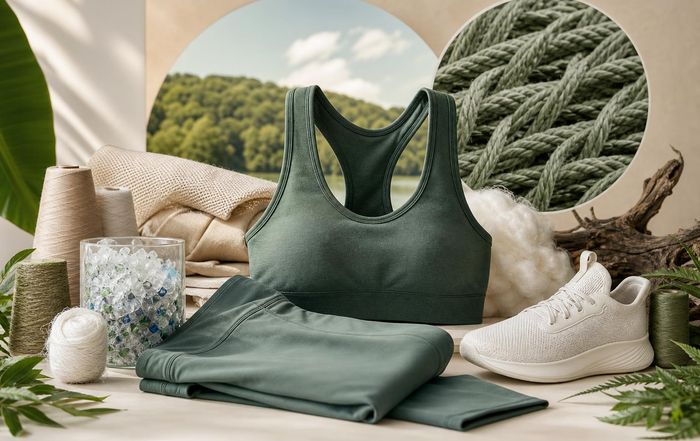
What Sustainable Activewear Materials Actually Offer
Sustainable activewear is no longer a niche idea reserved for eco-branded yoga pants. Major sports labels, boutique athleisure brands, and outdoor companies now promote "green" leggings, "ocean plastic" sneakers, and "plant-based" performance fabrics. Yet the marketing often moves faster than the science, leaving many people unsure what these materials genuinely deliver in terms of performance, durability, and environmental benefit.
This article looks beyond slogans to examine what common sustainable activewear materials actually offer: how they perform in real workouts, what their environmental trade-offs look like across the lifecycle, and where the biggest gaps remain. The focus is on materials that are already widely used or rapidly scaling, rather than experimental fibers that are still in the lab.
Why materials matter in performance and sustainability
For activewear, fabric is the core technology. It determines how well clothing manages sweat, stretches, resists odor, and holds its shape. At the same time, textiles are a major environmental pressure point. According to the UN Environment Programme, fashion is responsible for a significant share of global carbon emissions and wastewater, while synthetic fibers shed microplastics that end up in oceans and food chains. Polyester, nylon, and elastane dominate performance apparel because they are cheap, strong, and versatile, but they are derived from fossil fuels and can persist in the environment for decades.
Sustainable materials aim to reduce this impact in several ways: cutting fossil fuel use, lowering water and chemical consumption, improving recyclability, and reducing waste. However, there is no single "best" fabric. A recycled polyester legging may have a lower carbon footprint than a conventional cotton one, but still shed microfibers in the wash. A plant-based fiber may biodegrade more easily, yet require more land and water to grow. For people who care about both fitness and the planet, the relevant questions are: how does the material perform in training, and what does it actually change in the environmental footprint of your gear?
For athletes and exercisers building a more sustainable routine, this means thinking about the full system: the fabric, how long the garment lasts, how often it's washed, and what happens at the end of its life. It also means seeing through "green" buzzwords and focusing on verifiable claims, such as certifications from organizations like OEKO-TEX or bluesign, which assess chemicals and environmental standards in textile production.
Recycled polyester and nylon: familiar performance with a smaller footprint
Recycled synthetics are currently the backbone of "sustainable" performance apparel. Most brands rely on recycled polyester (rPET) and, to a lesser extent, recycled nylon, because they closely mimic the stretch, durability, and moisture management of conventional synthetics while reducing demand for virgin fossil fuels.
Recycled polyester is typically made from post-consumer plastic bottles or textile waste that are cleaned, shredded, and re-melted into new fibers. According to Textile Exchange, using recycled polyester can significantly cut greenhouse gas emissions and energy use compared with virgin polyester production, while also diverting plastic from landfills. Recycled nylon, often made from industrial waste or recovered fishing nets, offers similar benefits, although the supply is more limited and the process more complex.
From a performance perspective, most people will not notice a difference between high-quality recycled polyester or nylon and their virgin counterparts. These fabrics still deliver the sweat-wicking, fast-drying, and abrasion-resistant properties that make them staples in running shorts, compression tops, and training leggings. Many of the same advanced knit structures and finishes used in traditional fitness apparel can be applied to recycled yarns with minimal compromise.
However, recycled synthetics do not solve everything. They still shed microfibers during washing, which can contribute to microplastic pollution. Organizations such as The Ocean Cleanup and academic research groups have highlighted the persistence of these particles in marine environments. Additionally, recycling itself requires energy and chemicals, and not all recycled fibers are created equal; closed-loop textile-to-textile recycling is generally preferable to downcycling that locks in impurities and limits future recyclability. For activewear buyers, recycled polyester and nylon are usually a better choice than virgin synthetics, but they should be seen as a step in the right direction, not an end point.
Organic and Better Cotton: softer impact, mixed performance
Cotton is not the first fabric most people associate with high-performance sport, but it remains common in gym T-shirts, casual athleisure, and hybrid pieces that blur the line between lifestyle and training. Conventional cotton farming can be water-intensive and heavily reliant on pesticides. In response, more brands now use organic cotton or cotton sourced through initiatives like the Better Cotton program.
Organic cotton is grown without synthetic pesticides and fertilizers, and certified by organizations such as Global Organic Textile Standard (GOTS). This can reduce chemical pollution and improve soil health, and in some regions may support better working conditions. Better Cotton focuses on more sustainable practices and farmer training rather than a strict organic standard. According to Better Cotton, its programs aim to reduce water use, improve soil management, and promote safer pesticide practices across large volumes of cotton production.
From a workout perspective, cotton's biggest drawback is its tendency to absorb and hold moisture. It can feel heavy and clammy in high-intensity sessions, especially compared with synthetic or blended fabrics designed for moisture wicking. For low-intensity activities like yoga, walking, or strength sessions with long rest periods, organic cotton can be comfortable, breathable, and pleasant against the skin. Many brands blend organic cotton with recycled polyester or elastane to improve stretch and drying time.
The environmental benefit of sustainable cotton depends heavily on local conditions, farming practices, and how the fabric is processed and dyed. While organic and Better Cotton usually have a lighter environmental footprint than conventional cotton, they are not automatically "low impact." Water use may still be significant, and cotton garments often have shorter technical lifespans than synthetic performance gear. When choosing cotton-based activewear, it is worth prioritizing durability and multi-use versatility so that garments are worn frequently rather than sitting in a drawer.
TENCEL, modal, and other cellulosic fibers: plant-based comfort with caveats
Regenerated cellulosic fibers such as TENCEL Lyocell, modal, and viscose are derived from wood pulp. They are often marketed as "eco-friendly" because they are plant-based and can be produced in closed-loop systems where solvents are recovered and reused. Companies like Lenzing, which produces TENCEL, highlight lower water and energy use compared with conventional cotton, and the use of certified sustainable wood sources.
In practice, these fibers offer a soft, smooth hand-feel and excellent breathability, making them popular in yoga wear, base layers, and hybrid wellness pieces designed for both studio and street. TENCEL Lyocell, in particular, tends to manage moisture better than traditional viscose and can be blended with recycled polyester or elastane to improve stretch and resilience. For activities such as Pilates, barre, or light gym sessions, TENCEL-based fabrics can feel cooler and less clingy than cotton, while still offering a natural feel.
The environmental story is more nuanced. Not all viscose or modal is produced under strict environmental standards. Historically, viscose production has been linked with hazardous chemical use and deforestation in some regions. Certification schemes like FSC (Forest Stewardship Council) for wood sourcing and EU Ecolabel or bluesign for processing help distinguish more responsible producers from the rest. When brands specify TENCEL Lyocell or other third-party certified fibers, it is usually a positive sign.
From a performance angle, cellulosic fibers are not yet a complete replacement for high-intensity training synthetics. They can absorb more moisture and may feel heavy in very sweaty sessions unless engineered in specific knits or blends. They also tend to be less abrasion-resistant than polyester and nylon, which matters for high-friction activities or frequent machine washing. For many people, the sweet spot is using these fibers in low- to medium-intensity activities, rest days, and travel, where comfort and breathability are the top priorities.
Bamboo, hemp, and other plant fibers: promise and pitfalls
Bamboo and hemp often appear in marketing as "natural," "antibacterial," or "eco-superior" fibers. The reality is more complex. Bamboo viscose is not simply shredded bamboo spun into yarn; in most cases, it is a chemically processed regenerated fiber similar to other viscose. The US Federal Trade Commission has taken action against misleading "bamboo" claims, emphasizing that many such products should be labeled as rayon or viscose rather than pure bamboo. The sustainability of bamboo fabrics depends on how the raw material is grown and, crucially, how it is processed.
When responsibly produced, bamboo viscose can be soft, breathable, and comfortable for low-intensity movement and wellness-focused clothing. However, claims of inherent antibacterial properties are often overstated or unsupported once the fiber has been heavily processed. For performance training, bamboo-based fabrics usually need to be blended with synthetics to achieve sufficient elasticity and moisture management.
Hemp, by contrast, is a traditional bast fiber that can be grown with relatively low pesticide and water requirements compared with conventional cotton, according to organizations like Textile Exchange and some agricultural studies. Modern hemp fabrics have become much softer than older, coarse versions, and blends of hemp with organic cotton or TENCEL can offer a balance of durability, breathability, and comfort. For casual activewear, outdoor lifestyle pieces, and recovery wear, hemp blends can be a strong option.
The limitation for both bamboo and hemp is high-intensity performance. Pure plant-based fabrics generally struggle to match the stretch, quick-dry behavior, and shape retention of synthetic or high-tech blends. They excel in slower, more mindful movement, travel, and everyday wear, where their natural feel and lower-impact cultivation can be fully appreciated.
Biobased synthetics and emerging materials: early-stage but growing
A newer wave of sustainable activewear materials comes from biobased synthetics and lab-driven innovations. These include partially biobased polyesters made from plant-derived feedstocks, such as bio-PET, and alternative fibers like polylactic acid (PLA) derived from corn or sugarcane. Large chemical companies and sports brands have partnered to produce fibers and foams containing renewable content, marketed as reducing reliance on fossil fuels.
From a performance standpoint, many of these biobased synthetics are designed to behave similarly to conventional polyester or nylon, offering stretch, durability, and moisture management suitable for running, training, and field sports. However, they often remain chemically similar to traditional plastics, meaning they may not biodegrade readily in real-world conditions and can still shed microfibers.
Beyond biobased versions of existing plastics, there is also work on next-generation fibers made from agricultural residues, algae, or mycelium (fungi). Startups and research institutions, some supported by organizations like Fashion for Good, are experimenting with ways to turn waste streams into usable performance textiles. At present, most of these materials appear in limited runs or specific product lines rather than mainstream training gear.
For people choosing activewear today, the key is to treat these innovations as promising but not automatically superior. Look for transparent information about what portion of the fiber is biobased, how the material is processed, and whether there are credible third-party certifications or lifecycle assessments. Marketing terms alone are not enough.
Elastane (spandex): the stretch problem no one has solved yet
Almost all modern activewear relies on elastane (spandex/LYCRA) for stretch and recovery. Even garments advertised as "natural" or "plant-based" often contain a small percentage of elastane to hold their shape. Elastane is a petroleum-derived synthetic that is difficult to recycle and can compromise the recyclability of blended fabrics.
From a performance angle, elastane is hard to replace. It delivers high stretch with excellent recovery, enabling compression, support, and close-to-body fits that many athletes rely on. Without it, leggings would bag out at the knees, sports bras would lose support quickly, and fitted tops would feel restrictive or fail to move with the body.
Several companies and research projects are exploring biobased elastane alternatives or mechanical stretch constructions that reduce the need for spandex, but these remain limited in availability. Some brands use clever knitting techniques with high-stretch polyesters or nylons to achieve partial recovery without elastane, but this approach does not yet match the performance of conventional stretch fabrics in all scenarios.
For consumers, the practical takeaway is that elastane is currently a necessary compromise in most high-performance activewear. Choosing products that balance stretch with durability-so they last many seasons of training-can be more impactful than focusing solely on eliminating elastane altogether, which is rarely realistic in compression-heavy categories such as leggings and sports bras.
Microfibers, washing, and end-of-life: where impact often hides
Even the most thoughtfully chosen fabric can cause environmental harm if it sheds microfibers or ends up in landfill after a short life. Synthetic and blended fabrics, including recycled ones, release tiny fibers during washing that pass through wastewater systems and accumulate in rivers and oceans. Research referenced by organizations like the International Union for Conservation of Nature (IUCN) suggests that synthetic textiles are a notable contributor to microplastic pollution.
There are practical ways to reduce this impact. Washing activewear in cooler water, using gentler cycles, and air-drying where possible can reduce shedding and energy use while extending garment life. Specialized laundry bags and filters are designed to capture microfibers before they enter wastewater systems, though their efficacy varies. Some brands are starting to promote these tools alongside their sustainable collections.
End-of-life is another critical piece. Most activewear is made from complex blends that are difficult to recycle. Mechanical recycling often downgrades fibers, while chemical recycling is still emerging and not widely accessible. Initiatives like clothing take-back programs, resale platforms, and fiber-to-fiber recycling pilots are growing, but infrastructure remains patchy and region-dependent. Organizations such as the Ellen MacArthur Foundation advocate for circular design principles-making garments easier to disassemble and recycle-but many performance products have not yet caught up.
In practical terms, one of the most sustainable choices is to buy fewer, better pieces and keep them in use longer. Selecting versatile items that work across training, casual wear, and travel, repairing minor damage instead of replacing, and donating or reselling usable items can all significantly reduce the per-wear footprint of each garment.
How to read labels and claims without getting lost in greenwash
With so many materials and claims, it can be difficult to distinguish genuine progress from marketing gloss. Several strategies can help activewear buyers make more informed decisions without needing to become textile experts.
First, look for specific fiber names and percentages rather than vague terms like "eco fabric." Labels that identify recycled polyester, recycled nylon, TENCEL Lyocell, organic cotton, or hemp give more concrete information than generic "sustainable blend" language. When brands disclose the exact composition and origin of their fibers, it's easier to understand what you are getting.
Second, pay attention to third-party certifications. Standards such as GOTS for organic textiles, OEKO-TEX STANDARD 100 for harmful substance testing, bluesign for responsible chemical and resource use, and Fair Trade for certain social criteria add some independent oversight. While no certification is perfect, they are generally more reliable than self-declared claims. Many of these organizations, including OEKO-TEX and bluesign, outline their criteria publicly so consumers can see what is actually being evaluated.
Third, consider the brand's broader behavior, not just one "green" capsule collection. Does the company publish sustainability reports or targets? Are they aligned with initiatives like the Science Based Targets initiative (SBTi) or reporting through frameworks promoted by groups such as the Sustainable Apparel Coalition? Brands that treat sustainability as a system-wide issue-covering materials, manufacturing, transport, and end-of-life-are more likely to follow through beyond marketing campaigns.
Finally, remember that material choice is only one part of the picture. Fit, comfort, and durability all influence how often you will actually wear a garment. A slightly less "perfect" material that you use three times a week for years may have a lower effective footprint per wear than a technically superior fiber that stays in your drawer.
Where sustainable activewear materials stand now
When all the evidence is weighed, sustainable activewear materials offer meaningful but partial improvements rather than a clean break from the environmental challenges of sportswear.
Recycled polyester and nylon substantially reduce reliance on virgin fossil fuels and often cut emissions, while preserving the performance characteristics athletes expect. Organic and Better Cotton, along with hemp and responsibly produced cellulosic fibers like TENCEL Lyocell, can lower chemical and water impacts and provide excellent comfort for low- to medium-intensity activities. Biobased synthetics and next-generation fibers show real promise but are still maturing, and elastane remains a necessary but problematic ingredient in most stretch garments.
For individuals who care about both training and the planet, the most effective strategy combines smarter material choices with behavior: choosing verified recycled or responsibly sourced fibers where they make sense, prioritizing durable and versatile designs, washing and caring for garments to extend their life, and supporting brands that are transparent about their impacts. Complementing that with broader lifestyle choices-such as integrating more active transport, following balanced nutrition, and focusing on overall health and wellness-can help align fitness goals with environmental values.
The perfect performance fabric that is low-impact, fully circular, and widely available does not yet exist. But the shift toward more responsible materials is real, and informed choices from athletes and everyday exercisers can help push the industry toward solutions that genuinely perform-for bodies in motion and for the environment they move through.