

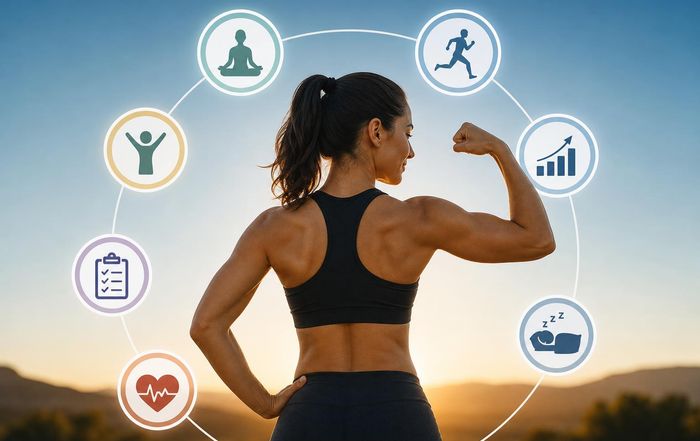
How to Measure Fitness Gains Beyond Weight Loss
Many people start exercising with one goal in mind: watching the number on the scale go down. When that number stalls-or even goes up-it can feel like nothing is working, even if your health and performance are improving dramatically. Focusing only on body weight hides most of the meaningful changes that training creates in strength, endurance, body composition, and overall well-being.
This guide looks at practical, science-backed ways to track fitness progress that have nothing to do with what the bathroom scale says. It blends lab-style concepts with simple tools you can use at home or in the gym, whether your main interest is fitness, sports performance, or long-term health.
Why the Scale Is a Poor Solo Scoreboard
Body weight is only one data point, and it is a noisy one. Daily fluctuations in hydration, glycogen (stored carbohydrate), digestion, and hormones can easily swing weight by 1-2 kg (2-4 lb) without any real change in fat or muscle. Someone beginning resistance training may gain lean mass while losing fat, resulting in minimal net change on the scale, even as their body composition and health markers improve.
Health agencies such as the World Health Organization and U.S. Centers for Disease Control and Prevention emphasize that cardiometabolic risk relates more to body composition, fitness level, and waist circumference than to weight alone. You can explore their broader guidance on physical activity and chronic disease risk at WHO and CDC. Research summarized by organizations like the American Heart Association and American College of Sports Medicine shows that higher cardiorespiratory fitness and muscular strength are associated with lower mortality risk, independent of body weight; in other words, being "fit and heavy" can be healthier than "thin and unfit."
If the scale is your only metric, you are likely to miss improvements in:
Strength and power
Endurance and recovery
Mobility and pain levels
Blood pressure, blood lipids, and blood sugar control
Sleep quality, mood, and energy
The rest of this article focuses on how to measure those changes in a structured way.
Performance Metrics: What Your Body Can Do
Performance is one of the clearest indicators that training is working. Unlike weight, it is directly tied to the purpose of exercise: improving what your body can do in daily life, sport, or work.
Strength and power
For people doing resistance training, tracking strength is essential. Simple metrics include:
Repetition performance at a fixed load: Choose a few core lifts-such as the squat, deadlift, bench press, row, or overhead press-and record how many repetitions you can complete with good technique at a given weight. If you can perform more reps at the same load over time, your muscular endurance and strength are improving even if you never test a one-rep max.
Estimated 1RM (one-repetition maximum): If you train with barbells or heavy dumbbells and have good technique, you can occasionally estimate your 1RM using a submaximal set (for example, the heaviest weight you can lift for 3-5 reps) and a standard formula. Organizations like the National Strength and Conditioning Association provide widely used methods and guidelines for safe testing.
Power and speed: For athletes and power-oriented trainees, metrics such as vertical jump height, broad jump distance, sprint times over 10-40 m, or the time needed to complete a set number of kettlebell swings can reveal improvements in neuromuscular performance.
These indicators tend to improve rapidly in the first months of training, especially for beginners, making them a motivating complement to slower-changing measures like body composition. Logging strength sessions in a simple training diary or app is often enough to see clear trends week to week. Readers interested in structured strength programs can explore the training and physical sections for more ideas.
Cardiovascular endurance
Cardiorespiratory fitness is one of the strongest predictors of longevity and disease risk. While laboratory VO₂ max testing is the gold standard, several field tests give useful, repeatable indicators:
Time-trial tests: Record how long it takes you to cover a fixed distance-such as 1.5 km or 1 mile running, 5 km cycling, or 500 m swimming-at maximal sustainable effort. Retest every 6-8 weeks under similar conditions.
Distance in a fixed time: The classic 12-minute Cooper run test, shuttle runs, or a 30-minute bike test can all estimate aerobic fitness. Protocols and norms are available from organizations like the American College of Sports Medicine.
Pace at a given heart rate: If you use a heart-rate monitor or sports watch, note the pace you can maintain at a moderate heart rate (for example, 70% of your estimated max). If your pace improves at the same heart rate, your efficiency and aerobic capacity have increased.
Recovery heart rate: After a steady-state run, ride, or circuit, track how quickly your heart rate drops in the first 1-2 minutes of rest. Faster recovery generally reflects better cardiovascular conditioning.
These metrics are especially relevant for people focused on running, cycling, or team sports. They also matter for everyday fitness; climbing stairs without gasping is a practical expression of improved VO₂ max. For more on endurance-focused training and events, the sports and events sections often cover race prep and conditioning strategies.
Functional capacity and daily-life performance
Not everyone cares about barbell numbers or 5K times. For many, the most meaningful changes are functional: carrying groceries more easily, lifting children without back pain, or hiking for hours without feeling wrecked. You can turn these into trackable metrics by defining simple, repeatable tests:
How many push-ups, body-weight squats, or chair-stands can you perform in 30-60 seconds?
How long can you hold a plank, side plank, or wall sit?
Can you walk briskly for 30 minutes without stopping, and how does your perceived exertion change over time?
Can you climb a specific staircase at work or home faster or with less breathlessness than a month ago?
These low-tech measures are used in clinical and community fitness settings worldwide because they correlate reasonably well with overall physical function, especially in older adults. Organizations such as the National Institute on Aging provide examples of simple mobility and strength tests that can be adapted for home use.
Body Composition and Circumference: Shape Over Scale
While weight alone is blunt, tracking how your body is partitioned-fat mass, lean mass, and where fat is stored-offers a more accurate picture of health and progress.
Waist circumference and waist-to-height ratio
Abdominal fat is more strongly linked to cardiometabolic risk than overall body weight. Measuring waist circumference at the level of the navel or just above the hip bones, using a flexible tape, is an accessible way to monitor central adiposity. Health authorities including the World Obesity Federation and NHS highlight waist measurements and waist-to-height ratio (waist divided by height) as useful indicators of risk.
From a progress standpoint, you might see your waist shrink even when the scale is stable, especially if you are gaining muscle in your legs, back, and shoulders. Recording waist, hip, and possibly thigh and arm circumferences every 4-6 weeks can reveal meaningful changes in body shape that weight alone obscures.
Skinfolds, smart scales, and more advanced tools
More detailed body-composition methods include:
Skinfold calipers: When used by a trained practitioner, skinfold measurements at multiple sites can estimate body-fat percentage. Accuracy depends heavily on technique, so consistency matters more than the exact number.
Bioelectrical impedance analysis (BIA) scales: Many home "smart scales" estimate fat and muscle mass using BIA. Single-frequency devices are imperfect and influenced by hydration status, but they can still show trends over time if you measure under similar conditions (for example, first thing in the morning).
DEXA, Bod Pod, and other lab methods: Dual-energy X-ray absorptiometry (DEXA) and air-displacement plethysmography (Bod Pod) are more precise but require specialized facilities. These are most useful if you want a periodic, in-depth snapshot rather than frequent tracking.
Professional bodies such as the International Society for the Advancement of Kinanthropometry offer technical standards for anthropometric assessment. For everyday trainees, the key is not chasing perfect accuracy but using the same method consistently and interpreting trends in context with performance, health, and how you feel.
Readers interested in how nutrition choices affect body composition can find complementary coverage in the nutrition and wellness sections.
Health Markers: Inside-Out Progress
Fitness is fundamentally about health, and many of the most important gains happen internally. These changes are not visible in the mirror but show up in lab results and clinical measures.
Cardiometabolic indicators
Regular physical activity and improved diet can positively influence:
Blood pressure: Aerobic and resistance training can lower both systolic and diastolic blood pressure, especially in people with hypertension. Guidelines from bodies like the American Heart Association emphasize lifestyle interventions, including exercise, as a first-line strategy.
Blood lipids: Exercise and dietary changes can reduce LDL cholesterol and triglycerides while increasing or maintaining HDL cholesterol. Tracking a fasting lipid profile every 6-12 months gives a more meaningful picture of cardiovascular risk than weight alone.
Blood glucose and insulin sensitivity: For people with prediabetes or type 2 diabetes, regular training can improve fasting glucose, HbA1c, and insulin sensitivity. Organizations such as Diabetes UK and the American Diabetes Association highlight physical activity as a core part of management and prevention.
Discussing these tests with a healthcare professional ensures they are interpreted in light of your age, medical history, and medications. For many people, seeing quantifiable improvements in health markers can be more motivating than chasing a target weight.
Resting heart rate and heart-rate variability
Two non-invasive, at-home indicators of fitness and recovery are:
Resting heart rate (RHR): As aerobic fitness improves, RHR often decreases because the heart becomes more efficient. Measuring your pulse for 60 seconds after waking and before getting out of bed, several times per week, can reveal gradual trends.
Heart-rate variability (HRV): HRV reflects the variation in time between heartbeats and is influenced by autonomic nervous system balance. Higher HRV (within your personal normal range) is often associated with better recovery and resilience to stress. Many wearables estimate HRV, though accuracy varies. Organizations like Harvard Health Publishing offer accessible explanations of what HRV means and its limitations.
These indicators are not perfect and can be affected by stress, illness, sleep, and caffeine, but over weeks and months they can complement other signs of progress.
Movement Quality: Mobility, Stability, and Pain
Moving better is a major fitness gain, particularly for people who start training with joint stiffness, back pain, or a history of injuries. Improvements in movement quality can reduce injury risk and make both exercise and daily life more comfortable.
Range of motion and flexibility
Simple mobility checks can be turned into repeatable tests:
How far can you reach toward your toes from standing or sitting?
Can you raise your arms overhead without arching your lower back?
How deep can you squat while keeping your heels on the ground and your back relatively upright?
Taking occasional photos or short videos from the side and front while performing these movements allows you to compare technique and range of motion over time. Many physiotherapy and sports-medicine organizations, such as the Chartered Society of Physiotherapy, provide guidance on safe mobility work and common movement limitations.
Balance, coordination, and stability
Balance and stability are crucial for falls prevention, athletic performance, and joint health. Tests might include:
Single-leg balance time with eyes open or closed
Single-leg squat depth and control
Ability to perform coordinated movements like lunges with rotation or step-downs without pain or wobbling
Tracking these qualities is especially important for older adults and for anyone returning from injury. If pain or instability is persistent, consulting a qualified physiotherapist or sports medicine professional is recommended; they can use structured assessments like the Functional Movement Screen and design targeted interventions.
Psychological and Lifestyle Gains: The Often-Ignored Wins
Exercise is one of the most effective non-pharmacological tools for mental health and quality of life. Large bodies of research, summarized by organizations like the World Psychiatric Association and public-health agencies, show that regular physical activity can reduce symptoms of mild to moderate depression and anxiety, improve sleep, and enhance cognitive function.
Mood, stress, and mental health
While mood is subjective, you can still track it systematically:
Use a simple 1-10 rating for mood, stress, and anxiety at the end of each day.
Note in a training log how you feel before and after workouts.
Pay attention to patterns: do regular sessions correlate with feeling calmer, more confident, or more focused?
For some, these changes are the most meaningful outcome of a training program, even if external appearance changes slowly. Mental-health organizations, such as Mind and the National Alliance on Mental Illness, increasingly highlight movement as part of holistic care.
Sleep quality and energy
Improved sleep is another key sign of progress. You might observe:
Falling asleep faster and waking less during the night
Waking feeling more refreshed
Needing less caffeine to function
Experiencing fewer afternoon energy crashes
Sleep-tracking devices and apps can provide data, but even a simple sleep diary noting bedtimes, wake times, and perceived sleep quality (1-5) can make changes visible. Better sleep, in turn, supports training adaptations, recovery, and appetite regulation, creating a virtuous cycle.
Building a Personal Progress Dashboard
With so many possible metrics, the goal is not to track everything but to create a simple "dashboard" that reflects what matters most to you. A practical framework is to select a small number of indicators from each of these categories:
Performance:
One or two strength measures (for example, squat reps at a fixed load, push-ups in 60 seconds)
One endurance measure (for example, 1.5 km run time, 20-minute bike distance)
Body and health:
Waist circumference and possibly hip circumference
Periodic health markers (blood pressure, lipids, glucose) through your healthcare provider
Function and movement:
One mobility or balance test (for example, plank hold time, single-leg balance)
A daily-life benchmark (for example, time to climb a familiar set of stairs, ease of carrying shopping bags)
Well-being:
Brief mood and energy ratings
Sleep duration and perceived quality
Record baseline values before or early in a new program, then retest at regular intervals: performance and subjective measures every 2-4 weeks, circumference measures monthly, and lab-based health markers as advised by your clinician. Combining this data with training logs and any guidance from coaches or health professionals gives a rounded picture of progress that goes far beyond the scale.
For fans building longer-term training and wellness plans, related daily reporting across fitness, wellness, health, lifestyle, and even technology (for wearables and apps) can help refine which metrics to prioritize and how to track them efficiently.
Reframing Success: From Weight Loss to Capability
Shifting focus from "What do I weigh?" to "What can I do, how do I feel, and how healthy am I?" changes the emotional tone of training. It reduces the boom-and-bust cycles driven by daily weigh-ins and instead rewards consistency, skill development, and sustainable habits. Over time, many people find that when they prioritize performance, movement quality, and health markers, body composition tends to improve as a by-product.
By building a personal progress dashboard that incorporates performance metrics, body-composition trends, health indicators, movement quality, and psychological well-being, you create a richer, more accurate story of your fitness journey. The scale can still play a role, but it no longer gets to be the only-or even the main-judge of how far you have come.