

How Spain's Urban Parks Turn Cities Into Free Outdoor Gyms
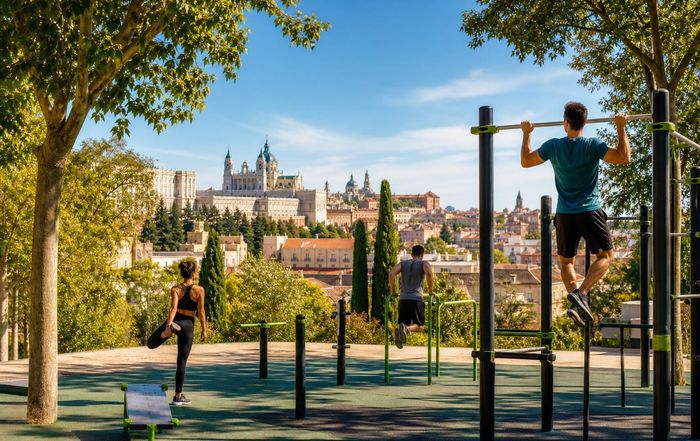
Across Spain, a morning stroll through a neighborhood park often reveals more than dog walkers and café-bound commuters. It is increasingly common to see older adults cycling on low-impact machines, teenagers experimenting with calisthenics on pull-up bars, and runners pausing at bodyweight stations mid-route. Over the past two decades, Spanish cities have quietly transformed many of their green spaces into open-air fitness zones, blending recreation, public health, and social life in a way that feels distinctly Mediterranean.
Come and find out how Spain's urban parks support free outdoor workouts: the infrastructure cities are installing, how residents actually use it, what the research says about health benefits, and what other countries might learn from this large-scale experiment in everyday movement.
From paseo to "street fitness": how the trend took hold
Spain has long had a strong culture of walking and socializing outdoors. The evening paseo-a leisurely stroll through plazas and promenades-is a familiar ritual in cities from Madrid to Seville. Municipal planners and public health officials have built on this tradition, seeing parks as natural platforms to promote physical activity without the barriers of gym fees or memberships.
Beginning in the early 2000s, many city councils began installing what are often called "parques biosaludables" (bio-healthy parks) or "gimnasios al aire libre" (outdoor gyms). These are clusters of simple, durable machines designed primarily for low- to moderate-intensity exercise: elliptical-style steppers, arm rotation wheels, leg presses, and balance boards. The trend accelerated after the 2008 financial crisis, when budgets were tight and residents were less able to pay for private fitness facilities. Outdoor gyms offered a relatively low-cost way for municipalities to promote health while visibly investing in neighborhoods.
At the same time, Spain's running and cycling boom, the spread of calisthenics and street workout culture, and interest in holistic wellness created demand for more varied movement spaces. Cities responded by integrating multi-use fitness areas into existing parks, coastal promenades, and riverfront redevelopments. These now sit alongside traditional playgrounds, football pitches, and walking paths, supporting everything from light rehabilitation exercises to demanding strength workouts, and complementing more structured training covered in resources like the site's own training and physical fitness coverage.
What Spain's outdoor fitness infrastructure actually looks like
A walk through major Spanish cities illustrates the variety and density of outdoor workout options. In Madrid, parks such as Madrid Río and Parque Juan Carlos I combine long running and cycling routes with calisthenics areas, multi-use courts, and senior-focused equipment clusters. Barcelona integrates fitness stations along its beachfront promenades and in neighborhood parks like Parc de la Ciutadella, while Valencia's Jardín del Turia, a former riverbed turned linear park, stretches several kilometers and is dotted with workout zones, football fields, and bike lanes.
Most of these spaces share key features. First, they are free and open access, with no gates or check-ins, making them accessible to people who might never consider a conventional gym. Second, equipment is generally low-tech and weather resistant, designed to withstand heavy use and high UV exposure. Third, many parks deliberately group equipment into zones serving different needs: strength-focused bars and benches, cardio-oriented steppers and cycles, and mobility-focused stretches with parallel bars and balance platforms. This zoning encourages people to build informal circuits similar to structured workouts described in many fitness programs.
Cities also increasingly integrate multimodal paths that support running, brisk walking, and cycling, often with distance markers. These routes turn parks into natural training grounds for road races and triathlons, while still serving casual walkers. In coastal areas, boardwalks and promenades effectively function as long, outdoor treadmills, especially in the early morning and evening when temperatures are milder.
Designed for all ages: from seniors to street athletes
One of the most distinctive aspects of Spain's park-based fitness strategy is its deliberate focus on older adults. Many municipalities explicitly frame parques biosaludables as health resources for people over 60, aiming to combat sedentary lifestyles, maintain functional independence, and reduce healthcare costs associated with chronic disease. Equipment often includes illustrated panels showing simple exercises for joint mobility, balance, and gentle strength work, which align with recommendations from organizations such as the World Health Organization and World Physiotherapy for aging populations.
Research from Spanish universities, including studies disseminated through platforms like PubMed and SciELO, has examined how older adults use these parks. Findings suggest that while some equipment is underused or misunderstood, many seniors appreciate the social and motivational aspects of exercising in a shared space. Regular users often report improved balance, mobility, and mood, especially when workouts are combined with walking and light stretching.
At the other end of the spectrum, Spain has seen a rise in calisthenics parks-areas with pull-up bars, dip bars, monkey bars, and gymnastic rings-popular with teens and young adults. These spaces often emerge from collaboration between city councils and local street workout associations. They support demanding bodyweight training that can rival indoor strength sessions, offering a free alternative for those who prefer outdoor, skill-based movement. The culture around these parks is often community-led, with informal coaching, shared routines, and social media groups.
Between these two groups lies a broad middle: recreational runners, parents combining playtime with exercise, and office workers squeezing in short sessions before or after work. For many, these parks serve as gateways to more structured fitness habits, complementing interests in health, wellness, and nutrition that they may explore elsewhere.
The health case: what the evidence says
Spain's emphasis on active parks aligns with global guidance from bodies such as the World Health Organization, which recommends at least 150-300 minutes of moderate-intensity aerobic activity per week for adults, alongside muscle-strengthening activities on two or more days. Many people struggle to meet these targets, especially in urban environments where time, money, and access to facilities can be limiting. By embedding exercise opportunities in everyday public spaces, cities lower the activation energy required to move more.
The Spanish Ministry of Health and regional health departments have highlighted physical inactivity as a major risk factor for non-communicable diseases such as cardiovascular disease, type 2 diabetes, and some cancers. National surveys show that a significant share of adults and adolescents do not meet recommended activity levels, despite Spain's generally favorable climate. Urban parks with integrated workout zones are one of several strategies-alongside active transport, school programs, and sports promotion-aimed at closing this gap.
International research, including work catalogued by the Centers for Disease Control and Prevention and Public Health England (now part of the UK Health Security Agency and Office for Health Improvement and Disparities), has consistently linked access to green space and recreational facilities with higher physical activity levels and better mental health. Studies focusing specifically on outdoor gyms suggest that their presence can increase park use and provide an entry point for people who might be intimidated by indoor fitness environments, though long-term adherence varies.
At the same time, some evaluations point out that simply installing equipment does not guarantee widespread use. Signage quality, perceived safety, maintenance, and cultural norms all influence whether residents feel these spaces "belong" to them. Spanish cities that pair infrastructure with guided sessions, community programs, or health campaigns often see better engagement than those that rely on passive use alone.
Climate, culture, and the appeal of exercising outside
Spain's climate is a major asset for outdoor fitness, but it also shapes how and when parks are used. In much of the country, mild winters support year-round activity, while hot summers push workouts toward early mornings and late evenings. Shaded areas, tree cover, and water features become more than aesthetic choices; they are practical design tools that determine whether a park feels usable for exercise in July or August.
Culturally, outdoor life is deeply embedded in Spanish cities. Terraces, plazas, and pedestrianized streets encourage lingering outside, and this extends naturally into physical activity. For many residents, a run along the river or a strength session in a park is not just a workout; it is a social and sensory experience, intertwined with everyday routines like stopping for coffee or meeting friends. This social dimension is supported by the way parks are laid out: equipment is often placed near benches, playgrounds, and walking paths, allowing family members of different ages to be active in parallel.
The Mediterranean diet and lifestyle-frequently highlighted by organizations such as Harvard T.H. Chan School of Public Health and Mayo Clinic-are often cited as factors in Spain's relatively high life expectancy. While diet, healthcare, and social structures all play roles, the ease of everyday movement through walking, cycling, and park-based exercise is a crucial piece of the puzzle. Urban parks that support free workouts effectively extend this lifestyle into denser, more modern parts of cities that might otherwise feel disconnected from traditional rhythms.
Design details that make outdoor workouts actually usable
Not all outdoor gyms function equally well. Observations from Spanish cities and research from planning and public health fields suggest several design features that strongly influence whether people actually use park-based fitness equipment. First, visibility and proximity matter: equipment placed in well-trafficked, open areas near entrances or main paths tends to attract more users than isolated clusters. People often feel safer and more comfortable exercising where they can see others and be seen.
Second, clear instructions are critical, especially for older adults or beginners. Many Spanish parks now include pictograms and short text explaining how to use each machine and which muscle groups it targets, sometimes with suggested repetition ranges. Simple, intuitive movements also help: stepper-style machines, arm wheels, and seated leg presses are easier for novices than complex or unstable apparatus.
Third, surface quality and accessibility determine who can reach and safely use the space. Paved or compacted surfaces, ramps, and enough clearance around machines are important for people with mobility challenges, wheelchairs, or walking aids. Some municipalities have begun integrating these considerations more systematically, aligning with inclusive design principles promoted by bodies like UN-Habitat.
Fourth, maintenance is a recurring challenge. Rust, broken parts, or missing bolts can quickly undermine confidence, especially for seniors. Municipalities that schedule regular inspections and repairs-and that respond visibly to reported issues-create a virtuous cycle where residents are more likely to adopt and defend these spaces. Conversely, neglected equipment can become symbolic of disinvestment, discouraging use even when some machines remain functional.
Finally, integration with broader park functions helps ensure that fitness zones do not feel like isolated add-ons. When workout areas sit alongside playgrounds, dog parks, picnic lawns, and sports courts, they benefit from shared foot traffic and a sense that exercise is just one of many normal activities happening in the space. This integrated approach mirrors how many people think about health: not as a separate, specialized pursuit, but as part of daily life, alongside work, family, and leisure.
How people actually train in Spain's parks
Observers of Spanish parks often note a wide range of training styles. Some individuals follow structured routines that would be familiar to anyone reading fitness or training guides: warm-up walks, intervals on step machines, sets of push-ups and pull-ups, and cool-down stretches. Others use equipment more casually, combining a few movements with socializing or using machines as a way to stay active while supervising children.
Runners frequently incorporate park equipment into circuit training: a loop around the park, followed by a short strength sequence at a fitness station, then another loop. Calisthenics enthusiasts may focus on skill progressions such as muscle-ups, front levers, or handstands, using bars and open space. Older adults often favor rhythmic, continuous movements on low-impact machines, sometimes in small groups led informally by a more experienced peer.
One notable pattern is the blending of formal and informal guidance. While some cities organize free group classes or partner with local health centers for supervised sessions, much day-to-day learning happens peer-to-peer. Regular users demonstrate exercises, correct technique, or encourage newcomers, creating micro-communities. This social reinforcement can be particularly powerful for populations who might feel out of place in commercial gyms, including some older adults, immigrants, and people returning to exercise after long breaks or illness.
For individuals interested in building a balanced routine entirely around park facilities, the basic elements are typically available: cardio via walking, running, or cycling routes; strength through bodyweight stations and simple resistance machines; mobility and balance via open grass, benches, and low bars. When combined with attention to nutrition and recovery, these resources can support meaningful fitness improvements without paid memberships or specialized gear.
Challenges, criticisms, and lessons learned
Despite their popularity, Spain's outdoor fitness parks are not without critics. One recurring concern is unequal distribution: central or wealthier neighborhoods sometimes receive more investment and better-maintained facilities than peripheral or lower-income areas, even though the latter might benefit most from free exercise options. Addressing this imbalance requires deliberate planning and transparent criteria for where and how equipment is installed.
Another criticism involves equipment choice and quality. Some early-generation machines have been described by researchers and users as poorly adapted to human biomechanics, offering limited resistance or awkward ranges of motion. In some parks, equipment is used more as a novelty than as part of effective training. Newer installations increasingly draw on sports science and user feedback, with more functional designs and a stronger emphasis on bodyweight training, but legacy equipment remains common.
There are also debates about gendered use. Observational studies in Spain and other countries have found that outdoor gyms are sometimes dominated by men, particularly younger men in calisthenics areas, while women may gravitate toward walking paths or group classes. This pattern is not universal, but it raises questions about design, social norms, and whether certain spaces feel welcoming to everyone. Initiatives such as women-led outdoor training groups, inclusive signage, and programming that explicitly targets diverse users can help shift these dynamics.
Finally, some public health experts caution against overestimating the impact of outdoor gyms alone. Without broader support-safe walking and cycling infrastructure, time-flexible work cultures, and policies that address inequality-their effect on population-level activity may be modest. However, as part of a wider ecosystem that includes sports, active transport, and health promotion, Spain's parks clearly play a meaningful role.
What other cities can learn from Spain's approach
For cities around the world interested in promoting free outdoor workouts, Spain offers several practical lessons rather than a rigid template. First, build on existing habits. Spain's strategy works partly because it amplifies behaviors-walking, socializing outdoors-that residents already value. Cities elsewhere might similarly look at local customs, whether that is riverfront strolling, evening markets, or weekend park gatherings, and integrate fitness opportunities into those patterns.
Second, treat parks as health infrastructure, not just leisure amenities. When health departments, urban planners, and community organizations collaborate, equipment choices and layouts are more likely to reflect evidence-based priorities: cardiovascular health, strength maintenance, fall prevention, and mental wellbeing. Partnerships with universities and public health agencies, such as those visible through platforms like The Lancet or BMJ, can support evaluation and refinement over time.
Third, prioritize inclusivity and equity. This means distributing facilities across neighborhoods, ensuring accessibility for people with disabilities, and designing spaces that feel welcoming across genders, ages, and cultural backgrounds. Engagement with local communities-through surveys, workshops, and pilot projects-can help avoid top-down designs that look good on paper but fail in practice.
Fourth, invest in maintenance and programming, not just installation. Spain's experience suggests that well-maintained equipment and occasional guided activities (from senior-friendly circuits to youth calisthenics workshops) significantly increase use. Modest, recurring budgets for upkeep and programming may deliver greater long-term health returns than one-off, high-profile installations.
Finally, communicate how to use the spaces. Clear signage, simple routines posted on-site, and integration with broader educational content-such as digital guides on wellness, health, and fitness-can help residents turn curiosity into consistent practice.
A quiet transformation of urban fitness
Without the fanfare that often accompanies new stadiums or flagship sports events, Spain's urban parks have steadily become everyday training grounds for millions of people. From older adults rotating their shoulders on bio-healthy machines to teenagers practicing pull-ups at dusk, these spaces demonstrate how modest infrastructure, aligned with culture and climate, can shift a population's relationship with movement.
For individuals, the appeal is simple: fresh air, no membership fees, and the chance to fold exercise into daily routines. For cities, the stakes are higher: healthier residents, more vibrant public spaces, and a tangible step toward addressing sedentary lifestyles. As debates continue globally about how best to support active, resilient populations, Spain's parks offer a grounded example of how free outdoor workouts can be woven into the fabric of urban life-one pull-up bar, shaded path, and riverside circuit at a time.