

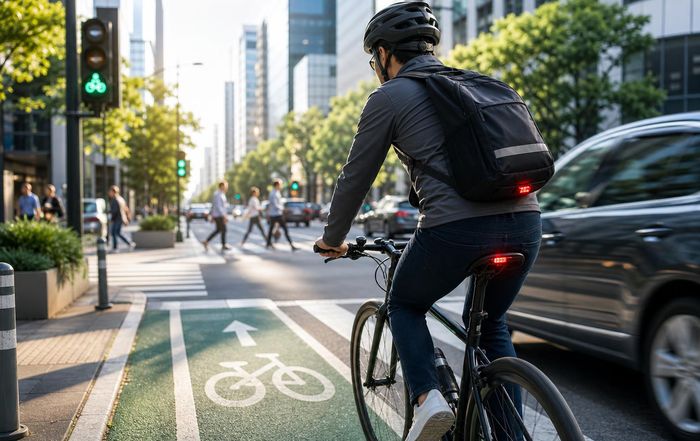
Cycling Safety Tips for Busy City Streets
Riding a bike through crowded city streets can be fast, fun, and efficient-but it also demands sharper awareness and better planning than a quiet weekend ride. Congested traffic, distracted drivers, complex intersections, and mixed infrastructure mean urban cyclists need a clear strategy for staying safe, visible, and confident.
This guide brings together practical, research-backed tips from road safety organizations, cycling advocates, and urban planners to help riders navigate busy streets more safely, whether they are commuting daily or just starting to swap short car trips for two wheels.
Know the rules of the road like a driver
In most countries, cyclists are legally considered vehicles and are expected to follow the same traffic rules as drivers. That means stopping at red lights and stop signs, yielding when required, and riding in the correct direction of traffic. Many collisions happen not because a cyclist is "invisible," but because someone does something unexpected-like riding against traffic or blowing through a red light. Understanding and obeying road rules helps drivers predict your movements and gives you legal protection if a crash occurs. National and local transport agencies, such as the U.S. National Highway Traffic Safety Administration (NHTSA) and the UK's Department for Transport (GOV.UK), provide clear guidance on how bikes fit into traffic law, and local city websites often publish cycling-specific rules, including where bikes can ride, turn, and park.
It is worth checking whether your city allows riding on sidewalks, which is often restricted or banned in dense downtown areas because it creates conflicts with pedestrians. Similarly, some cities mandate the use of bike lanes where available, while others simply recommend them. Understanding right-of-way rules at intersections and roundabouts is particularly important; many serious urban cycling crashes occur at junctions where drivers turning right or left fail to see a cyclist going straight. Reviewing your area's highway code or equivalent, and even taking a short urban cycling skills course if available, can significantly improve your decision-making in traffic.
For riders who use cycling as part of their training or fitness routine, treating city segments as "neutral zones" rather than race sections is essential. Save high-intensity efforts for safer routes or structured sessions off busy arterials; in traffic, the priority is predictable, law-abiding behavior, not speed. If you track your rides for performance or upload to fitness platforms, consider pausing segments or ignoring city-center times so you are not tempted to take risks for a faster commute.
Choose safer routes, not just the shortest ones
The most direct line from home to work is not always the safest or most comfortable by bike. Whenever possible, choose routes that minimize high-speed multi-lane roads, complex intersections, and heavy truck traffic. Many cities now publish official cycling maps through their transport departments, highlighting protected lanes, painted bike lanes, traffic-calmed streets, and recommended quiet routes; these are often accessible via city websites or local transit agencies. Internationally, organizations like PeopleForBikes (peopleforbikes.org) and Sustrans in the UK (sustrans.org.uk) also offer resources and route ideas that prioritize safety and comfort.
Digital maps and fitness apps increasingly include bike-specific routing, but they can still misjudge traffic stress, especially in fast-changing urban environments. Before committing to a new commute, preview the route on a map and, if possible, ride it once at a quieter time of day to identify problem spots such as fast slip lanes, tram tracks, or poorly designed junctions. Look for alternatives that use residential back streets, riverside paths, park cut-throughs, or dedicated cycleways, even if they add a few minutes. Over the long term, the reduced stress and lower risk are worth the minor detour, and the extra distance can even support your broader fitness goals.
Time of day matters too. If your schedule is flexible, shifting your commute 20-30 minutes earlier or later can dramatically change traffic density. In some cities, certain roads become bus lanes at peak times, which may or may not allow bicycles; check the signage and your local regulations so you are not caught off guard. Weather also affects route choice: in rain or snow, avoiding steep descents, metal bridge decks, and tram tracks can reduce the risk of slipping. Over time, many urban cyclists maintain multiple "go-to" routes-an all-weather option, a daylight-only scenic route, and a direct but traffic-heavy path used only when necessary.
Make visibility a priority, day and night
Being seen is one of the most powerful safety tools available to urban cyclists. Research cited by organizations like the World Health Organization (who.int) and national road safety bodies suggests that high-visibility clothing, reflective materials, and lights can significantly reduce crash risk, especially in low-light conditions. In many jurisdictions, front and rear lights are legally required after dark, and some cities now recommend or mandate daytime running lights for cyclists, particularly on busy roads. A bright white front light and a solid or slow-flashing red rear light are a strong baseline; higher-lumen lights or additional helmet-mounted lights can help in heavy traffic or poor weather.
Clothing choices also matter. While all-black outfits may look sleek, they blend into the urban environment at dawn, dusk, and in rain. High-visibility or at least contrasting colors on jackets, vests, or backpacks help drivers and pedestrians notice you sooner. Reflective elements placed on moving parts-ankle bands, shoe details, or pedal reflectors-can be especially effective because motion catches the eye. Many sportswear brands and technical apparel companies now integrate reflective panels into cycling and running gear, which can be a practical upgrade for people who regularly ride in low light and want to align their wardrobe with broader lifestyle and safety needs.
Positioning on the road also affects visibility. Riding too close to the curb can hide you behind parked cars, street furniture, or road undulations, making it harder for drivers to anticipate your line. In many situations, taking a more assertive position in the lane-far enough from the curb to avoid door zones and debris, but not unnecessarily obstructive-actually improves safety because it keeps you within the main field of view of drivers. Training yourself to think, "Can that driver see me clearly from their position?" and adjusting accordingly can be more effective than any single piece of gear.
Use bike lanes wisely-and know their limits
Dedicated cycling infrastructure can greatly improve safety, but it is not foolproof. Painted bike lanes often run in the "door zone" of parked cars, and even physically protected lanes can intersect with driveways, side streets, and bus stops. Studies highlighted by groups such as the European Cyclists' Federation (ecf.com) show that separated cycle tracks tend to reduce overall crash risk, yet many collisions still occur at intersections where turning vehicles cross bike paths. The key is to treat bike lanes as a helpful tool, not a guarantee of protection, and to adjust your speed and attention at conflict points.
When riding in a painted lane beside parked cars, maintain enough lateral distance to avoid being struck by an unexpectedly opened door. This may mean riding near the outer edge of the lane or even slightly outside it when safe and legal. In protected lanes that approach intersections, be alert for drivers turning across your path who may not expect a bike moving at speed; making eye contact where possible, moderating your speed, and watching for turn signals and wheel movement can buy you precious reaction time. Some cities now install bike-specific traffic lights or advance stop lines so cyclists can start ahead of motor traffic; understanding how these work in your area and using them correctly can reduce conflicts at junctions.
Shared paths with pedestrians, runners, and scooters introduce a different set of challenges. Speed differentials are often large, and some users may be wearing headphones or looking at phones. On these paths, slower speeds, clear passing signals (a bell or brief verbal cue), and extra patience are essential. In very crowded conditions-near stadiums, train stations, or major events-it may be safer and more respectful to dismount and walk for a short stretch. For riders focused on training or interval work, it is usually better to schedule hard efforts away from shared-use paths where frequent slowing and overtaking are required.
Master intersections, turning traffic, and door zones
Intersections are where many urban cycling crashes happen, particularly those involving turning vehicles and "dooring" incidents. Defensive techniques can dramatically reduce risk. When approaching an intersection, scan early for potential conflicts: cars waiting to turn across your path, pedestrians stepping off curbs, and buses pulling in or out. Position yourself where you are visible and not squeezed between large vehicles and the curb. Many road safety organizations, including Cycling UK (cyclinguk.org) and Vision Zero initiatives in major cities, recommend avoiding riding alongside heavy trucks at junctions because of large blind spots; if a truck is stopped at a light, it is often safer to wait behind it rather than trying to sneak up the side.
Dooring-being hit by a suddenly opened car door-is a common city hazard. To reduce the risk, ride at least a door's width away from parked cars whenever you can, even if that means taking what feels like a more central lane position. Watch for signs that a parked car might be about to open or pull out: brake lights, exhaust, wheels turned outward, or movement inside. Drivers and passengers do have legal responsibilities in many jurisdictions to check before opening doors, but relying solely on others' behavior is not enough; building a habit of maintaining door clearance is one of the simplest, most effective urban safety strategies.
Left and right turns require particular care. When turning left in countries where traffic drives on the right (or right in left-driving countries), signal early, shoulder-check, and move gradually into the correct lane, avoiding sudden swerves from the curb. In very heavy traffic or on multi-lane roads, it can be safer to use a "two-stage turn": cross straight through the intersection, stop in the far-side crosswalk or bike box, reorient your bike, and then cross again with the next green. Some cities explicitly mark these two-stage turn boxes for bikes. Practicing these maneuvers on quieter streets builds confidence before you need them at rush hour.
Ride predictably and communicate clearly
Predictability is one of the core principles of safe city cycling. Drivers, pedestrians, and other riders can adapt to your presence if your movements follow a clear, understandable pattern. Sudden swerves, last-second lane changes, or weaving between parked cars and traffic make it much harder for others to judge your path and speed. Instead, hold a steady line when possible, signal lane changes and turns with clear hand signals, and avoid squeezing through narrow gaps that may close unexpectedly. Many national cycling manuals and organizations like The League of American Bicyclists (bikeleague.org) emphasize that assertive, visible positioning usually leads to fewer close passes than timid hugging of the curb.
Hand signals are a simple but often underused tool. Indicating left or right turns and occasionally signaling that you are slowing or stopping gives drivers behind you time to respond. Shoulder checks-quick glances back before moving laterally-both improve your situational awareness and signal to drivers that you may change position. In some contexts, brief eye contact with drivers at side streets or driveways can confirm that they have seen you, though cyclists should never assume eye contact guarantees safe behavior; it is only one piece of information among many.
Urban environments are full of small negotiations: who goes first at an ambiguous junction, how to merge when a bike lane ends, or how to pass a double-parked delivery truck. Calm, deliberate gestures, obvious lane choices, and a willingness to pause briefly rather than forcing a marginal gap can defuse many of these situations. For those cycling as part of a broader wellness routine, reframing these micro-delays as stress-reduction moments rather than annoyances can make commuting feel more sustainable over the long term.
Manage speed, spacing, and road conditions
Speed is a double-edged sword in city riding: going faster reduces your exposure time in traffic but also shortens your reaction window and increases the severity of any crash. The safest approach is context-sensitive speed management-riding briskly where visibility is good and conflicts are few, then easing off in dense, complex environments. Wet roads, leaves, construction gravel, and metal surfaces like manhole covers or tram tracks dramatically reduce traction, especially when cornering or braking. International road safety bodies and cycling federations, including the International Cycling Union (UCI) (uci.org), consistently stress the importance of moderating speed in poor conditions and avoiding sudden maneuvers on low-grip surfaces.
Following distance is just as important for cyclists as for drivers. Tailgating buses, trucks, or other bikes reduces your sightlines and leaves no margin if they brake suddenly or encounter an obstacle. Maintaining a generous buffer gives you time to react to potholes, opening doors, or pedestrians stepping into the street. In stop-and-go traffic, think of your bike as a series of controlled micro-accelerations and gentle decelerations rather than a sequence of sprints and hard stops; this not only improves safety but can also make your commute feel less physically and mentally draining, supporting your overall health and daily energy.
City streets change quickly due to construction, road works, and temporary event closures. A route that felt safe last month may suddenly feature narrowed lanes, new barriers, or heavy machinery intruding into the roadway. When you encounter such changes, slow down and reassess rather than assuming the old pattern still applies. If a detour forces you onto an uncomfortable road, it can be worth dismounting and walking a short section on the sidewalk until you reach a safer stretch. Building flexibility into your commute time-arriving 5-10 minutes early rather than cutting it fine-makes these conservative choices easier to accept.
Gear, bike setup, and maintenance that boost safety
While no equipment can eliminate risk, a well-chosen and well-maintained bike setup can make city riding safer and more enjoyable. A properly fitted helmet remains a widely recommended protective measure, with guidance from organizations such as the Centers for Disease Control and Prevention (cdc.gov) and many national health agencies. The key is correct fit: the helmet should sit level on the head, low on the forehead, with snug straps and minimal movement when you shake your head. Some modern helmets also include technologies designed to reduce rotational forces in certain impacts, though they are not a substitute for careful riding.
Brakes and tires are your primary safety hardware. Regularly check that your brake pads have sufficient material, are correctly aligned, and can lock each wheel with firm lever pressure. Tires suited to urban riding-often slightly wider, with puncture protection and reflective sidewalls-provide better grip and resilience on rough city surfaces than narrow racing tires. Keeping them inflated within the recommended pressure range improves handling and reduces pinch flats. Routine maintenance, whether done at home or by a local bike shop, should include chain lubrication, bolt checks, and occasional inspections of wheels and frame for cracks or damage.
Accessories can also enhance safety and practicality. Bells or electronic horns are required by law in some regions and are useful for alerting pedestrians and other cyclists. Fenders keep water and grit off you and your drivetrain, encouraging year-round riding and reducing wear. Sturdy racks and panniers allow you to carry work gear, groceries, or sports equipment without a heavy backpack that shifts your center of gravity and traps sweat, which is particularly relevant for riders balancing commuting with sports or gym sessions. For those interested in smart tech, app-connected lights, GPS trackers, and crash-detection features in some wearables can add another layer of reassurance, though they should complement, not replace, core safety habits.
Mental focus, distractions, and riding under stress
Urban cycling is cognitively demanding. It requires continuous scanning, risk assessment, and quick decision-making. Riding while mentally overloaded, angry, or distracted significantly increases the chance of errors. Just as drivers are urged by bodies like the World Health Organization and national transport agencies to avoid phone use, cyclists should also keep distractions to a minimum. That means avoiding texting or browsing while riding and being cautious with headphones. In many places, using headphones on the bike is legal, but isolating yourself from traffic sounds with noise-cancelling or high-volume audio can be risky. If you choose to use them, consider single-ear or bone-conduction options and keep the volume low enough to hear horns, sirens, and approaching vehicles.
Stress management is another underappreciated safety factor. Running late, dealing with work pressures, or navigating aggressive drivers can push riders toward impulsive choices-squeezing through tight gaps, jumping lights, or taking risky shortcuts. Recognizing these emotional triggers and deliberately choosing a calmer response can be life-saving. Building a small time buffer into your commute, practicing a few deep breaths at red lights, or viewing your ride as part of your overall wellness routine rather than a race against the clock can shift your mindset toward patience and self-preservation.
Fatigue also matters. Long workdays, heavy training loads, or lack of sleep impair reaction times and situational awareness. If you feel dangerously tired or unwell, it may be safer to combine your bike trip with public transport, take a slower route, or even leave the bike and walk or ride-share for part of the journey. Employers and city planners increasingly recognize the role of active commuting in health and productivity; some workplaces now offer secure bike parking, showers, and flexible start times, making it easier to prioritize safety over speed.
What to do if something goes wrong
Even with the best preparation and habits, crashes and near-misses can happen on busy streets. Knowing what to do in the aftermath can protect your health and your rights. After any incident, first check yourself and others for injuries. If anyone is seriously hurt, call emergency services immediately; in many countries, guidance from health authorities like the National Health Service in the UK (nhs.uk) or national emergency medical services emphasizes not moving someone with suspected head, neck, or spinal injuries unless there is immediate danger. If you are able, move yourself and your bike out of active traffic to avoid secondary collisions.
If a motor vehicle is involved and you are safe to do so, exchange details with the driver, including name, contact information, and insurance. Note the vehicle's registration number, make, model, and color, and, if possible, collect contact details from any witnesses. Take photos of the scene, your bike, any visible injuries, and relevant road features such as signage, lane markings, or obstructions. In many jurisdictions, cyclists have the same rights as drivers regarding insurance claims and legal recourse, and documentation is critical. If you feel unwell later-especially with symptoms like headache, dizziness, nausea, or confusion-seek medical evaluation, as some injuries (including concussions) may not be obvious immediately.
Near-miss reporting is also gaining traction as a safety tool. Some cities and advocacy groups collect data on close passes, dangerous junctions, and recurring conflict points to inform infrastructure improvements. Participating in these schemes, when available, can turn a frightening experience into information that helps prevent future incidents for others. At the personal level, reviewing what happened-without self-blame-can help you adjust routes, timing, or habits to reduce similar risks in the future.
Building a safer cycling culture in cities
Individual behavior is only one piece of urban cycling safety; infrastructure design, driver education, and policy choices all play major roles. Organizations such as the World Resources Institute (wri.org) and OECD's International Transport Forum (itf-oecd.org) have repeatedly found that cities investing in protected bike lanes, lower speed limits, and traffic-calming measures see reductions in serious injuries for all road users, not just cyclists. Supporting local campaigns for safer streets, participating in community consultations, and sharing constructive feedback with city officials can gradually improve conditions for everyone who walks, rides, or drives.
For many people, cycling is not just transportation but part of a broader fitness and health strategy, a way to reduce emissions, and a means of engaging with their city at human scale. The safer and more welcoming streets become, the more people feel able to choose active travel over short car trips, with knock-on benefits for air quality, congestion, and public health. Collaborations between public health agencies, transport departments, and community groups are increasingly common, and their work often draws on best-practice examples from cities worldwide.
At the individual level, the most effective approach combines respect for the rules, smart route choices, visible and predictable riding, and a mindset that values arriving safely over arriving quickly. With those elements in place, busy city streets become more navigable, and cycling can remain what it should be: a practical, enjoyable, and health-promoting way to move through the urban landscape.