

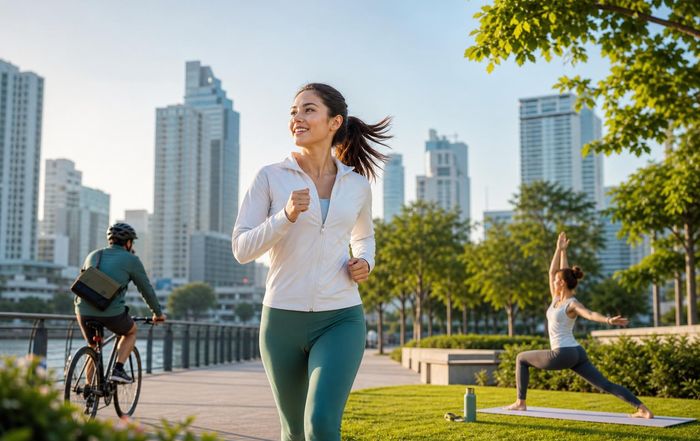
Active Living Habits for Healthier City Life in 2026
Urban life in 2026 is more dynamic, more connected, and more demanding than ever, and for readers of FitBuzzFeed this reality is felt every day in crowded commutes, hybrid work schedules, and the constant pressure to perform at a high level both professionally and personally. Yet across the world's major metropolitan areas, from New York and London to Singapore, Berlin, Sydney, São Paulo and beyond, a quiet revolution is reshaping how people move, eat, work, and recover. This revolution is centered on active living habits that transform dense, fast-paced cities into environments that can actually enhance, rather than erode, physical health, mental resilience, and long-term wellbeing.
As city governments, employers, health systems, and technology companies respond to growing evidence from organizations such as the World Health Organization and OECD that inactivity and chronic disease impose massive economic and social costs, the urban landscape is being redesigned to reward movement instead of sedentariness. For business leaders, professionals, and entrepreneurs who follow FitBuzzFeed's business coverage as closely as its training and wellness insights, this shift is not only a personal lifestyle question but also a strategic issue affecting productivity, employer branding, healthcare costs, and talent retention.
The New Science of Urban Activity and Performance
Over the past decade, research from institutions such as Harvard T.H. Chan School of Public Health and Mayo Clinic has solidified the connection between regular physical activity, cognitive performance, and long-term health outcomes. Urban adults who meet or exceed aerobic and strength guidelines consistently show lower risks of cardiovascular disease, type 2 diabetes, depression, and certain cancers, while also demonstrating improved concentration, creativity, and stress tolerance at work. Readers can explore how moderate daily activity supports metabolic health through resources such as the U.S. Centers for Disease Control and Prevention, which continues to refine its recommendations for adults in different age groups and with varying health profiles.
In high-pressure business environments, this evidence has moved active living from a "nice-to-have" wellness perk to a core performance strategy. Studies summarized by McKinsey & Company and Deloitte increasingly highlight that teams with higher physical activity levels show better engagement scores, lower absenteeism, and stronger collaboration. For professionals following FitBuzzFeed's jobs and careers content, the implication is clear: cultivating sustainable active habits is no longer just about personal health; it is a competitive advantage in a global labor market where cognitive agility and emotional resilience are prized.
Designing Daily Movement into Dense City Routines
One of the defining challenges of city life is that time feels compressed, and the idea of carving out hours for structured exercise can seem unrealistic for individuals balancing demanding jobs, family obligations, and long commutes. Yet the most successful active urban lifestyles in 2026 are not built solely on gym sessions or formal training blocks; they are built on integrating movement into the fabric of daily routines in ways that are realistic, repeatable, and personally meaningful.
For many FitBuzzFeed readers in cities from Los Angeles and Toronto to Paris, Stockholm, Singapore, and Tokyo, the simplest shift begins with active commuting. Choosing to walk or cycle for at least part of the journey to work has been shown in research published by The Lancet and British Medical Journal to reduce all-cause mortality and improve cardiovascular health, even when total weekly exercise time remains modest. Those who wish to understand the broader societal benefits of active transport can review analyses from the World Health Organization on how walking and cycling reduce air pollution and congestion while improving population health.
In practical terms, active commuting in dense cities can be as straightforward as getting off public transport two stops earlier, using bike-share schemes for short trips, or combining e-bikes with rail networks to extend range without requiring elite fitness levels. Cities such as Amsterdam, Copenhagen, and Berlin have been global pioneers in this area, but in 2026 similar infrastructure is accelerating in London, New York, Seoul, and Melbourne, supported by policy guidance from organizations like C40 Cities that promote climate-smart urban mobility.
Turning the City into an Everyday Training Ground
While structured training plans still matter for FitBuzzFeed's audience interested in performance, sports, and targeted physical goals, there is growing recognition that the city itself can function as an expansive training environment if approached with creativity and intention. Stairs in office buildings become mini-interval sessions, parks and riverside paths become accessible running routes, and public exercise stations transform into strength-training hubs for those without access to private gyms.
Professionals who follow FitBuzzFeed's fitness section are increasingly blending formal workouts with "incidental training," such as walking meetings, standing work sessions, and micro-breaks that include mobility exercises. Resources from organizations like American College of Sports Medicine explain how even short bouts of activity throughout the day can accumulate to meet recommended weekly targets, particularly when they elevate heart rate and engage large muscle groups. Those interested in structured home or office routines can also explore guidance from NHS UK on simple bodyweight exercises that require no equipment yet deliver meaningful strength and flexibility benefits.
In cities like London, New York, and Singapore, corporate campuses and modern coworking spaces are now designed with movement in mind, incorporating central staircases, flexible standing-desk zones, and on-site training spaces. These design choices, informed by evidence from World Economic Forum reports on workplace wellbeing, support a culture where movement is normalized rather than treated as a disruption to productivity. For FitBuzzFeed's business-focused readers, these environments demonstrate how physical design and organizational culture intersect to either encourage or discourage active living.
Nutrition Strategies for High-Intensity Urban Lifestyles
Physical activity is only one pillar of an active urban life; nutrition is equally decisive in determining whether long workdays, irregular schedules, and frequent travel lead to sustained performance or chronic exhaustion. In global cities such as New York, London, Hong Kong, and Dubai, the abundance of food options can be both a strength and a risk, with ultra-processed, high-sugar choices often more accessible than nutrient-dense alternatives.
Readers who follow FitBuzzFeed's nutrition coverage are acutely aware that high-quality fuel is essential for energy, cognitive clarity, and recovery. Evidence summarized by Harvard School of Public Health and European Food Safety Authority emphasizes the value of diets rich in whole grains, lean proteins, healthy fats, fruits, and vegetables, alongside controlled intake of added sugars and highly processed foods. Urban professionals who rely on delivery platforms are increasingly turning to curated "performance menus" offered by forward-thinking restaurants and food brands that prioritize balanced macronutrients and micronutrient density.
Many city dwellers are also adopting time-restricted eating or flexible intermittent fasting patterns, informed by research from institutions such as National Institutes of Health on metabolic health and circadian rhythms. While these approaches are not appropriate for everyone and require medical consideration for individuals with specific conditions, they can provide structure in environments where late-night social events, cross-time-zone meetings, and early-morning training sessions are common. For those seeking foundational guidance, resources from Dietary Guidelines for Americans and World Cancer Research Fund offer practical frameworks that can be adapted to local cuisines across Europe, Asia, Africa, and the Americas.
Mental Resilience, Stress Management, and Urban Wellbeing
The most active urban lifestyles in 2026 acknowledge that physical movement, nutrition, and mental health are inseparable. Chronic stress, sleep deprivation, and digital overload are prevalent in global cities such as New York, London, Shanghai, and São Paulo, and they can undermine even the most disciplined training program. For readers of FitBuzzFeed's wellness section, the question is not whether stress exists but how effectively it is managed through evidence-based strategies.
Research from American Psychological Association and National Health Service highlights that regular physical activity is one of the most powerful tools for managing anxiety and depression, yet it is most effective when combined with adequate sleep, social connection, and techniques such as mindfulness or cognitive-behavioral strategies. Urban professionals are increasingly adopting short, app-guided meditation sessions between meetings, brief breathing exercises during commutes, and digital "focus modes" that reduce notification overload. Those seeking deeper understanding of the relationship between stress, brain function, and performance can explore resources from Stanford Medicine and Cleveland Clinic that translate neuroscience into practical daily habits.
Sleep, often sacrificed in city life, has become a central performance metric, with wearable devices and smart home technology tracking duration, quality, and variability. Evidence summarized by National Sleep Foundation underscores that adults who consistently achieve 7-9 hours of quality sleep demonstrate better decision-making, emotional regulation, and physical recovery. For FitBuzzFeed readers who travel frequently across time zones, strategies such as light exposure management, consistent pre-sleep routines, and moderated evening screen time can mitigate jet lag and maintain training continuity.
Technology as an Enabler of Active Urban Habits
Technology in 2026 sits at the heart of urban life, and when used deliberately it can be a powerful enabler of active living rather than a driver of sedentary behavior. Wearables, smartwatches, and connected fitness platforms provide real-time feedback on steps, heart rate, sleep, and recovery, allowing city dwellers to make data-driven decisions about training intensity, rest, and nutrition. Readers can follow developments in this space through FitBuzzFeed's technology coverage, which tracks how new devices and platforms are reshaping training and wellness.
Leading companies such as Apple, Garmin, and WHOOP have expanded their analytics to move beyond simple step counts toward nuanced insights into heart rate variability, strain, and readiness, while platforms like Strava continue to build global communities of runners, cyclists, and multisport athletes who share routes through urban environments from Berlin to Bangkok. At the same time, digital health platforms supported by organizations like National Health Service and Health Canada integrate telemedicine, remote physiotherapy, and personalized coaching, making professional guidance accessible to busy professionals who might otherwise defer care.
Yet technology also introduces risks of over-tracking, comparison, and burnout if not managed thoughtfully. Experts from MIT Sloan School of Management and World Economic Forum emphasize the importance of digital boundaries and mindful use of data, encouraging individuals to treat metrics as tools rather than sources of pressure. For FitBuzzFeed's readership, the most sustainable approach is one where technology supports intrinsic motivation, community connection, and long-term consistency rather than short-term extremes.
Corporate Responsibility and the Business Case for Active Cities
As evidence of the link between physical activity, mental health, and productivity continues to accumulate, leading employers across North America, Europe, and Asia-Pacific are recognizing that active living is not solely an individual responsibility; it is also a strategic corporate concern. Companies with global workforces in cities such as New York, London, Berlin, Singapore, and Sydney are integrating wellness into business strategy, not just human resources.
Organizations like World Economic Forum and International Labour Organization have documented how workplace wellness programs, flexible scheduling for exercise, and supportive physical environments can reduce healthcare costs, improve retention, and strengthen employer brands. Initiatives range from subsidized fitness memberships and on-site training facilities to incentives for active commuting and structured recovery periods after intense project cycles. For readers following FitBuzzFeed's business and jobs sections, these developments reflect a broader shift toward viewing human energy as a core asset to be managed with the same rigor as financial capital.
Companies in sectors such as technology, finance, consulting, and professional services are also rethinking travel policies, encouraging employees to combine business trips with recovery time and local activity rather than back-to-back flights and sleep-deprived meetings. Guidance from World Health Organization and OECD on occupational health is increasingly integrated into corporate governance frameworks, with boards asking explicit questions about how leadership teams are protecting employee wellbeing in high-pressure environments.
Global Variations: Active Living Across Regions and Cultures
Although the principles of active living are universal, their expression varies across regions, cultures, and city infrastructures. In North America and parts of Australia, urban sprawl and car-centric design present challenges, but there is rapid growth in mixed-use developments, protected bike lanes, and revitalized downtowns that encourage walking and cycling. Resources from U.S. Department of Transportation and Transport Canada highlight national strategies aimed at making active transportation safer and more attractive.
In many European cities, from Amsterdam and Copenhagen to Barcelona and Munich, long-standing traditions of cycling and walking are being complemented by sophisticated public transport and low-emission zones, making it easier to integrate movement into daily routines. Initiatives supported by the European Commission and European Cyclists' Federation are promoting active mobility as a climate, health, and economic imperative. For FitBuzzFeed readers in Germany, France, Italy, Spain, Netherlands, Switzerland, and the Nordic countries, these policies translate into tangible daily benefits, from safer streets to more accessible green spaces.
In Asia, the picture is more diverse. Cities such as Tokyo, Seoul, and Singapore combine dense urban form with efficient transit systems and growing networks of parks and riverside paths, making walking and public transport a natural part of daily life. Governments and organizations like Health Promotion Board Singapore and Japan Sports Agency are investing heavily in community sports, workplace activity programs, and public education campaigns. In rapidly growing cities across China, Thailand, Malaysia, and India, planners are grappling with balancing growth, congestion, and health, with support from international bodies such as UN-Habitat that share best practices in active urban design.
In Africa and South America, from Cape Town and Johannesburg to São Paulo and Buenos Aires, there is increasing recognition that active living must be integrated into broader development agendas. Programs supported by World Bank and African Development Bank emphasize the co-benefits of safe walking and cycling infrastructure for equity, access to jobs, and public health. For FitBuzzFeed's global readership, these regional variations underscore that while the specifics differ, the underlying opportunity is shared: to design cities where movement is the default, not the exception.
Community, Events, and the Social Side of Active Cities
One of the most powerful drivers of sustained active living in cities is community. Group runs, cycling clubs, outdoor fitness classes, and urban sports leagues create social accountability and enjoyment that make movement a source of connection rather than obligation. For readers tracking FitBuzzFeed's sports and events coverage, the growth of city marathons, charity rides, urban obstacle races, and community wellness festivals reflects a broader cultural shift toward celebrating active lifestyles.
Major events such as the Olympic Games, World Athletics championships, and global marathons in cities like London, Boston, Berlin, and Tokyo inspire participation at all levels, while local initiatives such as parkrun provide accessible weekly entry points for beginners and experienced athletes alike. Those interested in the wider social and economic impact of sports events can explore analysis from Sport England and Australian Sports Commission, which highlight how community participation strengthens public health and social cohesion.
Digital communities layered on top of physical events further enhance engagement. Platforms like Strava, Zwift, and local fitness apps in markets such as China and South Korea allow urban residents to share routes, compare progress, and support each other across time zones and work schedules. For FitBuzzFeed readers, these communities often become gateways to deeper involvement in local clubs, charity initiatives, and urban advocacy efforts aimed at improving infrastructure for safe, active living.
Building a Personal Active Living Strategy in the City
For professionals, entrepreneurs, and leaders who follow FitBuzzFeed's lifestyle and training content, the most important question is how to translate all of this evidence, infrastructure, and technology into a personal, sustainable strategy that fits the realities of modern city life. The most effective approaches in 2026 are grounded in four principles: clarity, integration, adaptability, and support.
Clarity means defining what active living should achieve personally and professionally, whether that is improved energy at work, resilience under pressure, preparation for a marathon, or long-term health for family and community. Integration involves embedding movement, nutrition, and recovery into existing routines rather than relying solely on willpower; this might include walking meetings, active commuting, scheduled training blocks, and consistent meal planning. Adaptability recognizes that careers, family demands, and travel patterns change, and that active strategies must evolve accordingly, with periods of higher intensity balanced by phases of maintenance and recovery. Support acknowledges that sustained change is easier with community, whether through colleagues, local clubs, digital platforms, or professional guidance from coaches, dietitians, and healthcare providers.
Readers can draw on the full ecosystem of FitBuzzFeed, from health and wellness insights to training resources and global news on emerging trends, to continuously refine their approach as new research, technologies, and urban policies emerge. External resources from organizations like World Health Organization, Harvard T.H. Chan School of Public Health, American College of Sports Medicine, and national health agencies across the United States, United Kingdom, Europe, Asia, Africa, and the Americas provide additional depth for those seeking to align personal habits with the best available evidence.
The Future of Active Urban Living and FitBuzzFeed's Role
Looking ahead to the late 2020s, it is increasingly likely that active living will be embedded not only in individual routines but in the core design of cities, workplaces, and digital ecosystems. Urban planners, business leaders, public health experts, and technology innovators are converging around a shared understanding that healthier, more active populations are essential for economic resilience, social cohesion, and environmental sustainability. Initiatives championed by organizations such as World Health Organization, C40 Cities, World Economic Forum, and national health ministries are setting ambitious targets for physical activity, green space, and active transport, while investors and brands are directing capital toward products and services that support movement, nutrition, and recovery.
For FitBuzzFeed and its global audience across North America, Europe, Asia, Africa, and South America, this moment represents both an opportunity and a responsibility. By curating evidence-based insights on fitness, nutrition, wellness, business, technology, and world trends, the platform serves as a trusted guide for individuals and organizations seeking to navigate the complexity of modern city life while protecting and enhancing health.
In 2026, the most successful urban professionals, entrepreneurs, and leaders are not those who simply endure the demands of city life but those who intentionally design active living habits that align their bodies, minds, and environments with their ambitions. As cities evolve and evidence deepens, FitBuzzFeed will continue to provide the analysis, tools, and inspiration its readers need to build healthier, more resilient, and more fulfilling lives in the world's great urban centers.