

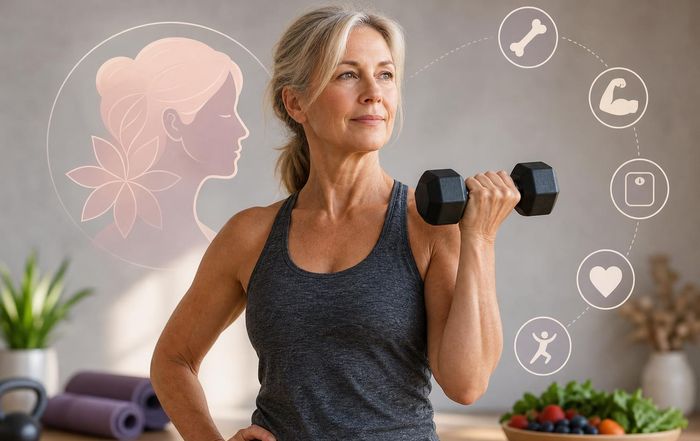
Why Strength Training Matters During Menopause
For many people, menopause arrives with a familiar list of concerns: hot flashes, sleep disruption, weight gain, mood swings, and a sense that the body is changing in ways that feel hard to control. What is sometimes missing from that conversation is one of the most powerful tools available to navigate this transition: strength training. Far beyond aesthetics or "toning," resistance exercise directly addresses several of the biological shifts driven by falling estrogen, from bone density and muscle mass to cardiovascular health and mental wellbeing. This healthy focused page looks at why strength training is uniquely important during perimenopause and postmenopause, what the science says, and how to start (or safely adapt) a program if you are new to lifting or returning after a break.
What actually changes in the body during menopause?
Menopause is defined as 12 consecutive months without a menstrual period, usually occurring between ages 45 and 55. The years leading up to it-perimenopause-can last a decade or more, with fluctuating hormones and highly variable symptoms. The primary change is a sustained decline in estrogen and progesterone, which has knock-on effects throughout the body.
Estrogen has protective roles in bone, muscle, the cardiovascular system, and even the brain. As levels fall, bone remodeling tilts toward breakdown, which increases the risk of osteopenia and osteoporosis. According to the International Osteoporosis Foundation (https://www.iofbonehealth.org/), women can lose up to 20% of their bone density in the five to seven years after menopause. At the same time, age-related sarcopenia-loss of skeletal muscle mass and strength-accelerates, particularly in people who are inactive. The World Health Organization (https://www.who.int/) highlights physical inactivity as a major modifiable risk factor for noncommunicable diseases, many of which become more common after midlife. Add changes in body fat distribution, with more fat stored viscerally around the abdomen, and the result is a higher risk of cardiovascular disease, type 2 diabetes, and metabolic syndrome. These changes are not purely cosmetic; they shape long-term health and functional independence.
Sleep disruption and mood changes, partly driven by hormonal fluctuations and partly by life stressors that often cluster in midlife, can further reduce spontaneous activity and make it harder to maintain previous exercise habits. Many people also notice joint stiffness and aches, which can discourage movement and create a vicious cycle of deconditioning. Against this backdrop, strength training is not just one more fitness option; it is a targeted countermeasure to several of the most important physiological trends of menopause.
For readers wanting a broader overview of movement and health, the training resources at https://www.fitbuzzfeed.com/training.html provide additional context on how different forms of exercise support long-term wellbeing.
How strength training counters bone and muscle loss
Bones respond to stress. When muscles pull on them under load, the micro-strains stimulate bone-forming cells (osteoblasts) to build stronger, denser tissue. This is why most major guidelines-from the National Osteoporosis Foundation in the United States (https://www.nof.org/) to Osteoporosis Canada (https://osteoporosis.ca/)-recommend resistance training as a core component of osteoporosis prevention and management. Weight-bearing and resistance exercises are particularly important for the spine, hips, and wrists, which are common fracture sites after menopause. Walking alone, while valuable for cardiovascular health, does relatively little for bone density compared with targeted loading.
Muscle tissue is similarly responsive. Research summarized by organizations such as the American College of Sports Medicine (https://www.acsm.org/) shows that adults of almost any age can gain strength and muscle mass with progressive resistance exercise, and that older adults may benefit as much as younger ones when programs are well-designed. This is crucial because muscle loss is closely linked to reduced mobility, falls, and loss of independence. Stronger leg and hip muscles support balance and stability; stronger upper-body muscles make everyday tasks like lifting groceries, carrying luggage, or playing with grandchildren more manageable.
From a metabolic perspective, more muscle mass increases resting energy expenditure and improves glucose handling, which supports weight management and lowers the risk of insulin resistance. While strength training alone will not "fix" every symptom of menopause, it directly addresses several of the underlying physiological drivers: declining bone density, shrinking muscle mass, and reduced functional capacity. Readers interested in complementary approaches, such as cardiovascular training or flexibility work, can explore more at https://www.fitbuzzfeed.com/physical.html.
Menopause, body composition, and strength training's role
Many people report that, even without changing diet or activity, they gain fat-especially around the abdomen-during perimenopause and postmenopause. This is partly hormonal: lower estrogen shifts fat storage from hips and thighs toward the midsection, increasing visceral fat around the organs. According to the North American Menopause Society (https://www.menopause.org/), these changes are associated with higher cardiovascular and metabolic risk, even if overall body weight changes only modestly.
Strength training helps in several ways. First, as muscle mass increases or is at least preserved, resting metabolic rate is better maintained. This does not mean strength training "boosts metabolism" dramatically, but it can blunt the natural decline that occurs with age, making it easier to maintain weight with realistic eating patterns. Second, resistance exercise improves insulin sensitivity, which helps the body handle carbohydrates more effectively and can reduce the likelihood of developing type 2 diabetes. Third, while scale weight may not change much, body composition often shifts, with more lean mass and less fat, leading to improved waist circumference and a healthier metabolic profile.
Diet remains important, and combining strength training with thoughtful nutrition-adequate protein, fiber, and overall energy balance-is usually more effective than either approach alone. Resources such as the Academy of Nutrition and Dietetics (https://www.eatright.org/) and NHS guidance in the UK (https://www.nhs.uk/) emphasize protein intake and balanced eating patterns for midlife health. For readers wanting to explore nutrition in more depth, the dedicated section at https://www.fitbuzzfeed.com/nutrition.html offers additional context on how food choices support training and hormonal transitions.
Mental health, sleep, and mood benefits
The psychological side of menopause is often under-discussed, yet anxiety, low mood, irritability, and reduced self-confidence are common. Sleep disturbances-whether from night sweats, insomnia, or both-can amplify these issues. Exercise in general has well-documented antidepressant and anxiolytic effects, and strength training appears to be particularly helpful for self-efficacy and body image. The World Health Organization notes that regular physical activity is linked to lower rates of depression and cognitive decline, and resistance exercise is increasingly studied within this broader category.
Strength training can also improve sleep quality over time, especially when scheduled earlier in the day and combined with good sleep hygiene. The sense of agency that comes from progressively lifting heavier weights or mastering new movements can counteract some of the loss of control people feel over their bodies during menopause. For some, the gym or home workout space becomes a psychologically important zone: a place where change is visible and measurable, even if other symptoms feel unpredictable.
It is important, though, to avoid turning training into another source of pressure. During periods of severe hot flashes, fatigue, or poor sleep, reducing volume or intensity is often more sustainable than abandoning exercise entirely. Mental health support-from a therapist, support group, or menopause specialist-may also be appropriate. Readers interested in the wider wellness context, including stress management and recovery, can find more at https://www.fitbuzzfeed.com/wellness.html.
How much and what kind of strength training is recommended?
Major public health guidelines converge on similar recommendations. The U.S. Physical Activity Guidelines from the Centers for Disease Control and Prevention (https://www.cdc.gov/) and comparable guidance from bodies such as Sport England (https://www.sportengland.org/) and the Australian Government Department of Health (https://www.health.gov.au/) suggest that adults perform muscle-strengthening activities involving all major muscle groups at least two days per week, in addition to aerobic exercise.
For people in perimenopause or postmenopause, a practical and evidence-aligned approach often includes:
Two to three non-consecutive strength sessions per week.
Exercises that target legs, hips, back, chest, shoulders, and arms.
Two to three sets of each exercise, with a load that feels challenging by the last few repetitions while still allowing good form.
A mix of slower, controlled lifts and occasionally more power-focused moves (such as safe, low-impact step-ups or medicine ball throws) if joints and pelvic floor health allow.
The specific tools-free weights, machines, resistance bands, or body weight-matter less than the underlying principle of progressive overload: gradually increasing resistance, repetitions, or complexity over time. For those new to strength training, machines or guided group classes can be less intimidating and easier to learn, while free weights and body-weight movements often transfer well to daily life activities. The fitness section at https://www.fitbuzzfeed.com/fitness.html includes broader training ideas that can be adapted to different environments and preferences.
If there is a history of osteoporosis, cardiovascular disease, or other medical conditions, consulting a healthcare professional before starting a new program is important. Organizations like the Mayo Clinic (https://www.mayoclinic.org/) and Cleveland Clinic (https://my.clevelandclinic.org/) provide general guidance on exercise precautions for specific diagnoses, which can be a useful starting point for discussions with a doctor or physiotherapist.
Special considerations: joints, pelvic floor, and safety
Hormonal changes can affect connective tissue, and many people notice greater joint stiffness or discomfort around menopause. While this does not mean strength training is unsafe, it does warrant thoughtful exercise selection and progression. Emphasizing controlled movements through a comfortable range of motion, prioritizing hip-hinge patterns (such as deadlifts or hip thrusts) over deep loaded knee flexion if knees are sensitive, and using machines or supported variations can help. Warm-ups become more important: five to ten minutes of light cardio and dynamic mobility work can reduce stiffness and improve performance.
The pelvic floor also deserves attention. Pregnancy, childbirth, and aging can weaken pelvic floor muscles, and high-impact or heavy lifting performed with poor technique may aggravate symptoms like urinary leakage or pelvic heaviness. Consulting a pelvic health physiotherapist can be valuable, especially before starting heavy lifting. They may recommend breathing strategies, bracing techniques, and specific pelvic floor exercises. In many cases, appropriately coached strength training actually improves pelvic floor function rather than harming it.
For those with diagnosed osteoporosis, guidelines from organizations such as the Royal Osteoporosis Society in the UK (https://theros.org.uk/) typically advise avoiding high-impact activities and extreme spinal flexion or twisting under heavy load. However, that does not mean all lifting is off-limits; many people with low bone density safely perform resistance exercises under professional guidance. The key is individualization: starting with lighter loads, focusing on posture and control, and progressing gradually.
Hydration and temperature management are also practical issues. Hot flashes can make intense indoor sessions uncomfortable, so scheduling workouts at cooler times of day, using breathable clothing, and having access to water and ventilation can improve adherence. If symptoms are severe, healthcare providers may discuss options such as menopausal hormone therapy (MHT/HRT), which bodies like the National Institute for Health and Care Excellence (NICE) in the UK (https://www.nice.org.uk/) and NHS outline in their patient information.
Integrating strength training with lifestyle, nutrition, and recovery
Strength training works best as part of a broader lifestyle approach to menopause. Adequate protein intake is particularly important for building and maintaining muscle; many guidelines suggest that older adults may benefit from around 1.0-1.2 grams of protein per kilogram of body weight per day, though individual needs vary and should be discussed with a healthcare professional or dietitian. Distributing protein evenly across meals-rather than consuming most of it at dinner-can support muscle protein synthesis. For those following plant-based diets, combining sources such as beans, lentils, tofu, tempeh, and whole grains helps ensure a full complement of amino acids.
Calcium and vitamin D remain central for bone health. Authorities such as the National Institutes of Health Office of Dietary Supplements (https://ods.od.nih.gov/) provide reference intakes and food sources. Sun exposure, fortified foods, and supplements (when indicated) all play a role in maintaining adequate vitamin D levels, which support calcium absorption and bone metabolism. Alcohol moderation and smoking cessation are also important, as both are linked to poorer bone and cardiovascular outcomes.
Recovery often needs more attention in midlife than it did in earlier decades. Prioritizing sleep, spacing intense training days, and respecting signs of persistent fatigue can prevent overtraining and reduce injury risk. Stress management techniques-ranging from mindfulness and breathing exercises to social support and counseling-can help keep the nervous system from staying in a chronic high-alert state, which may otherwise undermine both hormonal balance and training progress. For a broader look at lifestyle, culture, and how people integrate movement into daily life, readers can explore https://www.fitbuzzfeed.com/lifestyle.html and https://www.fitbuzzfeed.com/wellness.html.
Getting started: practical entry points for different experience levels
For someone entirely new to strength training at midlife, the biggest barriers are often psychological: fear of injury, feeling out of place in a gym, or uncertainty about where to begin. One approachable route is to start with body-weight exercises at home-such as sit-to-stands from a chair, wall or countertop push-ups, and supported rows with resistance bands-two to three times per week. Once these feel manageable, adding light dumbbells or joining a beginner-friendly class can provide structured progression.
Those with previous lifting experience may need to adjust expectations rather than start from zero. It is common to find that loads once used comfortably now feel challenging, especially if there has been a long break or if sleep has been disrupted. Rebuilding gradually, focusing on technique, and accepting that progress may be slower-but still very real-can help sustain motivation. Periodic check-ins with a qualified trainer who understands menopause-related considerations can be valuable, particularly for programming around symptoms and medical conditions.
People already active in other ways (such as running, cycling, or group cardio classes) might integrate two short strength sessions into their weekly routine, focusing on compound movements like squats, deadlifts, rows, and presses. This can improve performance in their primary activity while providing the bone and muscle benefits that pure cardio cannot fully deliver. For more sport-specific ideas, the section at https://www.fitbuzzfeed.com/sports.html may offer relevant perspectives.
Finally, it is worth recognizing that menopause is not a narrow window that closes quickly; it marks the beginning of a long postmenopausal period that may last decades. Starting a strength training habit at 50, 60, or beyond is still profoundly worthwhile. Studies of older adults, including those in their 70s and 80s, show meaningful gains in strength, function, and quality of life with appropriately designed programs. In that sense, every session is a small investment in future independence-climbing stairs without fear, carrying your own bags, and engaging fully in the activities that matter.
Strength training during menopause is not about chasing an idealized physique or fighting aging. It is about aligning exercise with the specific biological realities of this life stage: preserving bone, maintaining muscle, supporting metabolic and cardiovascular health, and sustaining confidence in what the body can do. While the details of any program should be tailored to individual health status, preferences, and resources, the underlying message is consistent across health organizations and research: lifting something heavier than you are used to, on a regular basis, is one of the most powerful, evidence-backed steps you can take to navigate menopause with strength-both literal and figurative.