

The Business of Pickleball: From Backyard to Big Money
From Niche Pastime to Global Growth Engine
By 2026, pickleball has completed one of the most rapid transformations in modern sports history, evolving from a quirky backyard game played on repurposed tennis courts into a fully fledged global industry attracting institutional capital, media conglomerates, consumer brands and technology innovators. What began in the 1960s on Bainbridge Island as a family-friendly pastime has, in less than a decade, become a serious business ecosystem spanning professional leagues, franchised teams, equipment manufacturing, real estate development, sports tech, wellness services and corporate partnerships.
For a platform like FitBuzzFeed-which sits at the intersection of sports, fitness, health, lifestyle and business-pickleball is no longer just another recreational trend to cover casually; it has become a case study in how an inclusive, low-barrier sport can generate multi-layered commercial value while still aligning with wellness, community and longevity goals that matter to readers across fitness, health and lifestyle. The sport's growth touches nearly every topic in the FitBuzzFeed universe, from sports and business to technology, jobs and wellness, making it a powerful lens through which to examine the future of the global active economy.
Demographic Tailwinds and the Wellness Economy
Pickleball's commercial ascent cannot be understood without first acknowledging the demographic and health trends that underpin it. Across North America, Europe and parts of Asia-Pacific, aging populations, rising healthcare costs and growing awareness of lifestyle diseases have pushed individuals, employers and governments to look for accessible forms of physical activity that are low impact yet socially engaging. Organizations such as the World Health Organization have long underscored the economic and health burden of physical inactivity; readers can learn more about global physical activity guidelines to appreciate why policymakers now view recreational sports as a public health investment rather than a luxury.
Pickleball's unique value proposition-easy to learn, relatively inexpensive to play, suitable for mixed-age and mixed-ability groups, and less punishing on joints than tennis or running-positions it squarely within the broader wellness economy that McKinsey & Company and other consultancies have identified as a multi-trillion-dollar global market. Those exploring the macro context may explore insights on the global wellness economy to understand how consumer demand for holistic wellbeing is reshaping everything from fitness to nutrition and travel.
For FitBuzzFeed's audience, many of whom balance demanding careers with a desire to remain physically active, pickleball offers not only a compelling lifestyle option but also a lens into how wellness-focused activities can scale commercially without losing their community roots. This interplay between participation, health outcomes and economic opportunity is increasingly central to coverage across FitBuzzFeed's wellness and nutrition verticals, where readers look for activities that deliver both performance and long-term quality of life.
The Professionalization of Pickleball Leagues
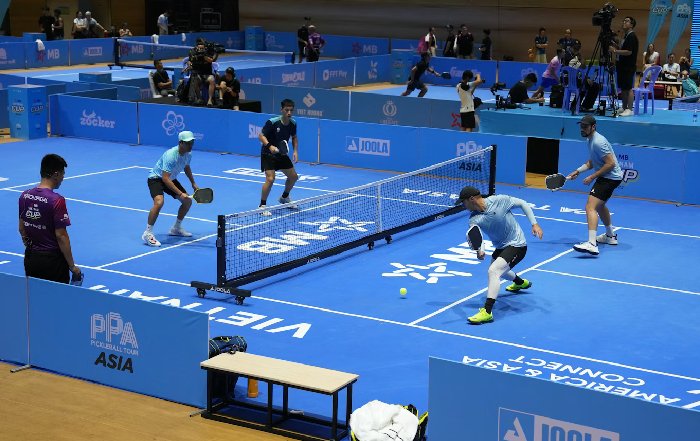
The inflection point in pickleball's business journey came when organized competition and professional structures began to attract serious investment. In the United States, entities such as Major League Pickleball (MLP) and the Professional Pickleball Association (PPA) moved swiftly from startup leagues into sophisticated sports properties, drawing in ownership groups that included professional athletes, venture capital firms and media executives. While each league has pursued its own strategic path, the broad trend has been unmistakable: structured schedules, franchised or city-linked teams, player contracts, sponsorship deals and growing media rights negotiations.
Media outlets such as ESPN and CBS Sports began testing pickleball broadcasts in the early 2020s, and by the mid-2020s, the sport had carved out regular windows on streaming platforms hungry for live content. Those interested in the changing media landscape can review analyses on the future of sports streaming to contextualize how niche sports, including pickleball, have benefited from the fragmentation of viewership and the rise of direct-to-consumer platforms. In parallel, outlets like The New York Times and The Guardian have chronicled the cultural and economic implications of the sport's rise, and readers can explore broader coverage of emerging sports trends to see how pickleball is discussed alongside esports, women's football and other growth categories.
For the business-minded FitBuzzFeed reader, the professionalization of pickleball raises questions about governance, revenue diversification and long-term sustainability that mirror those in more established sports. How leagues manage player welfare, competitive integrity, scheduling and international expansion will determine whether pickleball's professional tier becomes a durable asset class or a short-lived speculative bubble. Coverage in FitBuzzFeed's world and news sections increasingly tracks these governance debates, particularly as the sport expands into Europe, Asia and Latin America.
Courts, Real Estate and the Built Environment
Perhaps the most visible sign of pickleball's commercialization is the rapid conversion and construction of playing facilities worldwide. In cities from New York and London to Sydney, Berlin and Singapore, tennis courts, underused parking lots and vacant retail spaces have been transformed into dedicated pickleball venues. This has created an entirely new segment within sports real estate, combining elements of hospitality, coworking and experiential retail.
In the United States, developers have begun integrating pickleball into mixed-use projects and residential communities, positioning it as a core amenity alongside gyms and pools. The Urban Land Institute has documented how active design and wellness-oriented amenities influence property values and occupancy rates; readers can learn more about wellness in real estate development to see how pickleball fits into a broader trend of lifestyle-driven placemaking. In Europe and Asia, where space is often at a premium, modular and rooftop pickleball courts have emerged as creative solutions, supported by innovations in surfacing and acoustic design to address noise concerns that have occasionally sparked neighborhood tensions.
For FitBuzzFeed, which regularly examines how built environments influence physical activity in its physical and training coverage, pickleball facilities represent more than just places to play; they are social hubs where fitness, food, work and community intersect. Many venues now integrate healthy dining options, wellness workshops and corporate events, blurring the line between sports club and lifestyle destination and aligning closely with the multi-dimensional interests of readers who see fitness as part of a broader life design rather than an isolated activity.
Equipment, Brands and the Consumer Product Boom
As participation exploded, so did demand for paddles, balls, footwear and apparel tailored specifically to pickleball. What began as a cottage industry of small paddle makers quickly attracted established sporting goods giants and direct-to-consumer startups. Brands such as Nike, Adidas and Wilson Sporting Goods expanded their product lines to capture pickleball enthusiasts, while specialized companies focused on paddle technology, grip innovation and sport-specific shoes designed to handle the lateral movements and stop-start dynamics of the game.
The surge in equipment sales has been accompanied by a sophisticated branding and endorsement ecosystem. Professional players, influencers and even celebrities have launched signature paddle lines, apparel collaborations and training programs. Market research firms like Statista and IBISWorld have started to track pickleball as a distinct category within the broader sports equipment market; those wishing to understand the scale of this expansion can explore data on global sporting goods trends to see how racquet sports and emerging disciplines contribute to overall growth.
For FitBuzzFeed's brands and business audiences, pickleball offers a live case study in how consumer product companies can leverage micro-communities, social media and performance storytelling to build loyalty. The sport's inclusive image has encouraged brands to embrace diverse body types, ages and skill levels in their marketing, aligning with broader shifts in fitness culture away from elitism and toward accessibility, a theme that resonates strongly across FitBuzzFeed's lifestyle and wellness sections.
Technology, Data and the Smart Court Revolution
The digital transformation of sports has not bypassed pickleball; on the contrary, the sport's compact court size and clear ball trajectories make it a natural candidate for advanced tracking and analytics. Startups and established tech companies alike are developing sensor-embedded paddles, AI-driven video analysis tools and smart court systems that track shot placement, rally length, player workload and tactical patterns. Companies in the broader sports tech ecosystem, such as Hawk-Eye Innovations in tennis or Catapult Sports in team sports, have demonstrated how data can fundamentally change coaching, broadcasting and fan engagement; readers can learn more about sports performance technology to see parallels with what is emerging in pickleball.
These technologies are not limited to elite players. Recreational participants in markets from the United States and Canada to Germany, the United Kingdom and Japan are increasingly comfortable with wearables and connected fitness platforms that integrate heart rate, movement and recovery metrics. Organizations like the American College of Sports Medicine provide frameworks for understanding safe training loads and evidence-based conditioning; those interested can explore guidelines on exercise and performance to see how tech-enabled monitoring supports longevity in sport. In pickleball, this has translated into apps that track match history, recommend drills, connect players of similar ability and even facilitate league management for clubs and corporate programs.
For FitBuzzFeed's technology and training readers, the convergence of biomechanics, data science and user-friendly interfaces in pickleball represents a broader shift toward precision wellness, where even recreational athletes expect personalized insights, injury risk alerts and performance feedback once reserved for professionals.
Corporate Wellness, Jobs and the New Work-Sport Interface
As hybrid work models became entrenched across North America, Europe and parts of Asia-Pacific, organizations began to rethink how they support employee wellbeing, collaboration and culture. Pickleball has emerged as an attractive option for corporate wellness programs and team-building events because it is easy to organize, inclusive of varying fitness levels and conducive to casual social interaction. In cities like Austin, London, Toronto and Singapore, coworking spaces and corporate campuses have incorporated pickleball courts as part of their amenity mix, recognizing that shared physical activities can enhance engagement and retention.
This trend has also generated new employment opportunities across coaching, facility management, event organization and sports marketing. Professional certifications and coaching standards have evolved, with national federations and private academies offering structured pathways for prospective instructors. Platforms such as LinkedIn and Indeed reveal a growing number of job postings related to pickleball facilities, programming and content; those curious about the labor market can explore how sports and wellness roles are evolving within the broader future-of-work conversation.
FitBuzzFeed's jobs coverage increasingly highlights how the sport intersects with careers, from part-time coaching for fitness professionals to full-time roles in operations, marketing and technology at pickleball-focused startups. For readers contemplating career pivots into the wellness and active lifestyle sectors, pickleball offers a tangible example of how new sports can generate diversified employment ecosystems that span on-court and off-court roles.
Global Expansion and Regional Dynamics
While the United States remains the epicenter of pickleball's commercial boom, 2026 has seen accelerating adoption across Europe, Asia, Latin America and parts of Africa, each with its own regional characteristics and business implications. In the United Kingdom, Germany, France, Spain, Italy and the Netherlands, existing tennis and badminton infrastructures have provided a natural foundation for pickleball clubs and leagues, often supported by local sports councils and municipal governments eager to maximize facility utilization. Organizations such as UK Sport and Sport England have emphasized participation and community engagement, and readers can learn more about national strategies for growing grassroots sport to understand how pickleball fits into a broader inclusion agenda.
In Asia, countries like Japan, South Korea, Singapore and Thailand have embraced pickleball within urban recreational centers and private clubs, often linking it to broader healthy aging initiatives and corporate wellness programs. In China, where badminton and table tennis have deep cultural roots, pickleball is being introduced as a complementary sport, though regulatory and land-use considerations shape its expansion. Meanwhile, in Brazil, South Africa and other emerging markets, the sport is spreading through schools, community organizations and expatriate networks, opening avenues for equipment exports, coaching exchanges and tourism.
For FitBuzzFeed's globally distributed audience, covered extensively through its world and sports reporting, this internationalization raises important questions about localization, governance and equity. Will pickleball become a truly global sport with strong domestic leagues in multiple regions, or will it remain heavily US-centric with satellite markets? How will international federations coordinate rules, rankings and event calendars? Organizations like the Global Association of International Sports Federations provide useful context on how emerging sports navigate recognition and Olympic aspirations; readers can explore how new sports gain global legitimacy to see where pickleball might be heading.
Events, Tourism and Experiential Hospitality
The rise of pickleball has also created a burgeoning events and tourism segment, as players seek opportunities to compete, learn and socialize in attractive destinations. Resorts in Florida, Arizona, California, Spain, Portugal, Thailand and Australia have added pickleball courts and instructional camps to attract health-conscious travelers, often bundling them with nutrition workshops, spa services and cultural experiences. This aligns closely with the broader growth of sports tourism, which organizations like the World Travel & Tourism Council have highlighted as a key driver of post-pandemic recovery; readers can learn more about sports and wellness tourism trends to appreciate pickleball's role in destination strategies.
Tournaments and festivals, from local charity events to international championships, now feature live entertainment, brand activations and digital fan engagement, blurring the boundaries between competition and lifestyle festival. For FitBuzzFeed's events and lifestyle coverage, these gatherings represent fertile ground for storytelling that weaves together performance, community, travel and personal transformation, illustrating how a single sport can anchor broader experiences that appeal to families, solo travelers and corporate groups alike.
Health Outcomes, Longevity and Evidence-Based Practice
Beyond commercial metrics, pickleball's long-term viability depends on its ability to deliver genuine health benefits safely and sustainably. Early research from universities and sports medicine institutions in the United States and Canada has suggested that regular pickleball participation can improve cardiovascular fitness, balance, coordination and mental wellbeing, particularly among older adults. Organizations such as the Mayo Clinic and Cleveland Clinic have provided general guidance on the benefits of moderate-intensity exercise and social engagement for cognitive and emotional health; those seeking deeper context can explore resources on exercise and healthy aging to see why sports like pickleball are often recommended.
At the same time, the rapid growth of the sport has led to an uptick in overuse injuries and acute incidents, especially among new players who increase intensity too quickly or lack proper warm-up and movement mechanics. The American Council on Exercise and other professional bodies emphasize the importance of structured progression and cross-training; readers can learn more about safe training principles to integrate pickleball into balanced fitness plans. For FitBuzzFeed, whose health and fitness reporting prioritizes evidence-based guidance, the challenge is to celebrate pickleball's accessibility while also educating readers on injury prevention, recovery and the role of complementary strength and mobility work.
Risks, Saturation and the Question of Sustainability
No discussion of pickleball's business trajectory would be complete without acknowledging the risks that accompany rapid growth. Market saturation is a real concern in some urban centers where court construction has outpaced demand or where competing operators fragment local communities. Noise complaints and land-use conflicts have led to legal challenges in certain municipalities, particularly in the United States and Canada, forcing operators to invest in sound mitigation and community engagement strategies. Economic cycles also pose a threat; discretionary spending on sports memberships, travel and equipment can be sensitive to downturns, as seen in other fitness categories.
Analysts at organizations like Deloitte and PwC, which regularly publish outlooks on the sports industry, have emphasized the importance of diversified revenue streams, robust governance and digital engagement in weathering volatility; readers can review perspectives on the future of sports business to place pickleball within a broader strategic framework. For pickleball stakeholders, this means balancing aggressive expansion with disciplined capital allocation, transparent communication with local communities and a commitment to player safety and inclusive access.
For FitBuzzFeed's business and news audiences, these tensions are central to evaluating whether pickleball represents a durable investment theme or a cyclical enthusiasm. The sport's narrative now includes not only stories of growth and celebrity involvement but also case studies of failed venues, league disputes and regulatory challenges, offering rich material for sober, analytical coverage.
What Pickleball Reveals About the Future of Active Living
Viewed through the multi-dimensional lens that FitBuzzFeed brings to sports, fitness, health, business and technology, pickleball is more than a phenomenon; it is a signal. It reveals that the most powerful growth engines in the active lifestyle economy are likely to be those that combine low barriers to entry, strong social components, clear health benefits and adaptable business models that can operate across countries and cultures. It shows that participants are increasingly looking for activities that fit into busy, hybrid lives, that welcome family and colleagues, and that offer both casual enjoyment and aspirational pathways.
For readers exploring new ways to stay active, pickleball provides an accessible entry point that can complement strength training, mobility work and cardiovascular conditioning already featured heavily in FitBuzzFeed's training and physical coverage. For entrepreneurs and executives, it offers a live laboratory for understanding how communities form around activities, how brands can authentically participate in those communities and how technology can enhance rather than replace human connection. For policymakers and health professionals, it underscores the value of designing environments, programs and incentives that make movement enjoyable and social rather than prescriptive and isolating.
As of 2026, the business of pickleball stands at a pivotal moment. The sport has clearly outgrown its backyard origins, establishing credible professional structures, global participation, robust equipment markets and a growing digital ecosystem. Yet its long-term success will depend on whether it can preserve the qualities that made it appealing in the first place: inclusivity, playfulness, intergenerational connection and genuine health benefits. In tracking this evolution across sports, wellness, business and beyond, FitBuzzFeed will continue to examine not only how much money is being made, but also what kind of active, connected and sustainable lives that money is helping to build.