

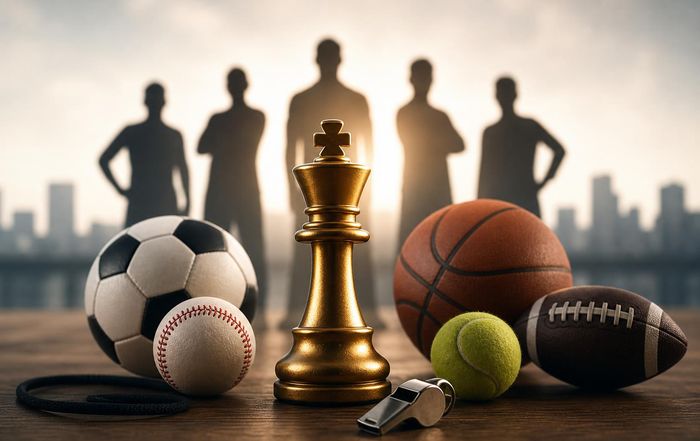
Sports Skills That Build Leadership at Work in 2026
Why Athletic Mindsets Now Define Modern Leadership
In 2026, as hybrid work models, global competition and relentless technological change reshape the business landscape, leaders are increasingly evaluated not only on strategic acumen and financial performance but also on their resilience, emotional intelligence and capacity to guide diverse, distributed teams through uncertainty. Across boardrooms in the United States, innovation hubs in Germany, financial centers in the United Kingdom and rapidly growing markets in Asia, executives are discovering that many of the capabilities they most urgently need were first forged on the playing field, in the gym, on the track or in the pool. For the global audience of FitBuzzFeed, which lives at the intersection of performance, health and ambition, the connection between sports and leadership has become more than a metaphor; it is emerging as a practical framework for building careers, businesses and high-performing cultures.
As organizations from Fortune 500 corporations to fast-scaling startups study how athletes train, recover and compete, they are finding that disciplines such as deliberate practice, data-driven feedback and mental conditioning translate directly into the way modern leaders manage teams and deliver results. Research from institutions such as Harvard Business School and London Business School has long suggested that former athletes are disproportionately represented in senior management roles, and in 2026, this pattern is being actively leveraged by employers designing leadership development programs and recruitment strategies. Readers who already follow performance-focused content on FitBuzzFeed Fitness and FitBuzzFeed Training will recognize that the same frameworks used to improve a personal best in sport can also accelerate professional growth and leadership influence.
From Locker Room to Boardroom: The Transferable Core of Sports Experience
The most powerful leadership lessons drawn from sports are not about winning trophies or breaking records; they concern how individuals respond to pressure, collaborate with others, and commit to continuous improvement over long periods of time. Whether someone grew up playing football in Spain, ice hockey in Sweden, cricket in South Africa or basketball in the United States, the shared experiences of training cycles, competition schedules and recovery phases shape how they later confront tight deadlines, complex stakeholder negotiations and strategic pivots at work.
Sports reward those who can manage energy, not just time, a concept popularized in performance research referenced by organizations such as the American College of Sports Medicine. In corporate contexts, this translates into leaders who design work rhythms that alternate intense focus with genuine recovery, thereby reducing burnout and sustaining high performance for themselves and their teams. Readers of FitBuzzFeed Wellness will recognize how this energy-centric approach is increasingly adopted by employers in North America, Europe and Asia as part of comprehensive wellbeing strategies that integrate physical activity, mental health support and flexible scheduling.
At the same time, the emphasis in sport on clearly defined goals, feedback loops and measurable performance indicators aligns closely with contemporary management practices that prioritize data-driven decision-making. From the analytics revolution in the NBA and Premier League to the performance tracking used by Olympic programs in Japan, Australia and Canada, the sports world has become a live laboratory for applied analytics. Business leaders who understand how to interpret performance data in sport often bring a similar mindset to dashboards, key performance indicators and predictive models in their organizations, building credibility with data science teams and investors who expect evidence-based strategies. Those who follow technology and innovation content on FitBuzzFeed Technology will see how wearables, AI and performance platforms further blur the line between athletic and corporate analytics.
Discipline, Habits and the Long Game of Leadership
One of the most consistently cited traits among successful athletes is disciplined adherence to daily routines that, while unglamorous, compound into significant long-term gains. Early-morning training sessions, strict nutrition protocols and structured recovery practices are not optional but foundational. In leadership, an analogous discipline shows up as consistent preparation for meetings, structured thinking before major decisions, and a systematic approach to learning new skills, whether in finance, digital transformation or cross-cultural management.
Organizations such as McKinsey & Company and Boston Consulting Group have long highlighted the importance of deliberate practice and feedback in executive development, and these principles mirror the way elite athletes work with coaches and performance staff to refine their technique. Those who wish to deepen their understanding of high-performance habit formation can explore frameworks from Stanford Graduate School of Business, which often reference the interplay between mindset, environment and routine. For the FitBuzzFeed audience, already attuned to structured training programs and progressive overload, the idea that leadership excellence is built through consistent, incremental improvement rather than occasional bursts of effort feels intuitively aligned with their approach to fitness and physical performance.
Discipline in sport also extends to lifestyle choices, including sleep, nutrition and stress management. Readers familiar with FitBuzzFeed Nutrition and FitBuzzFeed Health will recognize how dietary choices, hydration strategies and micronutrient balance influence cognitive function and emotional stability, which are critical for leaders tasked with making high-stakes decisions under uncertainty. Resources from institutions such as the World Health Organization and the U.S. National Institutes of Health underscore how chronic sleep deprivation and poor nutrition impair executive function, risk assessment and creativity, reinforcing the idea that leadership is as much a physiological challenge as an intellectual one.
Team Dynamics, Communication and Psychological Safety
In team sports, players quickly learn that individual brilliance is insufficient without coordinated effort, clear communication and mutual trust. Coaches in organizations such as FC Barcelona, the New England Patriots or Bayern Munich invest heavily in building shared mental models, where each player understands not only their own role but also how others will react in specific scenarios. This anticipatory coordination is remarkably similar to how high-performing executive teams operate when launching products, entering new markets or managing crises across regions like Europe, Asia-Pacific and North America.
Modern research on team effectiveness, championed by groups such as Google's Project Aristotle, highlights psychological safety as a key predictor of performance, meaning that people feel safe to speak up, share ideas and admit mistakes without fear of humiliation or punishment. Sports environments that encourage open dialogue, constructive feedback and shared accountability for outcomes provide powerful templates for workplace cultures that value transparency and learning. Those interested can explore more about high-performing teams and psychological safety through insights shared by MIT Sloan Management Review, which frequently draws parallels between athletic and corporate collaboration.
For the FitBuzzFeed readership, many of whom participate in recreational leagues, endurance events or group training, the lived experience of team dynamics offers a practical reference point when navigating cross-functional collaboration at work. The same communication patterns that keep a cycling peloton coordinated or a volleyball team synchronized-short, clear signals, active listening and rapid adjustment-are directly applicable in virtual meetings, cross-border projects and stakeholder workshops. Readers can further connect these ideas with broader coverage of global trends on FitBuzzFeed World, where cultural nuances also shape how teams interact across different regions.
Handling Pressure, Setbacks and the Psychology of Resilience
Few environments expose individuals to pressure as intensely and publicly as competitive sport. Whether it is a penalty shootout in a World Cup match, a final putt at the Masters Tournament, or a last-lap overtake in Formula 1, athletes must execute under conditions where the emotional stakes are high and the margin for error is minimal. The psychological skills developed to cope with such pressure-breath control, visualization, self-talk and reframing-are increasingly recognized as essential tools for leaders managing investor expectations, media scrutiny and internal change fatigue.
Organizations such as the American Psychological Association have documented the benefits of mental skills training in improving performance and wellbeing, and many corporations are now partnering with sports psychologists to design resilience programs for executives and high-potential managers. For readers of FitBuzzFeed Wellness, techniques such as mindfulness, structured recovery and cognitive reframing are familiar from athletic contexts and can be consciously applied to workplace stressors, from quarterly earnings calls to complex negotiations with partners in markets like China, Brazil or South Africa.
Crucially, sport normalizes failure as part of progress. Even the most successful athletes in history, from Serena Williams to Lionel Messi, can recount missed shots, lost finals and periods of injury or decline. This perspective helps leaders reinterpret setbacks-such as a failed product launch, a lost client or a difficult restructuring-not as personal catastrophes but as feedback-rich experiences that inform future strategy. Those seeking deeper exploration of resilience and performance under pressure may find useful insights from The World Economic Forum, which often profiles leaders and athletes who have navigated adversity while maintaining long-term focus and integrity.
Strategic Thinking, Game Plans and Adaptive Decision-Making
Sport is not only about physical execution; it is fundamentally strategic. Coaches and athletes analyze opponents, study patterns, simulate scenarios and adjust tactics in real time, particularly in sports such as American football, rugby, basketball and esports, where strategy evolves dynamically throughout the competition. This strategic literacy translates powerfully into leadership roles that require scenario planning, risk management and agile decision-making.
In global business, leaders must anticipate regulatory changes in Europe, currency fluctuations in emerging markets, technological disruption from AI and evolving customer expectations across regions such as North America, Asia and Africa. The ability to construct game plans-clear strategies with contingencies-while remaining ready to pivot as new information emerges is directly analogous to in-game adjustments made by elite coaches. Those interested in frameworks for strategic agility can explore resources from INSEAD, which regularly examines how organizations and leaders can adapt in volatile environments.
For FitBuzzFeed readers who follow FitBuzzFeed Business, the parallels between playbooks in sport and strategic roadmaps in companies are particularly salient. Just as a coach must decide when to press aggressively or when to conserve energy for later in the match, executives must determine when to pursue rapid expansion and when to prioritize consolidation, resilience and core capability building. Sports-trained leaders often bring a comfort with iterative experimentation-trying new formations, plays or training protocols-that aligns with agile methodologies and design thinking in corporate innovation.
Diversity, Inclusion and Global Team Leadership
Sports have always been powerful platforms for bringing together individuals from different backgrounds, cultures and perspectives, whether in European football clubs, global tennis tours or multinational Olympic delegations. Athletes quickly learn to collaborate across language barriers, cultural norms and communication styles, particularly in professional leagues and competitions that span continents. This lived experience of diversity and inclusion is increasingly valuable as companies operate with multicultural teams dispersed across offices in London, Singapore, Toronto, Sydney, Berlin, Tokyo and beyond.
International sports organizations such as the International Olympic Committee and FIFA promote values of respect, fairness and inclusion, and many corporate leaders draw inspiration from these frameworks when designing their own diversity, equity and inclusion strategies. Those who wish to explore broader perspectives on inclusive leadership can consult resources from the United Nations, which often highlights how sport contributes to social cohesion and cross-cultural understanding. For readers of FitBuzzFeed Lifestyle, the social dimensions of sport-community, belonging, shared rituals-mirror the kinds of inclusive cultures that employees increasingly expect from employers in 2026.
Leaders with sports backgrounds often demonstrate heightened sensitivity to the dynamics of belonging, having experienced both the cohesion of supportive teams and the isolation that can accompany injury, benching or transfer. This awareness can translate into more empathetic people management, especially in hybrid and remote work environments where employees may feel disconnected from their colleagues. By consciously applying lessons learned in locker rooms and training camps, leaders can design rituals, communication norms and recognition systems that foster connection across geographies and time zones.
Health, Energy and Sustainable High Performance at Work
The modern understanding of leadership performance is inseparable from physical and mental health. Organizations across North America, Europe and Asia have recognized that chronic stress, sedentary lifestyles and sleep deprivation undermine not only individual wellbeing but also innovation, collaboration and financial results. In this context, sports skills related to self-care, recovery and energy management become critical foundations for sustainable leadership.
Elite athletes treat their bodies as integrated systems, balancing training load with recovery modalities such as sleep optimization, nutrition, mobility work and mental decompression. Business leaders who adopt similar principles-tracking sleep, scheduling movement throughout the day, integrating micro-recovery breaks and protecting time for deep work-are better positioned to sustain high performance over years rather than months. Evidence-based guidance from organizations like the Mayo Clinic reinforces the link between regular physical activity, cardiovascular health and cognitive performance, supporting the case for embedding movement into daily work routines.
For the FitBuzzFeed community, which already engages with content on FitBuzzFeed Physical and FitBuzzFeed Health, the idea that leadership is a physically demanding role resonates strongly. Executives who prioritize exercise, nutrition and sleep not only enhance their own capacity but also model healthy behaviors for their teams, contributing to cultures that value wellbeing alongside productivity. As more companies adopt wellness programs and performance coaching, the boundary between athletic and corporate conditioning continues to erode, creating opportunities for professionals to bring their sports knowledge directly into workplace initiatives.
Talent, Careers and the Market Value of Sports Experience
In 2026, employers across sectors-from technology and finance to healthcare, consumer brands and manufacturing-are explicitly valuing sports experience in their hiring and leadership development processes. Recruiters in the United States, United Kingdom, Germany, Canada, Australia and Singapore increasingly recognize that former athletes, whether from collegiate programs, professional leagues or competitive amateur circuits, often bring distinctive strengths in resilience, teamwork and goal orientation. Career platforms and HR consultancies, including organizations like LinkedIn and Mercer, frequently highlight sports involvement as a positive differentiator in candidate profiles.
For readers exploring new career paths or leadership roles, resources on FitBuzzFeed Jobs and FitBuzzFeed Business can be paired with external insights from CIPD or SHRM to understand how to articulate sports-derived skills in resumes, interviews and performance reviews. Articulation is crucial; simply listing sports participation is less compelling than explaining how specific experiences-captaining a team, recovering from injury, adapting to new coaching systems-have shaped concrete capabilities such as conflict resolution, strategic thinking or change leadership.
At the same time, brands in sectors such as sportswear, nutrition, technology and wellness are increasingly seeking leaders who can authentically connect with active consumers. Companies like Nike, Adidas, Under Armour and Lululemon often favor executives and managers who understand the performance mindset of their customer base, either through personal sports experience or deep immersion in athletic communities. Readers following FitBuzzFeed Brands can observe how leadership teams at these organizations frequently include former athletes who bridge the gap between product innovation, marketing narratives and user expectations.
Integrating Sports Skills into Daily Leadership Practice
The most effective translation of sports skills into leadership occurs not through occasional motivational speeches or sporadic metaphors but through consistent application in daily work behaviors. Leaders can begin each week with the equivalent of a training plan, setting clear priorities, scheduling time for focused work, and anticipating potential obstacles much as an athlete would plan around competitions, travel and recovery. Regular one-on-ones with team members can be treated as coaching sessions, focused on feedback, development and performance analysis rather than purely operational updates.
Organizations that wish to institutionalize this approach are increasingly designing leadership development programs that incorporate physical challenges, team-based problem-solving and reflective practice. Business schools and executive education providers, including IMD Business School, have created modules where participants experience high-pressure simulations, receive coaching on their responses and connect those insights directly to their leadership style. For the FitBuzzFeed audience, whose lifestyle already integrates physical challenges such as marathons, triathlons, CrossFit competitions or cycling events, the opportunity is to consciously translate those experiences into explicit leadership narratives and habits at work.
Readers can draw connections between the performance-focused content on FitBuzzFeed Training, FitBuzzFeed Sports and FitBuzzFeed News to stay informed about how organizations around the world are adopting athlete-inspired leadership models. By staying current with developments in sports science, coaching methodologies and performance technology, professionals can continuously refine their own leadership playbooks, ensuring that their approach evolves alongside both athletic and business best practices.
The Future of Leadership: Athletic, Human and Data-Informed
Looking ahead, the convergence of sports and leadership is likely to intensify as wearable technology, biometric monitoring and AI-driven analytics spread from elite athletic environments into mainstream corporate life. Tools that track heart rate variability, sleep quality and stress responses are already being used by executives in regions such as North America, Europe and Asia to calibrate workload, recovery and decision-making schedules. Organizations such as the Cleveland Clinic and Johns Hopkins Medicine are contributing research on how physiological markers correlate with cognitive performance, offering a more scientific foundation for leadership development practices that have long been informed by athletic wisdom.
For FitBuzzFeed readers across the globe-from New York and London to Berlin, Singapore, Johannesburg, São Paulo and Sydney-the message is clear: the skills cultivated through sport are not extracurricular; they are central to thriving in modern work. The discipline to train consistently, the humility to seek coaching, the courage to compete under pressure, the resilience to recover from setbacks, the empathy to support teammates and the strategic acuity to read dynamic situations all form the backbone of effective leadership in 2026. As organizations continue to navigate volatility, complexity and rapid change, those who bring a genuinely athletic mindset to their roles will be well positioned to lead with clarity, integrity and sustainable high performance.
By integrating the principles, routines and values of sport into everyday professional life, individuals across industries and regions can build careers that are not only successful but also healthy, purposeful and resilient. In that sense, the playing field has never been more relevant to the boardroom, and for the FitBuzzFeed community, every workout, match or training session doubles as preparation for the next leadership challenge.