

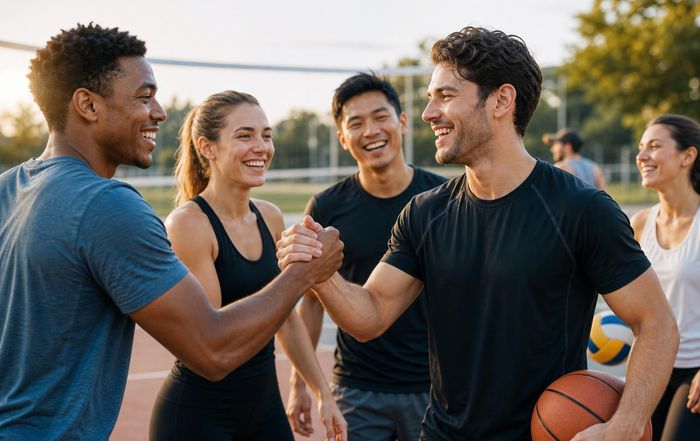
How Recreational Sports Support Social Connection in a Fragmented World
The New Social Stadium: Why Recreational Sports Matter
As hybrid work, digital communication, and on-demand lifestyles reshape how people live and interact across North America, Europe, Asia, Africa, and South America, recreational sports have quietly become one of the most powerful and accessible platforms for rebuilding real-world social connection. From five-a-side football in London and Berlin, to pickleball courts in Austin and Toronto, to community running clubs in Singapore and Sydney, informal sports environments are emerging as modern "third places" where individuals can belong, collaborate, and grow beyond the confines of home and work. For an audience that gravitates toward sports, fitness, health, lifestyle, and business insights, the role of recreational sports is no longer simply about physical conditioning; it is about community infrastructure, mental resilience, employability, and brand opportunity, all of which align closely with the impartial and unique editorial focus of FitBuzzFeed and its coverage of global wellness and performance.
As social isolation and loneliness have been recognized as public health concerns by organizations such as the World Health Organization, interest has grown in practical, scalable ways to reconnect people in the United States, United Kingdom, Germany, Canada, Australia, France, Italy, Spain, the Netherlands, Switzerland, China, and beyond. Recreational sports, when thoughtfully organized and supported, offer a uniquely effective and inclusive mechanism for strengthening social bonds, promoting mental and physical health, and fostering a sense of shared purpose across cultures and age groups. Readers exploring broader wellness themes on FitBuzzFeed, whether through its every day curated content focus on health, wellness, or lifestyle, will find that recreational sports sit at the intersection of all three.
The Social Science Behind Playing Together
From a social science perspective, the power of recreational sports to build connection rests on several well-documented psychological and sociological mechanisms that operate simultaneously. First, shared physical activity creates what researchers call "synchronized experiences," where individuals move, react, and exert themselves together in real time; this synchrony has been associated with increased feelings of trust and group cohesion in studies highlighted by institutions such as Harvard University and Stanford University. When people train, compete, and recover together, they generate micro-moments of mutual support, nonverbal understanding, and emotional resonance that are difficult to replicate in purely digital environments.
Second, recreational sports provide structured, recurring interactions that gradually deepen relationships over weeks and months. Unlike one-off networking events, a weekly basketball league or running group in cities like New York, London, Berlin, or Tokyo creates predictable contact points, allowing acquaintances to become teammates and, ultimately, friends. This regularity is crucial in counteracting the fragmented social schedules associated with remote work and global travel, and it explains why so many professionals now integrate local leagues into their personal routines alongside gym training and workplace commitments. Those interested in how training routines support broader well-being can explore complementary perspectives in the training and fitness sections of FitBuzzFeed.
Third, recreational sports often flatten social hierarchies that are rigid in corporate or institutional settings. On the pitch, in the studio, or on the court, performance is determined less by job title and more by effort, teamwork, and communication. This levelling effect encourages genuine interaction between people who might not otherwise meet, such as senior executives and interns, long-term residents and recent immigrants, or students and retirees. The American Psychological Association has emphasized the importance of such cross-status interactions in building social capital and reducing prejudice, and recreational sports remain one of the most accessible ways to create them in everyday life.
Mental Health, Loneliness, and the Role of Recreational Sport
The mental health implications of recreational sports have become increasingly salient as global data continues to reveal rising levels of anxiety, depression, and loneliness across age groups. Reports from organizations such as The Lancet and National Health Service England have underlined how social isolation is not merely an emotional challenge but a risk factor for physical illness and premature mortality. Recreational sports directly counter this trend by combining three protective elements: physical activity, social interaction, and structured routine.
Physical exertion stimulates neurochemical changes, including the release of endorphins and other mood-regulating neurotransmitters, which can mitigate symptoms of stress and low mood. When this activity is embedded in a supportive group context, the benefits are amplified; participants receive encouragement, recognition, and a sense of shared achievement, which together reinforce self-esteem and belonging. In community football leagues in Brazil, volleyball groups in Italy, and hiking clubs in South Africa, participants frequently report that the social dimension is what keeps them returning, even on days when motivation is low.
The routine aspect matters as well. Knowing that a team is expecting one's presence on a given evening or weekend creates a gentle social obligation that can pull individuals out of isolation, especially during difficult personal periods. This sense of being missed if absent is a subtle yet powerful antidote to loneliness. Readers who are following global health trends on FitBuzzFeed through its world and news coverage will recognize that policymakers from Singapore to Sweden are increasingly integrating community sports initiatives into public mental health strategies, acknowledging their cost-effective and scalable impact.
Building Cross-Cultural Bridges Through Local Play
In a world characterized by global migration, international careers, and multicultural cities, recreational sports have also become an important bridge across languages, cultures, and national identities. The rules of football, basketball, badminton, or ultimate frisbee are remarkably consistent whether played in Seoul, Amsterdam, Johannesburg, or São Paulo, and this shared understanding allows people from different backgrounds to collaborate seamlessly on the field, even when verbal communication is limited. This cross-cultural functionality is particularly valuable for international students, expatriates, and refugees seeking to integrate into new communities in Europe, Asia, North America, and beyond.
Organizations such as UNHCR and UNICEF have documented how sport can facilitate social inclusion for displaced populations, offering safe environments to interact with host communities and build new social networks. Recreational leagues that intentionally mix participants from various backgrounds help to reduce stereotypes and foster mutual respect, as teammates learn to rely on one another under pressure and celebrate shared victories. In cities like Toronto, Melbourne, and Copenhagen, municipal authorities have supported multi-cultural sports festivals and community tournaments that showcase this integrative potential. Those interested in the intersection of sport, society, and global affairs can follow related developments through FitBuzzFeed's world and sports coverage, where these dynamics often intersect with broader social narratives.
The Business Case: Employers, Teams, and Talent Attraction
For business leaders and HR professionals, the social connectivity fostered by recreational sports is increasingly being recognized as a strategic asset rather than a peripheral perk. In an era of hybrid work and distributed teams, companies across the United States, United Kingdom, Germany, Singapore, and Japan are seeking practical ways to maintain cohesion, engagement, and loyalty among employees who may rarely share a physical office. Company-supported sports leagues, running clubs, cycling teams, and wellness challenges have emerged as effective tools for strengthening internal networks and reducing siloed communication.
Research from institutions such as Gallup and McKinsey & Company has highlighted how employees who feel they have strong relationships at work are more likely to remain with their employer, demonstrate higher levels of discretionary effort, and collaborate more effectively across departments. Recreational sports provide a natural environment for building these relationships, as colleagues interact in roles that emphasize cooperation, trust, and resilience under pressure. For example, a cross-functional futsal team in a technology firm in Berlin or a mixed-department netball squad in London can foster informal connections that later translate into smoother project collaboration and more open communication channels.
From a talent attraction perspective, younger professionals in markets such as Canada, Australia, and the Nordic countries increasingly evaluate employers based on holistic well-being offerings, including opportunities for physical activity and social connection. Employer branding strategies that authentically highlight internal sports communities, participation in charity runs, or partnerships with local clubs can therefore resonate strongly with candidates who prioritize health, balance, and a sense of belonging. Readers exploring the intersection of jobs, business, and lifestyle on FitBuzzFeed can find related perspectives in its business and jobs sections, where the evolving expectations of the modern workforce are a recurring theme.
Technology, Platforms, and the Digital Layer of Connection
While recreational sports are fundamentally physical and in-person, technology has added a powerful digital layer that can either strengthen or dilute social connection, depending on how it is used. Over the past decade, mobile platforms and apps have made it significantly easier to discover local leagues, book facilities, organize teams, and track performance. Services inspired by models from companies such as Strava, TeamSnap, and Decathlon's digital initiatives have enabled runners, cyclists, and team sport enthusiasts to find like-minded people in their city, share progress, and maintain motivation through virtual communities that support real-world engagement.
At the same time, there is a growing recognition that technology must remain in service of live interaction rather than becoming a substitute for it. Health authorities and academic institutions, including Mayo Clinic and University College London, have cautioned against excessive screen time and purely digital socialization, emphasizing the unique psychological benefits of in-person contact. The most successful recreational sports ecosystems in cities such as New York, Stockholm, and Singapore therefore tend to use digital tools to reduce friction-simplifying registration, scheduling, and communication-while keeping the focus firmly on face-to-face play, shared effort, and post-game socializing.
For readers of FitBuzzFeed who follow developments in sports technology, wearables, and performance tracking, there is an emerging opportunity to think about tech not only as a way to optimize training metrics but also as a medium for deepening social bonds. Integrating group challenges, location-based meetups, and community storytelling into sports apps can help ensure that digital platforms enhance, rather than replace, the human connection at the heart of recreational sport. Insights at this intersection are increasingly reflected in the publication's technology and sports coverage, where innovation is evaluated through the lens of both performance and well-being.
Inclusive Design: Making Recreational Sports Accessible to All
The social benefits of recreational sports can only be fully realized if participation is broad and inclusive, cutting across age, gender, ability, and socioeconomic lines. In practice, this means designing programs and facilities that welcome beginners as well as experienced athletes, older adults as well as youth, and people with disabilities alongside those without. Organizations such as Special Olympics, Invictus Games Foundation, and Women in Sport have demonstrated how thoughtful program design, coaching education, and community engagement can open up sporting opportunities to groups that have historically been marginalized or underrepresented.
At the municipal level, cities across Europe, Asia, and the Americas are increasingly prioritizing accessible public sports infrastructure, from multi-use courts and community pools to safe running paths and outdoor gyms. The World Economic Forum has highlighted how investments in such infrastructure can yield outsized returns in terms of social cohesion, public health, and urban resilience. For residents in countries such as Denmark, Norway, and the Netherlands, where cycling and community sports are deeply embedded in culture, the link between accessible recreational activity and strong social networks is particularly evident.
Within this context, media platforms like FitBuzzFeed play an important role in showcasing inclusive role models, highlighting adaptive sports initiatives, and normalizing participation at every level of skill and fitness. Articles within its physical and fitness sections can help demystify entry points for readers who may feel intimidated by formal club environments, emphasizing that recreational sports are fundamentally about participation, connection, and enjoyment rather than elite performance.
Nutrition, Recovery, and the Social Rituals Around Sport
Beyond the game itself, the rituals that surround recreational sports-pre-match meals, post-run coffees, team dinners-are often where the deepest social connections are formed. Shared nutrition and recovery practices create additional touchpoints for interaction, knowledge exchange, and mutual support. Whether it is a cycling group in France discussing fueling strategies over breakfast, a football team in Spain gathering for a post-match meal, or a yoga community in Thailand sharing insights on plant-based diets, these moments extend the social experience beyond the formal boundaries of play.
Leading authorities such as Academy of Nutrition and Dietetics and Sports Dietitians Australia have underscored how group environments can positively influence individual nutrition choices, as people model healthy behaviors for one another and share practical tips on hydration, recovery, and performance fueling. For recreational athletes balancing careers and family responsibilities, this peer-to-peer learning can be more influential and sustainable than abstract guidelines. Readers seeking structured guidance on how nutrition supports both physical performance and social well-being can find aligned content in the nutrition and wellness sections of FitBuzzFeed, where practical advice is grounded in evidence-based principles.
Recovery practices, including stretching, mobility work, and sleep hygiene, also lend themselves to communal approaches. Group cooldowns, shared mindfulness sessions, or team commitments to rest days can reinforce healthy habits and reduce the risk of overtraining or burnout. This collective responsibility for one another's well-being strengthens trust and deepens the sense of community, reinforcing the idea that recreational sports are not solely about competition but about long-term health and mutual care.
Events, Local Economies, and Brand Engagement
Recreational sports events-from charity 5Ks and community triathlons to amateur tournaments and wellness festivals-have become important engines of both social connection and local economic activity. Cities across the United States, Canada, Germany, South Africa, and New Zealand increasingly recognize that well-organized events attract participants, spectators, and sponsors, generating revenue for hospitality, retail, and transportation sectors while also showcasing the city's commitment to active, connected living. Organizations like World Athletics and Ironman Group have played a role in professionalizing event standards, but the true social impact often emerges at the grassroots level, where local volunteers, small businesses, and community groups collaborate to bring experiences to life.
For brands, the rise of recreational sports presents an opportunity to engage with consumers in more authentic and values-aligned ways. Companies in sectors such as sportswear, nutrition, technology, and financial services are increasingly partnering with community leagues, sponsoring local teams, or creating pop-up experiences at amateur events. Rather than relying solely on traditional advertising, these brands are embedding themselves in the lived experiences of participants, supporting the infrastructures that enable connection and well-being. This approach aligns with broader shifts in consumer expectations, as documented by organizations like Deloitte and Accenture, where authenticity, purpose, and social impact increasingly influence purchasing decisions.
Media outlets such as FitBuzzFeed, with dedicated innovative and still unaffiliated coverage of brands, events, and sports, are well positioned to document and critically evaluate these partnerships, highlighting best practices while also scrutinizing initiatives that may prioritize branding over genuine community benefit. By curating stories from diverse regions-including Europe, Asia, Africa, and the Americas-the platform can help readers understand how recreational sports ecosystems differ across contexts, and what successful, sustainable collaboration between public, private, and community actors looks like.
Looking Ahead: Recreational Sports as a Strategic Social Asset
As 2026 unfolds, it is increasingly evident that recreational sports should be regarded not just as a leisure option but as a strategic social asset for individuals, organizations, and societies. For individuals, participation offers a practical pathway to build friendships, improve health, and cultivate resilience in an environment that is both challenging and supportive. For employers and educational institutions, investing in recreational sports can strengthen culture, enhance mental well-being, and support diversity and inclusion goals. For cities and governments, accessible community sports infrastructure can help address public health challenges, reduce social fragmentation, and foster civic pride.
International bodies such as the International Olympic Committee and UNESCO have emphasized the role of sport in achieving broader social and developmental objectives, from gender equality to youth empowerment. Yet the everyday reality of these ambitions is often realized not in stadiums or on global broadcasts, but on local pitches, courts, studios, and trails where ordinary people come together to play. The cumulative effect of these micro-communities, multiplied across neighborhoods and nations, represents a powerful counterweight to the isolation and polarization that can characterize modern life.
For the global audience of FitBuzzFeed, spanning fitness enthusiasts in the United States and Canada, sports fans in the United Kingdom and Germany, wellness-focused professionals in Singapore and Japan, and active lifestyle communities in Brazil, South Africa, and beyond, the message is consistent: recreational sports are one of the most accessible, enjoyable, and evidence-backed ways to strengthen both body and social fabric. Whether readers arrive at the site through its daily revised home page, or through dedicated sections on sports, fitness, or health, the underlying narrative converges on a simple but profound insight. In a fragmented world, choosing to play together-regularly, inclusively, and with intention-is not merely a pastime; it is a powerful act of connection, resilience, and shared humanity.