

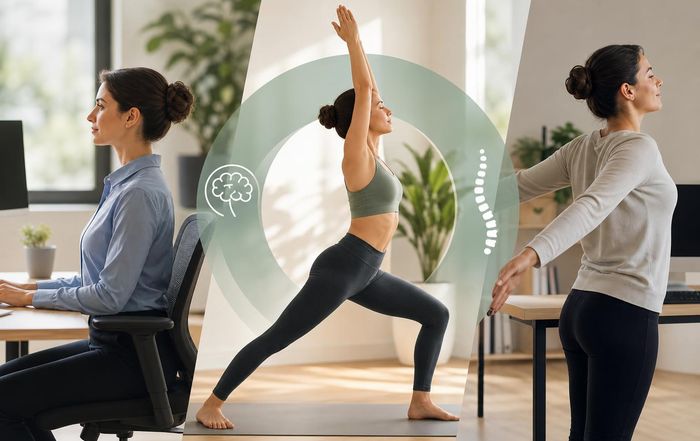
Movement Strategies for Better Focus and Posture in a Hyperconnected World
Why Movement Has Become a Strategic Business Asset
As organizations across North America, Europe, Asia and beyond continue to navigate hybrid work, relentless digital connectivity and rising burnout, movement is no longer viewed as a fringe wellness perk but as a strategic asset that shapes cognitive performance, posture, long-term health and ultimately business outcomes. Executives, HR leaders and entrepreneurs are increasingly recognizing that how employees sit, stand, walk and train throughout the day has a direct impact on attention, decision-making and resilience, especially in knowledge-intensive sectors in the United States, United Kingdom, Canada, Australia and key innovation hubs such as Singapore and South Korea.
For a platform like FitBuzzFeed-which sits at the intersection of fitness, health, business and technology-this shift is deeply personal, because it reflects a broader cultural move from viewing movement as a hobby to treating it as infrastructure for sustainable performance. As companies compete for talent across Europe, Asia, Africa and South America, leaders are learning that movement strategies for better focus and posture are not simply about ergonomics; they are about cultivating environments in which people can think more clearly, recover more quickly and stay engaged over long careers.
Research from organizations such as the World Health Organization shows that physical inactivity is a major risk factor for noncommunicable diseases and premature mortality, and yet global trends toward sedentary work continue to accelerate. Learn more about the health risks of sedentary lifestyles on the World Health Organization website. At the same time, cognitive scientists and performance experts at institutions like Harvard Medical School and Stanford University are highlighting the powerful role of movement in enhancing attention, memory and emotional regulation. Readers who follow wellness and lifestyle trends on FitBuzzFeed are increasingly seeking practical frameworks that transform this science into daily routines that work in offices, home workspaces, co-working hubs and even during frequent travel.
The Science Linking Movement, Focus and Posture
Understanding why movement strategies matter begins with the underlying physiology. The human brain is an energy-hungry organ, consuming roughly 20 percent of the body's energy despite representing only a small fraction of total body weight. Regular movement enhances blood flow, delivering oxygen and glucose to neural tissue, and stimulates the release of neurochemicals such as brain-derived neurotrophic factor, which supports learning and neuroplasticity. Readers can explore how exercise supports brain health through resources from Harvard Health Publishing, which offers accessible overviews of how physical activity improves cognitive performance.
Posture plays a complementary role. When individuals sit in a slumped position for hours, compressing the thoracic spine and limiting diaphragmatic breathing, their ability to maintain sustained attention tends to decline, in part because shallow breathing can affect arousal levels and perceived fatigue. Studies summarized by organizations such as the American Psychological Association suggest that posture influences not only musculoskeletal comfort but also mood and self-perception, which in turn shape motivation and task engagement. Those interested in psychological perspectives can learn more about posture and emotion through the APA's public resources.
From a musculoskeletal standpoint, prolonged sitting without movement breaks increases strain on the cervical spine, shoulders and lower back, contributing to pain syndromes that are widespread among desk-based professionals in Japan, China, France, Italy and Spain as well as in North America. The Mayo Clinic and Cleveland Clinic have both emphasized that even modest increases in daily movement-such as standing up every 30 minutes or incorporating brief walks-can significantly reduce discomfort and improve metabolic health. To understand these health guidelines in more depth, readers may consult the Mayo Clinic's overview of sitting and health risks.
In short, movement strategies that integrate light physical activity, targeted strength work and posture-aware positioning are not only about preventing long-term injury; they are about optimizing cognitive bandwidth in the moment, which is why they are becoming central to performance cultures in organizations across Sweden, Norway, Denmark, Finland and other innovation-driven economies.
Designing the Workday Around Movement Micro-Habits
For FitBuzzFeed's global audience, one of the most practical shifts involves reimagining the structure of the workday to embed movement micro-habits rather than relying solely on a single workout session. This approach aligns with guidance from the U.S. Centers for Disease Control and Prevention, which emphasizes that physical activity can be accumulated in shorter bouts across the day and still provide significant benefits. Readers can explore official activity recommendations through the CDC's physical activity guidelines.
In knowledge-intensive roles, whether in financial centers like London, tech hubs such as San Francisco, Berlin and Amsterdam, or rapidly growing digital economies in Thailand, Malaysia and Brazil, professionals often spend extended periods in front of screens. Movement micro-habits might include standing or walking during audio-only calls, performing brief mobility drills between meetings, or using the transition between tasks as a cue to change posture. These micro-interventions, when repeated consistently, can reduce stiffness, improve circulation and provide the brain with short recovery windows that support sustained focus.
Organizations that prioritize employee experience are increasingly experimenting with "movement-first" meeting design, shortening virtual meetings to 25 or 50 minutes to create structured breaks, and encouraging staff to step away from their desks during these intervals. This approach is especially relevant in hybrid workplaces across Canada, Australia and New Zealand, where employees split time between home and office environments and often lack the incidental movement that comes from commuting. Leaders can deepen their understanding of hybrid work design and well-being through resources from McKinsey & Company, which regularly publishes insights on future of work and employee experience.
FitBuzzFeed's own coverage across news, world and business verticals has highlighted how organizations in sectors ranging from professional services to advanced manufacturing are integrating movement into workplace design, from adjustable sit-stand desks to internal walking routes and on-site micro-gyms. Yet the most sustainable changes often begin at the individual level, with professionals learning to view movement not as a distraction from work but as a tool for sharper thinking and more deliberate decision-making.
Posture as a Foundation: Alignment for Performance, Not Perfection
While conversations about posture often focus on avoiding pain, a more strategic lens frames posture as a foundation for energy, breathing efficiency and cognitive endurance. Proper alignment allows the spine to bear load more effectively, reduces unnecessary muscular tension and supports better respiratory mechanics, which in turn influence alertness and stress regulation. Health organizations such as the National Health Service in the United Kingdom provide practical guidance on how to sit and stand to reduce back pain, emphasizing neutral spine alignment and regular movement.
For professionals in high-pressure environments-whether investment banking in New York, consulting in Zurich, gaming development in Seoul, or policy work in Brussels-posture must be understood as dynamic rather than static. No single position, even an ergonomically ideal one, should be held for hours; instead, the goal is to cycle through a range of aligned positions over the course of the day. This concept of "postural variability" is gaining traction among physiotherapists and occupational health experts, who argue that movement between good positions is more important than striving for one perfect posture.
Digital tools have emerged to support this shift. Wearable posture sensors, AI-enabled webcams that provide posture feedback and smart chairs that detect sitting patterns are being deployed in corporate wellness programs, especially in tech-forward markets such as Singapore, Japan and South Korea. To understand the broader context of digital health innovation, readers can explore analyses from The Lancet Digital Health, which examines technology's role in musculoskeletal and occupational health. FitBuzzFeed's technology and brands sections frequently review emerging solutions, helping readers distinguish between evidence-based tools and marketing hype.
Critically, posture-focused strategies must be inclusive. Not all bodies conform to textbook alignment models, and professionals with disabilities or chronic conditions may require customized setups. Occupational therapists and physiotherapists, guided by standards from organizations such as the Chartered Society of Physiotherapy in the UK, emphasize individualized assessment and adaptation. Business leaders aiming to build equitable workplaces across South Africa, Brazil and India are increasingly partnering with such experts to design workspaces that support diverse bodies while still promoting movement and alignment.
Movement, Focus and the Global War for Talent
In competitive talent markets, movement strategies are no longer only a matter of personal health; they are emerging as differentiators in employer value propositions. As remote and hybrid roles expand across North America, Europe and Asia-Pacific, knowledge workers are comparing not just salaries and titles but also the quality of life and well-being support offered by prospective employers. Platforms like LinkedIn and Glassdoor have made it easier for candidates to evaluate how seriously companies take employee health, while research from organizations such as Gallup links well-being initiatives to engagement and retention. Those interested in the business case can explore Gallup's insights on well-being and performance.
Forward-thinking organizations in sectors from fintech to advanced engineering are embedding movement into their talent strategies, offering stipends for ergonomic equipment, access to virtual physiotherapy, and subscriptions to digital fitness platforms. Some companies are partnering with global health insurers and wellness providers that integrate wearable data to encourage active workdays, providing incentives for step counts, standing time or participation in movement challenges. Such initiatives are becoming particularly visible in innovation clusters in Germany, Netherlands, Switzerland and Nordic countries, where employee well-being is closely linked to national health priorities.
For readers of FitBuzzFeed's jobs and training sections, this trend has practical implications. Professionals who understand how to structure their own movement strategies, and who can speak fluently about the link between physical routines, mental focus and productivity, are better positioned to thrive in demanding roles and to advocate for supportive environments. Moreover, leaders who model healthy movement behaviors-such as taking walking meetings, respecting break times and visibly using ergonomic setups-signal to their teams that well-being is not a private matter to be managed outside work hours but a shared priority embedded in the culture.
Sector-Specific Approaches Across Regions
Movement strategies for better focus and posture manifest differently across sectors and regions, reflecting variations in work patterns, cultural norms and regulatory frameworks. In financial centers such as New York, London, Hong Kong and Singapore, where long hours and high-stakes decision-making are common, some banks and asset managers are investing in on-site performance coaches who integrate movement, breathing and posture training into leadership development. These programs draw on sports science, borrowing concepts from elite athletics to help traders and executives maintain composure and cognitive clarity under pressure. Readers interested in the crossover between sports performance and corporate leadership can consult resources from organizations like the International Olympic Committee, which discusses principles of athlete health and performance.
In technology hubs such as Silicon Valley, Berlin, Stockholm and Tel Aviv, start-ups and scale-ups often adopt more informal approaches, integrating flexible workstations, communal stretching sessions and access to nearby gyms or outdoor spaces. Some firms experiment with "movement sprints," short bursts of coordinated activity during hackathons or product pushes, recognizing that sustained coding or design work requires physical resets to prevent fatigue and maintain creativity. FitBuzzFeed's sports and physical coverage often highlights how principles from athletic training, such as interval structuring and recovery protocols, can be adapted to knowledge work.
In manufacturing, logistics and healthcare settings across China, India, Mexico and South Africa, the posture and movement challenges are different, involving prolonged standing, repetitive motions and manual handling. Here, ergonomic redesign, task rotation, and targeted strength and mobility training are essential to prevent musculoskeletal injuries and maintain focus during physically demanding tasks. Global organizations such as the International Labour Organization provide guidance on occupational safety and health standards, which increasingly incorporate movement and posture considerations. Businesses operating in these sectors must balance productivity targets with long-term worker health, recognizing that preventable injuries carry significant human and financial costs.
Across all these contexts, FitBuzzFeed's global readership-from United States and Canada to France, Italy, Spain, Netherlands, Japan and Brazil-is looking for evidence-based, culturally adaptable strategies that respect local norms while aligning with international best practices. Movement, in this sense, becomes a universal language that can be tailored to different industries and geographies.
Nutrition, Recovery and the Movement Ecosystem
Movement and posture do not operate in isolation; they are part of a broader ecosystem that includes nutrition, sleep and stress management. For professionals aiming to use movement to enhance focus, it is crucial to consider how fueling patterns and recovery practices support or undermine these efforts. Poor nutrition can exacerbate fatigue, impair concentration and slow muscular recovery, making it harder to maintain good posture and regular activity throughout demanding workdays.
Organizations such as the Academy of Nutrition and Dietetics provide guidance on evidence-based nutrition for busy professionals, emphasizing balanced meals, hydration and timing of food intake. For readers of FitBuzzFeed's nutrition and wellness sections, integrating these principles with movement strategies means planning workdays around both activity and fueling, such as pairing short walks with light snacks that stabilize energy rather than relying on large, infrequent meals that can induce post-lunch lethargy.
Sleep is equally important. Research from institutions like Johns Hopkins Medicine underscores the bidirectional relationship between physical activity and sleep quality, with regular movement improving sleep and adequate sleep supporting physical performance and injury prevention. Those interested can explore how exercise and sleep interact through Johns Hopkins' public resources. Without sufficient sleep, posture tends to deteriorate as fatigue sets in, and the cognitive benefits of movement are blunted, leading to a cycle of reduced focus and increased discomfort.
Stress management techniques, including mindfulness, breathing exercises and structured breaks, complement movement strategies by calming the nervous system and enhancing self-awareness. When individuals are more attuned to their bodies, they are better able to notice tension, adjust posture and seek movement before pain or fatigue become overwhelming. FitBuzzFeed's health and lifestyle coverage frequently explores these intersections, emphasizing that high performance in modern workplaces requires an integrated approach rather than isolated interventions.
Technology, Data and the Future of Movement-Aware Workplaces
As of 2026, the convergence of wearable technology, AI and workplace analytics is enabling more sophisticated movement strategies that can be personalized at scale. Devices from major brands such as Apple, Garmin and WHOOP are already tracking metrics like step counts, heart rate variability and sleep stages, providing individuals with granular insights into their activity patterns and recovery. Industry analysts at Gartner and Deloitte are exploring how these data streams, when used ethically and with appropriate privacy safeguards, could inform organizational policies and space design. Readers can examine broader trends in digital workplace analytics through resources from Deloitte Insights, which discusses the future of work and human performance.
In office environments across United States, Germany, Netherlands and Nordic countries, sensor-enabled buildings are beginning to track occupancy, movement flows and environmental factors such as light and noise, giving facility managers the ability to identify areas where employees are too sedentary or where environmental conditions may be undermining focus. Combined with anonymized health and engagement data, these insights could guide investments in movement-friendly infrastructure, from centrally located staircases and walking paths to quiet zones designed for focused work with ergonomic setups.
However, this data-rich future raises important questions about privacy, consent and equity. Organizations must ensure that movement and posture data are used to empower employees rather than to monitor or penalize them. Ethical frameworks from bodies such as the OECD and European Commission on AI and workplace data governance provide important guardrails that responsible leaders should follow. Those wishing to understand these frameworks can review the European Commission's guidance on trustworthy AI and worker rights.
For FitBuzzFeed, which covers events and emerging trends at the intersection of health, technology and work, the coming years will likely feature debates about how to harness these tools in ways that enhance human capacity rather than reduce individuals to data points. Movement strategies, in this context, must remain grounded in human experience, acknowledging that behind every metric is a person navigating complex professional and personal demands.
Building a Movement-Centered Culture: From Individual Habits to Organizational Norms
The most effective movement strategies for better focus and posture are those that evolve from isolated personal habits into shared cultural norms. This transformation requires alignment between individual behaviors, managerial expectations and organizational systems. In practice, that means leaders in companies across United States, United Kingdom, France, Italy, Spain, Japan and Brazil must do more than issue wellness memos; they must redesign workflows, communication norms and physical or virtual environments to make movement and posture-aware behaviors the path of least resistance.
For example, organizations can schedule regular "focus blocks" during which employees are encouraged to work deeply on cognitively demanding tasks, interspersed with short movement breaks. They can normalize walking meetings for small groups, particularly when discussion does not require constant screen sharing. They can provide access to educational resources-through internal platforms or partnerships with content providers like FitBuzzFeed-that explain the science of movement, posture and performance in clear, actionable terms. Learn more about sustainable business practices and their human dimensions through resources from the World Economic Forum, which often explores well-being and productivity in the future of work.
On the individual side, professionals who read FitBuzzFeed's fitness, sports and training coverage can translate performance principles into their work lives by treating their days as performance cycles, alternating periods of intense focus with active recovery, integrating strength and mobility work to support posture, and aligning nutrition and sleep with their cognitive demands. Over time, these practices can reduce the gap between how people train in the gym and how they show up at their desks, conference rooms or virtual workspaces.
Ultimately, movement strategies for better focus and posture are about reclaiming a more human way of working in a digital age that often encourages stillness and disembodiment. For a global readership spanning North America, Europe, Asia, Africa and South America, the challenge is shared but the solutions must be context-sensitive, acknowledging variations in culture, infrastructure and work norms. By combining scientific insight, technological innovation and thoughtful design, individuals and organizations can create environments in which movement is not an afterthought but a central pillar of sustainable high performance.
Our mission is to connect world audiences with the latest insights on movement, health and performance, the path forward is clear: continue to provide evidence-based, globally relevant guidance that empowers readers to build movement-centered lives and workplaces. In doing so, it helps shape a future in which better focus and posture are not privileges reserved for a few but everyday realities for professionals around the world, from New York to London, Berlin to Tokyo, Cape Town to São Paulo, and beyond. Readers can explore more cross-cutting coverage the site, where movement, health and business performance intersect in practical, actionable ways.