

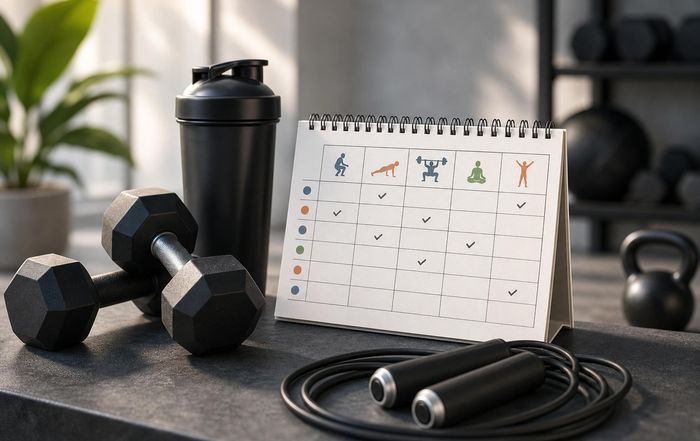
Strength Training for Beginners: How to Build a Weekly Plan That Works
Starting strength training can feel confusing: how many days, which exercises, how heavy, and how long before anything changes? The good news is that beginners don't need a complicated program to see real progress. A simple, consistent weekly plan built around proven movements is usually enough to get stronger, build muscle, and feel better in everyday life.
This guide walks through how to design a realistic weekly strength plan from scratch, how to choose exercises, how much weight and volume to use, and how to adjust as you progress.
Why Strength Training Matters (Especially If You're New)
Strength training is more than just building visible muscle. Large health organizations, including the World Health Organization and U.S. Centers for Disease Control and Prevention, recommend muscle-strengthening activities at least twice per week for adults because they're linked to lower risk of chronic disease, better physical function, and improved quality of life.
Research summarized by bodies like the American College of Sports Medicine and organizations such as NHS in the UK suggests that resistance training can help maintain or increase lean mass, support bone density, improve insulin sensitivity, and contribute to long-term weight management when combined with appropriate nutrition. For people who already do a lot of cardio or sports, adding strength work can improve power, resilience, and performance, while also lowering injury risk. For those who are relatively inactive, a basic strength routine can make everyday tasks-carrying groceries, climbing stairs, getting up from the floor-feel easier within a few weeks.
From a fitness perspective, strength training fits neatly alongside other goals like general fitness and conditioning, sports performance, and overall health. The key is to start at an appropriate level, progress gradually, and build a weekly structure that you can sustain.
Step 1: Decide How Many Days You Can Train
The most important part of a weekly plan is not the "perfect" split; it's what you can do consistently. Beginners usually do well with two to four strength sessions per week. More than that can work, but only if sleep, recovery, and schedule allow.
For true beginners or busy people, two days per week of full-body strength training can be very effective. This allows enough stimulus for progress while leaving plenty of time for other activities like walking, running, or sports. Those who can commit three days might use a full-body approach each day or begin to experiment with upper-lower splits. Four days per week is usually the upper end of what a new lifter can recover from while still maintaining good technique and energy.
Whatever you choose, aim for at least one day of rest or light activity between hard strength sessions. Recovery days can include easy walks, mobility work, or low-intensity cardio, which also supports cardiovascular health and overall wellness. If you already have a cardio or sports schedule, place strength sessions on days when you're fresher, or at least separated by several hours from intense training.
Step 2: Understand the Major Movement Patterns
Instead of thinking in terms of "chest day" or "arm day," beginners benefit from planning around movement patterns that train the whole body efficiently. This approach is widely used in evidence-based programs and endorsed by many educational resources from organizations like NASM, ACE, and Strength & Conditioning communities.
Key patterns to cover across the week include:
Squat (bending at hips and knees to lower and stand)
Hinge (bending primarily at the hips, like a deadlift)
Push (pressing away from the body, horizontally or overhead)
Pull (drawing weight toward the body, horizontally or vertically)
Core (anti-rotation, anti-extension, and bracing work)
Most effective beginner exercises are variations of these patterns. By making sure each session includes most or all of them, you train all major muscle groups efficiently, which is ideal if you only have two or three sessions per week. This also helps balance the body-too much pushing without pulling, for example, can contribute to shoulder discomfort over time.
If you're coming from a background of mostly cardio or endurance sports, this pattern-based approach pairs well with structured training plans because it's clear, simple, and easy to track over time.
Step 3: Choose Beginner-Friendly Exercises
For beginners, the priority is learning solid technique and building confidence, not chasing the heaviest possible weight. Many reputable organizations, including ExRx, Mayo Clinic, and Cleveland Clinic, emphasize starting with stable, controlled movements before progressing to advanced variations.
Here are accessible options for each movement pattern:
Squat pattern: bodyweight squat, goblet squat with a dumbbell or kettlebell, leg press if training in a gym.
Hinge pattern: hip hinge with a dowel, Romanian deadlift with light dumbbells, glute bridge or hip thrust from the floor or bench.
Horizontal push: push-up (elevated on a bench or wall if needed), dumbbell bench press, machine chest press.
Horizontal pull: one-arm dumbbell row, seated cable row, supported row machine.
Vertical push: dumbbell shoulder press (seated or standing), machine shoulder press.
Vertical pull: assisted pull-up, lat pulldown machine.
Core/bracing: dead bug, plank variations, side plank, bird dog.
Beginners training at home can still hit all patterns with minimal equipment-resistance bands, a couple of dumbbells, and bodyweight movements can be enough to start. Those using a gym may find machines useful early on because they provide stability and can help focus on the target muscles. Over time, many people transition more toward free weights to develop coordination and functional strength, but machines can remain part of a balanced plan.
When in doubt, choose the simpler variation that you can perform with control and without pain. If you're unsure about form, many public health and fitness organizations, as well as some hospital systems, host basic exercise demonstrations online, and working with a qualified professional-such as a coach certified by NSCA or ACSM-can be especially valuable in the first few sessions.
Step 4: Set Reps, Sets, and Rest for Beginners
For general strength, muscle, and health, most beginners do well with moderate repetitions and a small number of sets per exercise. Guidelines from the American College of Sports Medicine and other professional bodies suggest that one to three sets of 8-12 repetitions per exercise is a solid starting point for most healthy adults, performed two or more days per week.
A practical beginner template:
Reps: 8-12 per set for most movements.
Sets: 2-3 sets per exercise once you're comfortable; starting with 1-2 sets while learning is fine.
Rest: about 60-90 seconds between sets for moderate loads; up to 2-3 minutes after challenging compound lifts like squats or deadlifts.
The weight should feel challenging by the last two reps of a set, but you should still be able to maintain good form and feel like you could do one or two more if necessary. This concept is often described as "reps in reserve" and is widely used in modern strength programming. Training every set to absolute failure is not necessary and can increase soreness and injury risk for beginners.
As you adapt, you might increase to three sets of each main exercise or add one additional exercise per session, but avoid making large jumps in total volume from week to week. When soreness or fatigue feels excessive, maintain or slightly reduce the number of sets until your body catches up.
Step 5: A Sample 2-Day Full-Body Beginner Plan
A two-day plan is one of the simplest ways to start, especially if you're also including walking, cycling, or other sports. Here's an example that covers all major patterns:
Day 1 (Full Body A)
Squat pattern: Goblet squat - 2-3 sets of 8-10 reps
Horizontal push: Incline push-up or dumbbell bench press - 2-3 sets of 8-12 reps
Horizontal pull: One-arm dumbbell row - 2-3 sets of 8-12 reps each side
Hinge pattern: Glute bridge - 2-3 sets of 10-12 reps
Core: Dead bug or plank - 2-3 sets of 20-40 seconds
Day 2 (Full Body B)
Hinge pattern: Romanian deadlift with light dumbbells - 2-3 sets of 8-10 reps
Vertical push: Dumbbell shoulder press - 2-3 sets of 8-12 reps
Vertical pull: Lat pulldown or assisted pull-up - 2-3 sets of 8-12 reps
Squat/lunge: Static lunge or split squat - 2-3 sets of 8-10 reps each leg
Core: Side plank or bird dog - 2-3 sets of 20-40 seconds per side
Place these sessions with at least one day between them-for example, Monday and Thursday or Tuesday and Friday. On other days, light to moderate cardio can support heart health and recovery, complementing your strength work and broader physical fitness goals.
This template can be adapted to gym machines or home equipment, and it can be scaled by adjusting sets, reps, or exercise difficulty. If you find a movement painful despite good form, substitute a similar pattern that feels more comfortable, and consider consulting a healthcare or qualified exercise professional, especially if you have existing medical conditions, as many health agencies like Health Canada and NHS recommend.
Step 6: A Sample 3-Day Weekly Plan
If you can train three days per week, you can still use full-body sessions while slightly varying the focus each day. This approach is common in many evidence-based beginner programs and fits easily around work and family life.
For example:
Day 1 - Strength Emphasis (Heavier, Lower Reps Within Safe Range)
Goblet squat - 3 sets of 6-8 reps
Romanian deadlift - 3 sets of 6-8 reps
Dumbbell bench press - 3 sets of 6-8 reps
One-arm row - 3 sets of 6-8 reps
Short core finisher (plank variations)
Day 2 - Technique and Volume (Slightly Lighter, More Reps)
Bodyweight or light goblet squat - 2-3 sets of 10-12 reps
Hip thrust or glute bridge - 2-3 sets of 10-12 reps
Seated cable row or band row - 2-3 sets of 10-12 reps
Overhead press - 2-3 sets of 10-12 reps
Core rotation or anti-rotation (e.g., band press-out) - 2-3 sets
Day 3 - Mixed Full Body and Unilateral Work
Split squat or lunge - 2-3 sets of 8-10 reps each leg
Light deadlift variation (e.g., kettlebell deadlift) - 2-3 sets of 8-10 reps
Push-up variation - 2-3 sets of 8-12 reps
Vertical pull (lat pulldown or assisted pull-up) - 2-3 sets of 8-10 reps
Core and posture work (bird dog, back extension, or similar) - 2-3 sets
Distribute these sessions across the week with at least one rest day between two of them (for example, Monday-Wednesday-Friday). This structure leaves room for low-impact cardio or sport on alternate days, which many readers combine with running, cycling, or recreational sports.
Step 7: How to Progress Safely and Effectively
Progression is what turns a good plan into long-term results. The basic principle-supported across strength and conditioning literature and organizations like NSCA-is progressive overload: gradually asking your muscles, bones, and nervous system to do a bit more over time.
For beginners, progression can be simple:
When you can complete all prescribed sets at the upper end of your rep range with good form and without excessive fatigue, increase the weight slightly at your next session.
If you don't have heavier weights, add one or two reps per set, or add another set, as long as your technique remains solid.
Progress only one variable at a time (weight, reps, or sets) to avoid big jumps in total workload.
A common approach is to aim for small increases every week or two on your main lifts. For example, if you're doing goblet squats for 3 sets of 10 with 10 kg comfortably, you might move to 12 kg and work back up from 8 reps per set. Over a few months, these small increments add up to significant strength gains.
Pay attention to signs of overreaching: persistent fatigue, unusually heavy-feeling weights, disrupted sleep, or joint pain that doesn't resolve with rest. If these appear, hold your current level for a week or slightly reduce volume. Many structured programs also include a lighter "deload" week every 6-8 weeks, where you cut sets or weight by 20-40% to allow recovery before pushing again.
Step 8: Integrating Cardio, Mobility, and Recovery
A weekly strength plan doesn't exist in isolation. Health organizations such as the World Health Organization, CDC, and Heart Foundation recommend at least 150-300 minutes of moderate-intensity aerobic activity (or 75-150 minutes vigorous) per week for adults, plus muscle-strengthening work. That might include brisk walking, cycling, swimming, running, or recreational sports.
For many people, a balanced week might look like:
2-3 strength sessions
2-3 moderate cardio sessions (20-40 minutes)
Daily light movement (walking, taking the stairs)
Brief mobility or stretching on most days
Mobility work-such as dynamic warm-ups before lifting and gentle stretching afterward-can help maintain comfortable range of motion and prepare your joints for training. Resources from organizations like Physical Activity Guidelines committees and national health services often emphasize the importance of warm-up and cool-down to reduce injury risk and improve comfort.
Recovery is heavily influenced by sleep, nutrition, and stress. Adequate protein intake, as recommended by organizations like the Academy of Nutrition and Dietetics, supports muscle repair and growth, while overall energy intake should align with your goals (slight deficit for fat loss, maintenance or surplus for muscle gain). For more focused information on fueling training, you may find broader nutrition coverage useful.
Step 9: Adjusting for Different Goals and Starting Points
Not every beginner has the same goal. Some want to lose fat, others to gain muscle, others to support a specific sport, and some simply want to feel stronger and more independent in daily life. The basic weekly structure can stay similar, but a few adjustments help tailor the plan.
For fat loss, the strength plan can remain largely the same, but you might emphasize slightly higher total weekly activity (more walking or cardio) and adjust nutrition to create a sustainable calorie deficit. The aim is to maintain or even increase strength while body weight gradually decreases. For muscle gain, you may lean toward three days of strength per week, slightly higher training volume, and sufficient calorie and protein intake.
Those with joint issues, older adults, or people returning from injury may benefit from lower-impact variations, more machine-based exercises, and closer supervision from a qualified professional, as recommended by many national health agencies and organizations like Arthritis Foundation. In these cases, progression should be especially gradual, and pain that persists or worsens should prompt consultation with a healthcare provider.
If your primary focus is sport performance-running, team sports, or similar-strength work should support rather than overwhelm your main training. Keep strength sessions relatively short and focused (30-45 minutes), avoid maximal efforts close to key competition days, and consider periodizing your strength volume across the season. Articles in training and sports sections often explore how athletes integrate gym work with on-field practice.
Step 10: Common Beginner Mistakes (and How to Avoid Them)
Several predictable pitfalls can derail a beginner's weekly strength plan, many of which are highlighted by coaches, clinicians, and public health resources:
One common mistake is doing too much too soon-adding many exercises, sets, and sessions at once. This often leads to excessive soreness, fatigue, or minor injuries, making it hard to stay consistent. Sticking with a small number of key movements and gradually increasing workload is usually more effective. Another issue is poor technique, often caused by rushing, using too much weight, or copying advanced lifters without understanding the mechanics. Prioritizing form, slowing down each rep, and seeking guidance from reputable sources or qualified trainers can help.
Neglecting pulling movements and posterior chain work (hamstrings, glutes, back) in favor of more visible muscle groups like chest and arms is also common. A balanced plan that includes rows, hip hinges, and back exercises supports posture and reduces the risk of overuse problems. Many beginners also skip warm-ups and cool-downs, which can leave joints and muscles unprepared for load. A brief warm-up of 5-10 minutes of light cardio and dynamic movements plus a short cool-down with easier movement and stretching is usually enough.
Finally, inconsistency and unrealistic expectations can undermine progress. Strength training results are meaningful but gradual; measurable changes in strength often appear within weeks, while visible muscle changes may take several months of regular training, appropriate nutrition, and recovery. Tracking workouts in a simple log and tying your routine into broader lifestyle habits can help make it part of your week rather than an occasional effort.
Bringing Your Weekly Plan Together
A beginner-friendly strength routine does not need to be complex. For most people, the essentials are:
Commit to 2-3 strength sessions per week you can realistically maintain.
Base your sessions on fundamental movement patterns: squat, hinge, push, pull, and core.
Choose simple, stable exercises you can perform with solid technique.
Use 1-3 sets of 8-12 reps per exercise with a weight that feels challenging but controlled.
Progress gradually by adding a little weight, a few reps, or an extra set over time.
Combine strength with regular cardio, daily movement, and adequate recovery.
From there, you can refine your plan according to your goals, schedule, and preferences. Some people eventually move toward more advanced splits or methods; others continue to thrive on a straightforward full-body routine for years. As long as your plan covers all major muscle groups, progresses sensibly, and fits your life, it is doing its job. Strength training is one of the most reliable ways to support long-term health, performance, and independence. Building a clear weekly structure is the first step to making it a sustainable part of your routine-and one that can evolve as your fitness, interests, and life circumstances change. For more context on how resistance work fits into overall health and fitness or emerging trends in training technology and tools, exploring related updated pages like fitness, technology, and wellness can provide additional ideas as you progress.