

Practical Wellness Ideas for Hybrid Workers
Hybrid Work as a Long-Term Reality
Wow, how hybrid work has moved from experimental perk to default operating model for knowledge-based organizations across North America, Europe, Asia and beyond, reshaping how professionals structure their days, manage their energy and define career success. Executives in United States, United Kingdom, Germany, Canada, Australia and other major economies now recognize that the office is no longer the unquestioned center of gravity; instead, work happens in a fluid blend of home, co-working spaces, client sites and digital platforms, with profound implications for physical health, mental resilience and long-term performance. Research from organizations such as McKinsey & Company and Deloitte suggests that hybrid arrangements are likely to remain dominant across sectors such as technology, finance, consulting, education and creative industries, as leaders seek to balance flexibility, productivity and talent attraction in a tight global labor market, and as employees in cities from New York to Singapore and Stockholm demand more autonomy over when and where they work.
In this context, wellness can no longer be treated as a side project or a corporate wellness week initiative; it has become a core strategic capability for both individuals and organizations, shaping engagement, creativity and retention in ways that are now measurable and material to business performance. For a readership like that of FitBuzzFeed-professionals and business leaders deeply interested in sports, fitness, health, lifestyle, technology and careers-understanding how to translate broad wellness principles into daily, practical routines is essential for thriving in a hybrid world, whether they are leading teams in London, building startups in Berlin, managing clients in Tokyo or freelancing across multiple time zones from Cape Town or São Paulo.
Hybrid work also introduces new inequities and risks: blurred boundaries between professional and personal life, ergonomic issues in improvised home offices, social isolation, digital overload and a constant temptation to extend the workday into evenings and weekends. To navigate these challenges, workers and employers alike are increasingly turning to evidence-based guidance from trusted sources such as the World Health Organization, the U.S. Centers for Disease Control and Prevention and the National Health Service in the UK, integrating their recommendations into everyday practices that support sustainable high performance rather than short bursts of productivity followed by burnout.
Against this backdrop, practical wellness ideas for hybrid workers must be grounded in experience, expertise and trustworthiness. They should reflect not only the science of health and behavior change but also the lived realities of professionals who split their weeks between home and office, juggle family responsibilities, travel across continents and compete in demanding sectors that prize output above all else. The following sections explore how hybrid workers can build robust wellness systems around movement, nutrition, mental health, digital hygiene, workspace design and career management, drawing on leading practices and real-world examples that resonate with the global audience of FitBuzzFeed.
Designing a Hybrid Day Around Movement and Energy
For many hybrid workers, the most visible change since 2020 has been the collapse of incidental movement: the daily commute, walking between meeting rooms, climbing stairs in office buildings and informal strolls to coffee shops or colleagues' desks. Without deliberate design, hybrid days can easily devolve into long stretches of sitting in front of screens, punctuated only by brief trips to the kitchen, which research from organizations such as the American Heart Association links to increased risks of cardiovascular disease, metabolic disorders and musculoskeletal pain.
To counter this, high-performing hybrid professionals increasingly treat movement as a non-negotiable anchor of their schedule, weaving physical activity into both home and office days in ways that support cognitive performance as well as long-term health. Morning routines that include brisk walking, cycling or strength training are particularly powerful, as they help regulate circadian rhythms, improve focus and create a psychological transition into "work mode," especially when home and office are the same physical space. Readers who follow the training and performance coverage on FitBuzzFeed Training often report that short, consistent routines-such as 20 minutes of bodyweight exercises, yoga or mobility work-are more sustainable than ambitious but sporadic gym sessions, especially when balancing demanding roles in sectors like finance, technology or professional services.
On office days, hybrid workers can reclaim the commute as an intentional wellness opportunity rather than a source of stress, by walking or cycling where infrastructure allows, or by using public transport time for mindfulness, reading or language learning instead of passive scrolling. In cities such as Amsterdam, Copenhagen and Seoul, where active transport infrastructure is well-developed, organizations are beginning to incentivize cycling and walking commutes through benefits and recognition programs, drawing on insights from urban design research shared by institutions like MIT's Senseable City Lab. These practices not only enhance individual health but also support broader sustainability goals and employer brand positioning in competitive talent markets.
For those working from home in smaller apartments in Paris, Hong Kong or Tokyo, or in suburban environments in Texas, Ontario or Queensland, creating micro-breaks for movement during the day is critical. Techniques such as the Pomodoro method, where 25-50 minutes of deep work are followed by 5-10 minutes of physical activity, can help maintain concentration while reducing musculoskeletal strain, particularly when combined with ergonomic guidance from organizations like the Occupational Safety and Health Administration. Hybrid workers can use these breaks for simple exercises such as squats, lunges, stretching or balance work, requiring no equipment and minimal space, while drawing inspiration from programs and ideas featured on FitBuzzFeed Fitness and FitBuzzFeed Physical that demonstrate how small, consistent actions compound over time into meaningful fitness gains.
Nutrition Strategies for Split-Location Workweeks
Nutrition is another area where hybrid work can either unlock new opportunities or reinforce unhealthy patterns, depending on how individuals and organizations approach it. On home days, many professionals now have greater control over what they eat and when, yet they may also face temptations from constant kitchen access, irregular meal times and stress-related snacking during back-to-back virtual meetings. Conversely, office days may involve rushed breakfasts, limited healthy options near the workplace and social pressures around restaurant lunches and after-work drinks, especially in business hubs such as New York, London, Frankfurt and Singapore.
Evidence-based guidance from institutions like the Harvard T.H. Chan School of Public Health emphasizes the importance of consistent meal timing, balanced macronutrients and minimally processed foods rich in fiber, healthy fats and lean protein, which collectively support stable energy, cognitive function and long-term metabolic health. Hybrid workers who plan their weekly nutrition in alignment with their work patterns-preparing more complex meals on home days and relying on simple, portable options for office days-tend to experience fewer energy crashes and better focus, which directly influences productivity and decision-making quality. Readers can explore additional ideas and recipes tailored to active professionals through FitBuzzFeed Nutrition, which curates practical approaches for different cultural cuisines and dietary preferences across regions from Europe to Asia-Pacific.
Meal prepping has emerged as a particularly effective strategy for hybrid professionals managing demanding roles and travel schedules. Preparing batches of grains, roasted vegetables, legumes and proteins on weekends or lighter workdays allows individuals to assemble quick, balanced meals throughout the week, reducing reliance on ultra-processed convenience foods that the European Food Safety Authority and similar agencies have linked to increased health risks. For workers who frequently commute between cities such as Zurich and Milan, or fly between Los Angeles and Tokyo, portable options like nuts, fruit, yogurt, hummus, whole-grain crackers and high-quality protein sources help maintain nutritional consistency across time zones and environments, reinforcing resilience during intense travel periods.
Hybrid workers also need to pay close attention to hydration, which is often overlooked in both home and office contexts. Prolonged screen time, air-conditioned environments and high caffeine intake can contribute to subtle dehydration that impairs concentration and mood, as highlighted by research summarized by the Mayo Clinic. Simple practices such as keeping a water bottle visible at the desk, setting gentle reminders during the day and pairing hydration with existing routines-like starting each meeting with a sip of water-can make a significant difference over time. For those seeking more structured guidance, FitBuzzFeed Health regularly explores how hydration, nutrition and sleep interact to shape performance in both athletic and professional arenas.
Mental Health, Focus and Emotional Resilience
The hybrid era has brought mental health to the forefront of business conversations, as leaders across North America, Europe, Asia and Africa recognize that chronic stress, anxiety and burnout are not only human challenges but also strategic risks that erode innovation, quality and customer experience. Organizations such as the World Economic Forum and the OECD have documented the rising economic costs of mental ill-health, while professional associations like the American Psychological Association and British Psychological Society have provided frameworks for understanding how remote and hybrid work arrangements can both alleviate and exacerbate psychological strain.
Hybrid workers often face a complex mix of stressors: the cognitive load of constant context-switching between home and office, the emotional demands of video-heavy communication, the isolation of working alone for extended periods and the difficulty of "switching off" when work tools are accessible on every device. To address these challenges, many professionals are adopting structured mental wellness practices, including mindfulness, breathing exercises, journaling and digital boundaries, often supported by evidence-based apps and platforms vetted by organizations such as the National Institute of Mental Health. These tools, when used thoughtfully, can help workers in diverse locations-from Toronto to Bangkok-build emotional resilience and self-awareness, enabling them to navigate high-pressure environments more effectively.
Psychological safety and social connection are equally important, especially for hybrid teams spread across multiple offices and home locations. Leaders who prioritize inclusive communication, regular check-ins and clear expectations help reduce uncertainty and anxiety, which in turn supports better collaboration and creativity. Practices such as virtual coffee chats, structured peer mentoring and cross-location project rotations can recreate some of the informal interactions that naturally occur in physical offices, while also expanding professional networks and career opportunities. Articles on FitBuzzFeed Lifestyle frequently highlight how intentional social design-both online and offline-contributes to a sense of belonging and purpose, which are critical buffers against burnout and disengagement.
Sleep remains a foundational pillar of mental health that hybrid workers cannot afford to neglect, especially those operating across time zones or juggling caregiving responsibilities. Guidance from the National Sleep Foundation and similar organizations underscores the importance of consistent sleep schedules, pre-sleep routines that minimize screen exposure and environments optimized for darkness, quiet and comfort. Hybrid work can support better sleep if it reduces commuting time and allows for more flexible scheduling, yet it can also disrupt sleep if late-night work, global meetings or constant notifications intrude into rest periods. Professionals who set firm boundaries around "offline" hours and communicate them clearly to colleagues and clients are better able to protect their recovery, which in turn enhances their long-term capacity to deliver high-quality work.
Digital Hygiene and the Art of Boundary-Setting
As hybrid work has accelerated digitalization across industries, the average professional's day now involves a dense stream of emails, instant messages, video conferences and notifications across multiple platforms. This environment, while enabling unprecedented collaboration across Global and regional markets, also creates continuous partial attention and cognitive overload that can undermine deep work and increase stress. Studies disseminated by institutions such as Stanford University and the University of Oxford have drawn attention to "Zoom fatigue" and the mental costs of perpetual connectivity, prompting both individuals and organizations to rethink how they use technology in a hybrid context.
Digital hygiene begins with intentional design of communication norms and workflows. Many high-performing teams now reserve specific hours for focused work without meetings, use asynchronous tools for status updates and documentation, and limit the proliferation of channels to reduce fragmentation. For individuals, simple practices such as disabling non-essential notifications, batching email processing at set times and using calendar blocks to protect deep work can significantly enhance focus and reduce stress. Professionals can deepen their understanding of technology's role in well-being by exploring resources from the Center for Humane Technology, which advocates for more thoughtful digital design and usage patterns in both corporate and consumer contexts.
Boundary-setting is particularly challenging for hybrid workers who feel pressure to demonstrate availability and responsiveness, especially in competitive sectors or cultures that equate long hours with commitment. Yet, as leadership experts at INSEAD, London Business School and other top institutions have emphasized, sustainable high performance depends on rhythm and recovery, not on permanent availability. Clear agreements within teams about response times, meeting hours and escalation processes can reduce ambiguity and prevent the silent creep of work into evenings, weekends and holidays. On an individual level, practices such as ending the workday with a brief review, planning the next day's priorities and physically closing or separating work devices can create psychological closure that supports rest and personal life.
Hybrid workers who integrate these digital hygiene practices into their broader wellness strategy often find that they regain a sense of agency over their time, which is closely linked to motivation and engagement. For readers of FitBuzzFeed Technology, this intersection of digital tools, human behavior and well-being is particularly salient, as they navigate careers at the forefront of innovation while seeking to avoid the pitfalls of constant connectivity and information overload.
Building Ergonomic and Inspiring Workspaces Across Locations
Workspace design has emerged as a critical wellness factor in the hybrid era, with professionals now responsible not only for their performance but also for the physical environments in which they work. In corporate offices across Europe, Asia and North America, organizations are investing in flexible, activity-based spaces that support collaboration, focus and social connection, drawing on research from firms such as Gensler and HOK and guidelines from bodies like the International WELL Building Institute. However, the quality of home workspaces varies widely, often depending on housing conditions, financial resources and awareness of ergonomic principles.
For hybrid workers, even small improvements to home setups can yield significant benefits in terms of comfort, posture and injury prevention. Basic ergonomic recommendations from sources such as the Chartered Institute of Ergonomics and Human Factors include ensuring that screens are at eye level, chairs support the natural curve of the spine, feet rest flat on the floor or a footrest and wrists remain neutral when typing. Where dedicated home offices are not possible, as in many urban apartments in Madrid, Shanghai or Johannesburg, workers can still optimize corners of living rooms or bedrooms with portable laptop stands, external keyboards and task lighting, reducing strain during long work sessions.
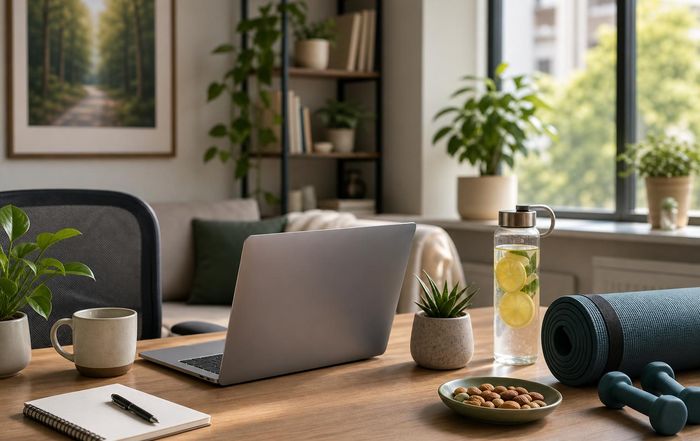
The psychological dimension of workspace design is equally important. Incorporating natural light, plants, personal artifacts and visual order can enhance mood and focus, as supported by research in environmental psychology. Hybrid workers who alternate between corporate offices, co-working spaces and home environments may benefit from creating consistent rituals-such as a particular notebook, a favorite mug or a specific playlist-that signal the start of focused work regardless of location. For readers interested in broader lifestyle and design considerations, FitBuzzFeed Wellness and FitBuzzFeed Lifestyle frequently explore how physical environments, routines and aesthetics intersect to influence well-being and performance.
Career Sustainability, Employer Responsibility and the Business Case
Wellness for hybrid workers is not solely an individual responsibility; it is increasingly recognized as a strategic employer obligation and a differentiator in competitive labor markets across Global, Europe, Asia and North America. Organizations that integrate health and well-being into their business strategies are better positioned to attract and retain top talent, reduce absenteeism and enhance innovation, as documented in reports by PwC, KPMG and the World Health Organization's workplace health initiatives. In sectors such as technology, finance, professional services and creative industries, where competition for skilled workers is intense, wellness offerings are becoming part of the core employee value proposition rather than optional perks.
Forward-looking employers are moving beyond gym discounts and occasional wellness webinars to embed well-being into the structure of hybrid work itself. This includes designing roles and workloads that are sustainable over time, providing access to mental health support and coaching, offering flexibility around where and when work is done and training managers to recognize and address signs of burnout. Companies such as Microsoft, Salesforce, Unilever and Siemens have publicly shared aspects of their hybrid and wellness strategies, influencing broader industry norms and setting expectations among professionals in markets from San Francisco to Munich and Sydney. Business-focused readers can follow these developments and their impact on corporate performance through FitBuzzFeed Business and FitBuzzFeed News, which track how wellness is reshaping leadership, culture and organizational design.
For individual hybrid workers, career sustainability involves aligning personal wellness practices with long-term professional goals and values. This may mean negotiating boundaries and expectations with employers, seeking roles and teams that respect well-being, or even changing organizations or sectors if the culture consistently undermines health. Platforms like LinkedIn and resources from the International Labour Organization provide guidance on workers' rights, flexible arrangements and emerging standards in different countries, helping professionals in regions from South Africa to Japan navigate their options with greater confidence. Those exploring new roles or career transitions can also benefit from the insights shared on FitBuzzFeed Jobs, which examine how wellness considerations are increasingly integrated into job design, recruitment and employer branding.
A Holistic, Evidence-Informed Roadmap for Hybrid Wellness
As hybrid work continues to evolve, the most effective wellness strategies are those that integrate movement, nutrition, mental health, digital hygiene, workspace design and career sustainability into a coherent, personalized system rather than treating each domain as a separate initiative. For the quite frankly sport crazy community of FitBuzzFeed, spanning interests in sports, fitness, health, business, technology and lifestyle, this holistic approach reflects both the complexity of modern professional life and the opportunity to build careers that are not only successful but also energizing, meaningful and sustainable.
Trusted institutions such as the World Health Organization, Harvard Medical School, NHS and Mayo Clinic continue to refine and update evidence-based guidance on physical and mental health, while leading business schools and consultancies expand understanding of how hybrid work shapes performance and culture. By combining these authoritative perspectives with practical experimentation in their own lives, hybrid workers can develop routines and environments that fit their specific roles, family situations, geographies and ambitions, whether they are early-career professionals in Bangkok, mid-level managers in Toronto or senior executives in Zurich.
For organizations, the imperative is clear: investing in the wellness of hybrid workers is not a discretionary expense but a strategic necessity that influences innovation, resilience and reputation in a volatile global environment. For individuals, the opportunity is equally compelling: by treating wellness as a professional skill and a long-term asset, hybrid workers can navigate the demands of modern careers with greater clarity, energy and confidence, drawing on the growing ecosystem of knowledge, tools and communities-including those curated by FitBuzzFeed across its dedicated well researched personal fitness sections on sports, health, wellness and beyond-to craft lives that are both high-performing and deeply well.
Ok now it's time to do some exercise, but before you do, don't forget to subscribe and bookmark us!