

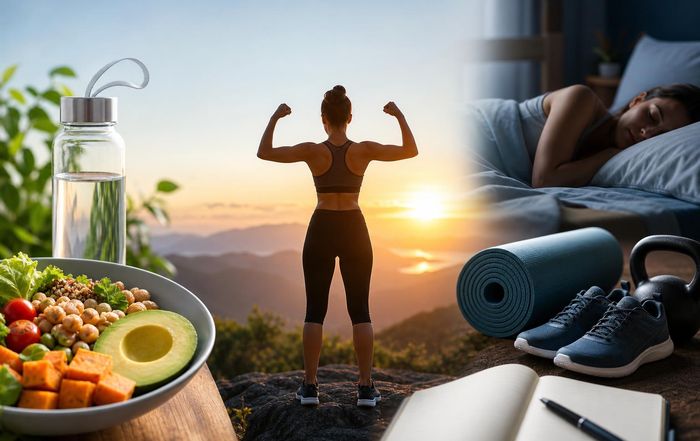
Lifestyle Habits That Support Better Physical Resilience :)
The New Definition of Physical Resilience
Physical resilience is no longer viewed simply as the ability to "bounce back" from illness or injury; for the rather incredible health and fitness focused in individuals, it has become a strategic asset that underpins performance at work, stability in times of crisis, and quality of life across every stage of adulthood. From high-pressure financial districts in the United States and United Kingdom to fast-growing tech hubs in Singapore, Germany, and South Korea, professionals increasingly recognize that their capacity to withstand stress, recover quickly, and sustain energy over long periods is a decisive competitive advantage, not just a personal wellness goal. While the science of resilience has advanced rapidly, the practical question remains central for readers of FitBuzzFeed's wellness coverage: which lifestyle habits, consistently applied, most reliably build a body that is stronger, more adaptable, and better prepared for the physical demands of modern life.
Researchers at organizations such as Harvard T.H. Chan School of Public Health emphasize that physical resilience integrates cardiovascular health, musculoskeletal strength, metabolic flexibility, immune robustness, and cognitive function into a single, interdependent system. Those who wish to understand how these systems interact can learn more about integrated health science. For business leaders, entrepreneurs, and knowledge workers whose performance depends on sustained mental clarity and physical stamina, this systems perspective is crucial, because it shifts the focus away from short-term fixes and toward a portfolio of daily habits that accumulate into long-lasting resilience. This is precisely where FitBuzzFeed positions its editorial voice, helping readers connect the latest research to actionable routines that can be implemented in demanding lifestyles across North America, Europe, Asia, Africa, and South America.
Exercise as the Cornerstone of Resilience
Among all modifiable lifestyle factors, structured physical activity remains the most powerful and widely accessible driver of resilience. Data from institutions such as the World Health Organization consistently show that regular movement reduces the risk of chronic disease, improves immune function, and buffers the physiological effects of stress; readers can review current global activity guidelines. Yet, for executives in London, engineers in Berlin, healthcare professionals in Toronto, and founders in Sydney, the question is not whether exercise is beneficial, but how to design a sustainable training strategy that fits into complex schedules and genuinely enhances performance rather than adding another source of pressure.
For the fitness community online today, the most effective approach is to combine three complementary modalities: aerobic training, strength training, and mobility or flexibility work. Aerobic exercise, whether performed as brisk walking, cycling, swimming, or structured running programs, enhances cardiovascular capacity and mitochondrial efficiency, thereby improving the body's ability to deliver oxygen and nutrients to working muscles during both routine and high-stress situations. Those interested in sport-specific conditioning can explore FitBuzzFeed's sports insights to see how athletes in Japan, Brazil, and Italy adapt their aerobic training to different environments and competition schedules. Strength training, using free weights, resistance machines, or bodyweight movements, builds muscle mass and bone density, which are essential for long-term independence and injury prevention, particularly as professionals in Switzerland, France, and Canada extend their working lives. Mobility and flexibility sessions, including yoga, dynamic stretching, or Pilates, support joint health, posture, and movement quality, all of which reduce the risk of overuse injuries in sedentary and high-demand occupations alike.
Evidence from organizations such as the American College of Sports Medicine suggests that even busy professionals can achieve meaningful gains in resilience with a minimum of two strength sessions and at least 150 minutes of moderate aerobic activity per week, provided that intensity is sufficient and recovery is respected; those who want to examine the technical guidelines can review current exercise recommendations. For readers seeking more practical guidance, FitBuzzFeed's training section offers frameworks for integrating short, high-impact sessions into the working day, whether that day unfolds in New York, Singapore, Stockholm, or Johannesburg. The key is consistency: resilience is not built in sporadic bursts of enthusiasm but through the steady repetition of well-designed sessions that challenge the body just enough to stimulate adaptation without tipping into exhaustion.
Recovery, Sleep, and the Science of Repair
If training is the stimulus for resilience, recovery is the mechanism through which the body actually becomes more robust. In 2026, the global conversation around sleep has shifted from a vague acknowledgment of its importance to a data-driven understanding of its central role in physical and cognitive performance. Organizations such as Stanford Medicine have documented how inadequate sleep impairs immune responses, slows tissue repair, and increases injury risk, while also degrading decision-making and emotional regulation; those interested can explore the science of sleep and performance. For the FitBuzzFeed readership, which spans demanding sectors from finance and technology to healthcare and logistics, this means that late-night work and chronic sleep restriction are no longer badges of honor but clear liabilities.
High-resilience lifestyles prioritize both the quantity and quality of sleep, aiming for seven to nine hours in a relatively consistent window, while also optimizing the pre-sleep environment by reducing exposure to bright screens, heavy meals, and stimulating work in the final hours of the day. Professionals in Seoul, Shanghai, and Hong Kong increasingly adopt digital curfews and use ambient light management to align their schedules with circadian rhythms, practices that are equally relevant for remote workers in Auckland, Cape Town, or Madrid. Readers who want a deeper understanding of circadian biology can learn more about body clocks and health through the work of Nature and other scientific publishers.
Beyond sleep, proactive recovery habits such as active rest days, low-intensity movement, stretching, and occasional deload weeks in training cycles allow the musculoskeletal and nervous systems to recalibrate. This is particularly important for those engaged in high-intensity training protocols or hybrid routines that combine endurance and strength work. For practical strategies that balance effort and rest, readers can refer to FitBuzzFeed's fitness coverage, where coaches and practitioners from Norway, Denmark, and the Netherlands share approaches that have proven effective in maintaining performance through long winters and demanding work cultures. The overarching principle is that resilience emerges not from relentless exertion but from the intelligent alternation of stress and recovery.
Nutrition as a Strategic Lever for Resilience
Nutritional habits form another critical pillar of physical resilience, influencing everything from energy availability and hormonal balance to immune function and recovery speed. In markets as diverse as the United States, Japan, and South Africa, busy professionals often default to convenience foods that are energy dense but nutrient poor, undermining their long-term capacity to perform under pressure. Organizations such as the World Health Organization and Food and Agriculture Organization of the United Nations have repeatedly highlighted the role of diet quality in preventing non-communicable diseases; those who wish to learn more about healthy dietary patterns can access their guidance. For the FitBuzzFeed audience, the challenge is to translate these principles into realistic daily routines that can withstand travel schedules, client dinners, and shift work.
A resilience-oriented nutrition strategy emphasizes whole, minimally processed foods, adequate protein to support muscle maintenance and repair, healthy fats for hormonal and cognitive function, and a wide variety of plant-based foods to supply fiber and micronutrients that support gut and immune health. Professionals in France, Italy, and Spain often benefit from elements of the Mediterranean dietary pattern, which has been associated with reduced inflammation and improved cardiovascular outcomes; readers can explore research on Mediterranean lifestyles through platforms such as The BMJ. Meanwhile, in Asia-Pacific markets like Thailand, Malaysia, and New Zealand, traditional diets that prioritize vegetables, legumes, and seafood offer naturally resilient frameworks when combined with modern nutritional science.
Hydration is another often underestimated factor. Even mild dehydration can impair cognitive performance and physical endurance, which is particularly relevant for those working in climate-stressed regions or spending long hours in climate-controlled offices where thirst cues may be blunted. For practical guidance on integrating high-quality nutrition into busy lives, readers can turn to FitBuzzFeed's nutrition section, where chefs, sports dietitians, and health professionals share region-specific strategies that respect local food cultures in Europe, Asia, and the Americas. By treating nutrition not as a restrictive set of rules but as a strategic lever for energy and resilience, individuals can better align their eating patterns with their professional and personal ambitions.
Stress, Mental Health, and the Body-Mind Interface
Physical resilience cannot be disentangled from mental and emotional resilience, especially in a decade marked by economic volatility, geopolitical tension, and rapid technological change. Chronic psychological stress produces measurable physiological consequences, including elevated cortisol, impaired immune responses, and increased cardiovascular strain, all of which erode the body's capacity to adapt and recover. Organizations such as the American Psychological Association and National Health Service in the United Kingdom have documented the interplay between stress, mental health, and physical outcomes; interested readers can explore the links between stress and the body to deepen their understanding.
Mind-body practices such as mindfulness meditation, controlled breathing, and yoga have moved from niche wellness trends to mainstream tools in corporate settings across Germany, Canada, Australia, and Singapore, where employers increasingly recognize that supporting mental health is a business imperative. These practices help regulate the autonomic nervous system, shifting the body from a chronic fight-or-flight state toward a more balanced mode in which recovery and digestion can occur. For a concise overview of the evidence base behind mindfulness, readers may review current research on contemplative practices through resources maintained by U.S. National Institutes of Health.
For the FitBuzzFeed community, which spans competitive athletes, desk-bound professionals, and active families, the most effective resilience strategies integrate mental and physical training rather than treating them as separate domains. Pre-performance routines that combine breathwork, visualization, and physical warm-ups, as well as post-work decompression rituals that include light movement and reflective practices, can reduce stress load and improve sleep quality. Those who wish to connect these ideas with broader health trends can visit FitBuzzFeed's health coverage, where mental health, physical performance, and lifestyle design are treated as interconnected dimensions of the same resilience equation.
Technology, Data, and the Quantified Resilient Body
By 2026, the convergence of wearable technology, mobile health applications, and AI-enhanced analytics has transformed how individuals monitor and manage their physical resilience. Devices produced by companies such as Apple, Garmin, and WHOOP now track heart rate variability, sleep stages, recovery indices, and training load with increasing precision, allowing users in New York, Amsterdam, Tokyo, and São Paulo to make data-driven adjustments to their routines. Those interested in the broader context of digital health innovation can learn more about emerging health technologies through analysis from McKinsey & Company and other advisory organizations.
However, as FitBuzzFeed regularly emphasizes in its technology coverage, the value of these tools depends on how the data is interpreted and integrated into daily decisions. Overemphasis on metrics can generate anxiety or encourage counterproductive behaviors, while thoughtful use of trends and patterns can help individuals identify early signs of overtraining, burnout, or illness. For example, a sustained decline in heart rate variability combined with reduced sleep efficiency may prompt a professional in Zurich or Copenhagen to temporarily reduce training intensity, adjust work hours, or prioritize recovery practices before more serious issues arise. Reputable medical institutions such as Mayo Clinic offer accessible explanations of these physiological markers, and readers can explore foundational information on heart rate and recovery to contextualize their data.
Data privacy and ethical use of health information also form part of the resilience conversation, especially as employers and insurers in North America, Europe, and Asia experiment with wellness programs that incorporate wearable data. Organizations such as World Economic Forum have begun to articulate frameworks for responsible digital health ecosystems; readers can learn more about digital health governance to understand how their information is used. For FitBuzzFeed readers, the practical takeaway is to treat technology as a supportive layer-useful for feedback and accountability, but always subordinate to self-awareness, professional medical advice, and the body's own signals.
Work, Environment, and the Culture of Resilience
Lifestyle habits do not exist in isolation; they are shaped by workplace cultures, urban design, and broader societal norms. Across global centers from San Francisco and London to Berlin, Toronto, and Singapore, organizations increasingly recognize that employee resilience directly influences productivity, innovation, and retention. Reports from groups such as World Health Organization and International Labour Organization highlight the economic costs of burnout and chronic disease, prompting more employers to invest in health-supportive policies; those interested can explore global perspectives on healthy workplaces. Hybrid work arrangements, flexible schedules, and wellness stipends are becoming more common, yet their effectiveness depends on whether individuals use this flexibility to embed resilient habits into their daily routines.
For professionals and job-seekers navigating this evolving landscape, FitBuzzFeed's business coverage and jobs section offer insights into how leading organizations in Australia, Sweden, and the Netherlands design environments that encourage movement, provide access to healthy food, and normalize conversations about mental health. Simple environmental adjustments, such as incorporating walking meetings, providing secure bike storage and showers, or designing office layouts that encourage frequent movement breaks, can significantly reduce sedentary time and musculoskeletal strain. At the city level, investments in public transport, cycling infrastructure, and green spaces support active lifestyles for residents in Copenhagen, Vancouver, Melbourne, and Barcelona, demonstrating how policy and design can either support or undermine individual efforts to build resilience.
For the globally mobile audience of FitBuzzFeed, who may relocate frequently between regions such as Asia, Europe, and North America, understanding how to evaluate and shape their immediate environments becomes a crucial skill. This includes assessing access to safe walking routes, fitness facilities, fresh food markets, and healthcare services, as well as building social networks that reinforce healthy norms rather than eroding them. In this sense, resilience becomes both a personal practice and a collective project, influenced by the choices of employers, city planners, and policymakers as much as by individual discipline.
Culture, Identity, and Long-Term Behavior Change
Sustaining resilience-enhancing habits over years rather than weeks requires more than knowledge and intention; it demands alignment with personal identity, values, and cultural context. Individuals in Italy, France, and Spain may find it easier to maintain healthy eating patterns when they anchor their choices in culinary traditions that already emphasize fresh, shared meals, while professionals in Japan, South Korea, and Thailand can draw on established cultural norms around communal activities, walking, and active transport. Behavioral scientists at organizations such as University College London and Stanford University have shown that habits are more likely to endure when they are integrated into existing routines and social structures; readers can learn more about evidence-based behavior change through their publications.
For FitBuzzFeed, which serves a readership that spans continents and cultures, the editorial approach emphasizes personalization over prescription. Rather than imposing a single "ideal" routine, the platform encourages readers to experiment with different configurations of movement, nutrition, sleep, and stress-management practices until they discover a pattern that fits their life stage, cultural background, and professional demands. Articles in the updated lifestyle section frequently highlight case studies of individuals from Brazil, South Africa, Finland, and New Zealand who have built resilient lifestyles by making incremental adjustments rather than radical overhauls, showing that sustainable change is both possible and adaptable to local realities.
This identity-based approach also helps mitigate the all-or-nothing mentality that often derails health efforts. Instead of viewing occasional setbacks as failures, resilient individuals interpret them as feedback, using data from their bodies, schedules, and emotional states to refine their routines. Over time, habits such as daily movement, nutrient-dense meals, and consistent sleep cease to feel like external obligations and become expressions of who they are: people who value long-term capability, presence, and contribution in their families, communities, and workplaces.
Events, Community, and the Social Dimension of Resilience
Physical resilience is strengthened when it is practiced in community. From local running clubs in London and Chicago to corporate wellness challenges in Frankfurt, Singapore, and Johannesburg, shared goals and social accountability enhance motivation and enjoyment. Large-scale events such as marathons, charity rides, and obstacle races provide focal points around which individuals can organize their training, often raising funds for health-related causes and reinforcing a sense of purpose. Organizations like World Marathon Majors and Ironman Group have expanded their global reach, creating opportunities for participants from Asia, Europe, Africa, and the Americas to test their resilience in structured, supportive environments; those curious about these events can explore major endurance competitions.
For the active site community, events also serve as platforms for education and networking. Through the events reporting, readers can discover conferences, workshops, and local meet-ups where experts in sports science, nutrition, mental health, and technology share insights tailored to high-performing individuals and organizations. These gatherings, whether in person or virtual, help bridge the gap between theory and practice, allowing participants to ask nuanced questions, compare experiences across regions such as Europe, Asia, and North America, and build relationships that sustain their commitment to resilient living.
The social dimension extends beyond formal events to include online communities, workplace affinity groups, and informal peer networks. When colleagues in Zurich, Toronto, or Bangkok agree to train together, share healthy recipes, or hold each other accountable for sleep and screen-time goals, they create micro-cultures that normalize resilience-supporting behaviors. For many, this sense of belonging and shared identity becomes the decisive factor that transforms intentions into long-term habits.
Building a Personal Blueprint for Physical Resilience
For website fans here, the path to greater physical resilience in 2026 is neither mysterious nor uniform. It is built on a foundation of well-established principles-regular movement, high-quality nutrition, adequate sleep, effective stress management, and supportive environments-applied with nuance to the realities of modern professional and personal life across global regions. Those who wish to integrate these insights can begin by auditing their current routines, identifying one or two leverage points where small, consistent changes would yield disproportionate benefits, such as introducing a daily walking interval, improving breakfast quality, or enforcing a digital curfew before bedtime.
Over time, these incremental adjustments compound, especially when supported by data from wearables, guidance from credible health institutions, and inspiration from peers and role models. For additional perspectives on how physical resilience intersects with global trends in health, sport, business, and technology, people can explore FitBuzzFeed's world coverage and main news hub, where developments from North America, Europe, Asia, Africa, and South America are analyzed through the lens of performance and wellbeing. Ultimately, the most resilient individuals and organizations are those that treat health not as a side project but as a central strategic priority, recognizing that in a world defined by uncertainty and rapid change, a strong, adaptable body is one of the most reliable assets they can cultivate.