

How Community Fitness Builds Long-Term Motivation in 2026
The New Architecture of Motivation
In 2026, as hybrid work, digital platforms, and global uncertainty continue to reshape daily life, long-term motivation has become one of the most valuable currencies in health and business alike. Across the United States, Europe, Asia, Africa, and beyond, individuals are no longer satisfied with short-lived fitness challenges or one-off wellness campaigns; they are seeking sustainable systems that keep them engaged, accountable, and energized over years rather than weeks. In this environment, community-based fitness has emerged not as a trend but as a structural solution, and FitBuzzFeed has positioned itself as a guide and curator for readers who want to understand how community transforms personal discipline into enduring lifestyle change.
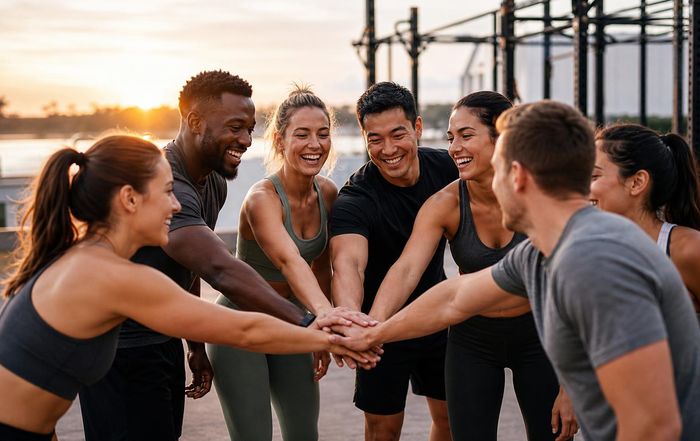
Community fitness, whether experienced through a local running club in London, a CrossFit box in Berlin, a yoga collective in Singapore, or a virtual cycling group connecting riders from New York to Sydney, operates on a simple but powerful principle: people are more likely to stay committed when they feel seen, supported, and part of something larger than their own goals. While traditional fitness models often centered on individual willpower, contemporary research and practice show that shared identity, social norms, and collaborative progress play a decisive role in sustaining motivation. For readers navigating the complex intersection of work, health, and lifestyle, understanding this shift is essential, and it is precisely this intersection that FitBuzzFeed explores across its coverage of fitness, health, business, and lifestyle.
From Willpower to Social Design
For decades, popular fitness culture emphasized self-discipline and individual grit, often suggesting that those who failed to maintain routines were simply lacking in character or willpower. However, behavioral science from institutions such as Stanford University and Harvard University has steadily reframed this narrative, showing that environment and social context strongly influence whether healthy behaviors are adopted and maintained over time. Readers who explore current behavioral research can learn more about habit formation and social influence and see that motivation is less a personal flaw or strength and more a function of how life is structured around them.
Community fitness leverages this insight by deliberately designing social environments that normalize, reward, and emotionally reinforce consistent movement. Instead of relying on an individual to wake up at 5 a.m. for a solo run, a community-based approach ensures that someone is expecting them at the park, that a shared app displays their participation, and that collective milestones are celebrated. This social design converts abstract goals-such as "get healthier" or "lose weight"-into concrete, shared experiences that feel meaningful in the moment, which is precisely the kind of reinforcement that psychological research has identified as critical for long-term behavior change. Organizations like World Health Organization provide global guidance on physical activity, and readers can explore current recommendations for different age groups to see how community models help people meet and exceed these baselines.
The Psychology of Belonging and Accountability
At the heart of community fitness is the psychological need for belonging, a factor that cuts across age, culture, and profession from New York and Toronto to Tokyo and Johannesburg. When individuals join a running club, a rowing crew, or a workplace wellness cohort, they are not merely signing up for exercise; they are entering a social contract in which attendance, effort, and progress matter to others. This sense of being counted on creates what behavioral economists call "commitment devices," mechanisms that increase the cost-social rather than financial-of skipping a session or abandoning a goal.
Research featured by organizations such as American Psychological Association has consistently shown that social support and accountability correlate with higher adherence to exercise programs over time. People who train with peers report greater enjoyment, lower perceived exertion, and stronger emotional resilience when facing setbacks. Those who wish to deepen their understanding of these findings can explore evidence on social support and mental health, noting how similar dynamics apply to physical activity. For readers of FitBuzzFeed, who often balance demanding careers with health aspirations, this psychological dimension is particularly relevant: the right community not only keeps them moving but also buffers stress, improves mood, and enhances overall quality of life.
Digital Platforms and Global Fitness Communities
The rise of digital fitness platforms has transformed community from a local phenomenon into a global network, allowing individuals in Los Angeles, London, Munich, Singapore, and São Paulo to share workouts, compete in challenges, and celebrate achievements in real time. Companies such as Strava, Peloton, and Zwift have demonstrated that virtual leaderboards, shared routes, and live classes can cultivate powerful social bonds, even among people who never meet in person. Interested readers can explore how connected fitness platforms design for engagement and observe how user experience, gamification, and data visualization support long-term use.
In 2026, this digital layer increasingly coexists with in-person communities rather than replacing them. A cyclist in Amsterdam might track rides on a global platform while also joining a local club, and a remote worker in Melbourne might attend virtual strength classes during the week and participate in community events on weekends. For the FitBuzzFeed audience, which spans continents and time zones, this hybrid model is particularly attractive because it accommodates varied work schedules, family responsibilities, and cultural norms. The website's focus on technology and events allows it to highlight innovations such as AI-driven coaching, biometric feedback, and virtual reality training, all of which are increasingly embedded in community-based programs.
Corporate Wellness and the Business Case for Community
From a business perspective, community fitness has evolved from a "nice to have" perk into a strategic investment in productivity, talent retention, and organizational resilience. Employers across North America, Europe, and Asia-Pacific are recognizing that physically active employees tend to have fewer sick days, higher cognitive performance, and stronger engagement at work. Organizations such as World Economic Forum have documented how health and wellbeing initiatives contribute to human capital development, and executives can learn more about the economic value of employee wellbeing to understand why leading firms are redesigning their wellness strategies.
Rather than offering isolated gym subsidies or once-a-year health fairs, forward-thinking companies are creating internal communities: walking meetings, cross-departmental running groups, step challenges that connect offices in London, New York, and Singapore, and digital platforms where employees share progress and encouragement. For readers exploring the intersection of work and health on FitBuzzFeed, the jobs and business sections increasingly highlight employers that treat community fitness as part of their culture, not a superficial benefit. This shift aligns with broader ESG (Environmental, Social, and Governance) priorities, as investors and stakeholders scrutinize how organizations support the physical and mental health of their workforce.
Local Culture, Global Trends
While the underlying psychology of community fitness is universal, its expression differs across regions and cultures, reflecting local norms, infrastructure, and social expectations. In the United States and Canada, group fitness classes, boutique studios, and recreational leagues are prominent, often supported by municipal initiatives that encourage active lifestyles. In the United Kingdom, Germany, and the Netherlands, cycling clubs and running communities leverage extensive urban infrastructure, while in Nordic countries such as Sweden, Norway, Denmark, and Finland, outdoor activities rooted in concepts like "friluftsliv" emphasize nature, resilience, and seasonal adaptation.
In Asia, community fitness takes diverse forms: from park-based tai chi groups in China and Japan to high-intensity group training in South Korea and Singapore, and from Bangkok's open-air aerobics sessions to the rapidly growing running scenes in Kuala Lumpur and Bangkok. Readers can explore global physical activity patterns to see how cultural preferences and policy environments shape participation. In Africa and South America, community clubs, football leagues, and informal running groups have long provided both social cohesion and physical activity, with cities like Cape Town, Nairobi, Rio de Janeiro, and São Paulo hosting events that bring together thousands of participants across socioeconomic backgrounds.
For FitBuzzFeed, whose audience spans these regions, this cultural diversity is not a complication but a strength. By covering world developments in sports and wellness, the platform highlights how community fitness initiatives in Johannesburg, Madrid, Seoul, or Vancouver can inspire readers elsewhere, demonstrating that motivation is often sparked when individuals see people like themselves, in similar environments, thriving through shared movement.
The Role of Brands and Influencers in Shaping Communities
Brands and influencers now play a central role in structuring community fitness, for better and for worse. On one hand, global companies such as Nike, Adidas, and Lululemon have invested heavily in running clubs, training apps, and ambassador programs that create real-world and digital communities. Interested readers can learn how purpose-driven brands build fitness ecosystems and see how apparel and equipment companies increasingly position themselves as partners in wellbeing rather than mere product suppliers. On the other hand, the influence of social media can sometimes amplify unrealistic body standards or promote unsustainable training regimens, which undermines the very motivation that communities are meant to strengthen.
For a platform like FitBuzzFeed, which covers brands as well as sports and wellness, the challenge and opportunity lie in curating examples of responsible leadership, where companies and public figures foster inclusive, evidence-based communities. Increasingly, readers look for fitness ecosystems that welcome all ages, body types, and ability levels, and that emphasize functional health, mental wellbeing, and long-term sustainability over short-term aesthetic goals. Thoughtful coverage helps audiences distinguish between communities that genuinely support health and those that primarily drive sales or engagement metrics.
Technology, Data, and the Personalization of Community
One of the most significant shifts since the early 2020s has been the integration of data and AI into community fitness. Wearables from companies like Garmin, Apple, and Fitbit track heart rate variability, sleep quality, and training load, providing insights that can be shared within communities to enhance accountability and personalization. Readers can explore how wearables are transforming healthcare and performance to understand how data-driven feedback supports both motivation and safety. In 2026, many group training programs now incorporate individualized targets, ensuring that a beginner in Barcelona and an experienced athlete in Zurich can participate in the same session while working at appropriate intensities.
AI-driven coaching platforms, some of which are covered in FitBuzzFeed's technology and training sections, use machine learning to adapt programs based on performance, recovery, and user feedback. When combined with community features-such as shared progress dashboards, team-based challenges, or adaptive leaderboards-these tools make it easier for individuals to stay engaged even as their needs and circumstances change. For busy professionals in London, Toronto, or Singapore, this flexibility is crucial: community no longer demands rigid schedules or uniform workouts; instead, it creates a shared narrative in which each member's path is personalized but still connected to collective goals.
Health, Recovery, and the Expanded Definition of Fitness
As the global conversation about wellbeing evolves, community fitness is increasingly understood not just as a vehicle for performance or appearance but as a holistic framework encompassing physical, mental, and social health. Medical organizations such as Mayo Clinic and Cleveland Clinic have emphasized the links between regular physical activity and reduced risk of chronic diseases, improved mental health, and enhanced cognitive function, and readers can learn more about exercise and chronic disease prevention to see why long-term adherence is so important. Community-based programs that incorporate education on sleep, stress management, and nutrition are better positioned to support sustainable motivation because they address the full context in which behavior occurs.
For FitBuzzFeed, which offers dedicated coverage of nutrition, wellness, and physical health, this expanded definition aligns with readers' interests. A running group that organizes seminars on fueling for endurance, a yoga collective that hosts workshops on workplace ergonomics, or a corporate wellness cohort that brings in mental health professionals are all examples of community fitness evolving beyond workouts into integrated wellbeing ecosystems. In this model, motivation is sustained not by constant willpower but by an environment in which healthy choices are socially reinforced, practically supported, and emotionally rewarding.
Inclusivity, Accessibility, and Trust
Long-term motivation cannot flourish in communities that exclude or alienate significant segments of the population. Issues of accessibility, affordability, and representation are therefore central to the future of community fitness in cities from New York and Paris to Johannesburg and Bangkok. Public health organizations and advocacy groups have highlighted disparities in access to safe spaces for exercise, quality coaching, and supportive communities, and readers can explore global health equity initiatives to understand how socioeconomic factors influence participation. For many, the absence of inclusive communities is not a matter of preference but of structural barriers.
Trust becomes a critical asset in this context. Communities that are transparent about their practices, respectful of diverse backgrounds, and attentive to safety-both physical and psychological-are more likely to retain members over time. For an audience that relies on FitBuzzFeed as a trusted source, editorial coverage that highlights inclusive models, evidence-based guidelines, and real-world success stories helps build confidence. When readers see communities that welcome older adults in Berlin, adaptive athletes in Toronto, or beginners in Seoul, they are more likely to believe that they, too, can find or build a community that fits their lives.
Events, Milestones, and the Power of Shared Achievement
Events have always been powerful catalysts for motivation, from city marathons and charity rides to workplace challenges and local tournaments. In 2026, the event landscape is more diverse and accessible than ever, with hybrid formats that allow participation from multiple countries and time zones. Global organizations such as World Athletics and International Triathlon Union continue to stage high-profile competitions, while cities across Europe, Asia, Africa, and the Americas host community races, open-water swims, and multi-sport festivals. Readers who wish to explore international running and endurance events can see how these milestones provide structure and purpose to year-round training.
For community fitness groups, events function as narrative peaks: they give members a shared objective, create anticipation, and deliver a collective sense of accomplishment that reinforces identity. FitBuzzFeed's coverage of events and sports often highlights how individuals who might never have considered themselves "athletes" find motivation in training for a 5K charity run in London, a cycling tour in Tuscany, or a virtual step challenge connecting teams from New York, Munich, and Tokyo. These experiences deepen social bonds and leave lasting memories, making it more likely that participants will continue training, join future events, and recruit others into the community.
Building a Personal Strategy for Community-Based Motivation
For readers across the globe who are considering how to harness community fitness for their own long-term motivation, the most effective approach is both strategic and personal. It begins with clarity about one's goals-whether they relate to weight management, stress reduction, athletic performance, social connection, or career resilience-and an honest assessment of constraints such as time, location, and budget. From there, individuals can explore existing communities, both online and offline, that align with their interests and values, whether that means a local football club in Madrid, a virtual strength group spanning the United States and Canada, or a workplace wellness team in Singapore.
Resources like FitBuzzFeed, with its integrated coverage of fitness, health, lifestyle, and news, can help readers evaluate options, understand emerging trends, and learn from the experiences of others. External sources such as NHS in the United Kingdom or Centers for Disease Control and Prevention in the United States provide evidence-based guidelines, and readers can learn more about starting and maintaining an exercise routine to ensure that their community-based efforts are grounded in sound practice. Over time, many individuals find that they move from being passive participants to active contributors, organizing group sessions, mentoring newcomers, or even launching new communities that reflect their evolving needs.
Looking Ahead: Community as the Engine of Sustainable Fitness
As 2026 unfolds, the convergence of behavioral science, digital technology, corporate strategy, and global culture points toward a clear conclusion: community is no longer a peripheral feature of fitness; it is the engine that makes long-term motivation possible. Whether in bustling cities like New York, London, Berlin, Singapore, and Tokyo, or in smaller communities across Africa, South America, and the Pacific, people who move together tend to stay moving, not because they possess extraordinary willpower but because they are embedded in systems that make healthy choices normal, rewarding, and socially meaningful.
For FitBuzzFeed and its global readership, this reality reshapes how fitness is understood, discussed, and pursued. The platform's role is not merely to report on workouts, gear, or diets, but to illuminate the ecosystems-communities, workplaces, brands, technologies, and events-that sustain motivation across years and life stages. As readers in the United States, Europe, Asia, Africa, and beyond navigate the pressures of modern work, shifting economies, and evolving lifestyles, community fitness offers a resilient foundation: a way to anchor personal health in shared purpose, collective achievement, and mutual support. In that foundation lies not only the promise of better physical and mental health, but also the possibility of more connected, energized, and resilient societies worldwide.