

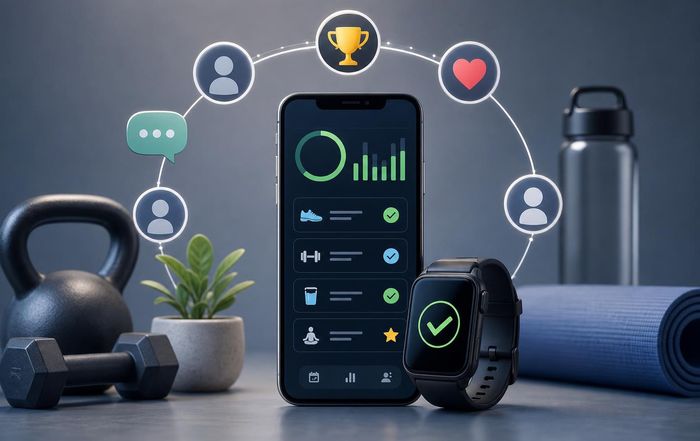
How Digital Fitness Platforms Support Accountability in 2026
The New Accountability Era in Digital Fitness
By 2026, digital fitness has matured from a collection of novelty apps into a deeply integrated ecosystem that shapes how individuals across North America, Europe, Asia, Africa and South America design, track and sustain their health and performance routines. What began as step counters and basic training videos has evolved into a sophisticated mesh of connected devices, artificial intelligence, live coaching, biometric analytics and social communities that now underpin accountability in ways traditional gyms and personal trainers alone rarely achieved. For readers of FitBuzzFeed who move fluidly between work, travel, sport and wellness, understanding how these platforms foster real, sustained accountability has become central not only to personal health, but also to professional performance, workplace culture, and even national productivity.
Accountability in fitness has always been about more than willpower; it is about structure, feedback, social reinforcement and credible expertise. As organizations such as World Health Organization continue to highlight the global burden of inactivity and lifestyle-related disease, individuals and employers are turning to digital platforms that provide persistent nudges, measurable outcomes and supportive communities. Readers who already engage with resources on fitness training, health insights and wellness strategies on FitBuzzFeed are now increasingly navigating a digital landscape where accountability is embedded in every workout reminder, sleep score and recovery recommendation.
From Tracking to Coaching: The Evolution of Digital Accountability
The first generation of fitness technology focused mainly on passive tracking: counting steps, logging runs and recording heart rate. While useful, these tools often failed to sustain behavioral change because they placed the entire burden of interpretation and motivation on the user. Over the past decade, however, digital fitness platforms have shifted toward active coaching models that combine data, behavioral science and human interaction to keep users engaged and responsible for their goals.
Major platforms such as Apple Fitness+, Peloton, Nike Training Club and Garmin Connect now integrate structured programs, progressive overload principles and adaptive recommendations that respond to user performance and adherence. This evolution mirrors research in behavior change science from institutions such as Harvard T.H. Chan School of Public Health, which underscores the importance of goal setting, feedback loops and social support in sustaining healthy habits. When a platform not only records a missed workout but automatically adjusts the training plan, offers a shorter alternative session and prompts a recovery check-in the next day, accountability becomes embedded in the user experience rather than an afterthought.
For business leaders and HR professionals who follow business and workplace trends on FitBuzzFeed, this shift has particular significance. Corporate wellness programs increasingly rely on digital platforms that provide structured coaching at scale, ensuring employees in the United States, United Kingdom, Germany, Singapore or Brazil receive consistent guidance and measurable feedback, regardless of location or time zone. The result is a more accountable workforce, where health goals, productivity and organizational outcomes are more tightly aligned.
Data, Metrics and the Psychology of Being Seen
A central pillar of accountability in digital fitness is the psychological impact of being measured and observed, even when the observer is an algorithm. When users see their training consistency, heart rate variability, sleep quality and recovery scores visualized over weeks and months, they confront an objective narrative of their behavior that is difficult to ignore or rationalize. Platforms such as WHOOP, Oura and Fitbit have popularized readiness scores and recovery metrics that translate complex physiology into simple, daily accountability prompts.
Research from organizations like American College of Sports Medicine has long emphasized the importance of objective monitoring in exercise adherence, and digital platforms now make that monitoring continuous and intuitive. The presence of leaderboards, streak counters, milestone badges and monthly progress summaries adds a layer of gamified accountability that resonates with competitive personalities, particularly among sports enthusiasts and high-performing professionals. For readers who gravitate toward sports performance coverage on FitBuzzFeed, this data-driven environment mirrors the analytics culture of elite sport, where every training decision is informed by metrics and every missed session has a visible impact on performance graphs.
At the same time, the most advanced platforms have moved beyond raw data to contextualized insights. Rather than simply reporting that a user slept six hours, they might highlight how reduced sleep correlates with decreased power output or slower running pace, drawing on evidence summarized by organizations such as National Institutes of Health. This narrative framing reinforces accountability by connecting everyday choices to tangible outcomes, making it harder for users to dismiss poor habits as inconsequential.
Social Communities and the Power of Collective Commitment
While data creates personal accountability, social features create relational accountability, and together they form a powerful combination. Digital fitness platforms now host communities that span continents, time zones and cultures, from runners in Canada and Australia participating in virtual marathons to strength athletes in Sweden, South Africa and Japan sharing progressive overload programs. The sense of belonging that emerges within these communities has a profound effect on adherence and goal attainment.
Platforms such as Strava, Zwift and Nike Run Club have demonstrated that when workouts are automatically shared with a trusted network, the likelihood of skipping sessions decreases significantly because every scheduled run or ride becomes a social contract. Members know that their peers will see whether they completed or missed their planned effort, and this subtle pressure often proves more effective than self-imposed resolutions. For those who follow world and global trends on FitBuzzFeed, it is evident that digital fitness communities are becoming transnational micro-cultures with their own norms, challenges and rituals.
These platforms also enable structured group challenges, such as month-long step competitions or virtual charity events, that align individual accountability with collective goals. Organizations such as UNICEF and World Food Programme have partnered with fitness apps to create campaigns where physical activity unlocks donations or awareness, thereby linking personal health with global impact. In this context, accountability is no longer just about personal transformation; it becomes part of a broader narrative of contribution and social responsibility, which resonates strongly with younger professionals in Europe, Asia and North America who seek purpose-driven lifestyles.
Hybrid Coaching: Human Expertise in a Digital Shell
Despite remarkable advances in artificial intelligence and machine learning, human expertise remains central to credible accountability. The most effective digital fitness platforms in 2026 blend algorithmic recommendations with access to certified professionals who provide nuanced guidance, form checks and psychological support. This hybrid model addresses a long-standing limitation of purely digital solutions: the inability to fully understand individual context, emotional state and personal history.
Leading organizations such as American Council on Exercise and National Strength and Conditioning Association have worked closely with technology companies to ensure that digital coaching adheres to evidence-based guidelines and ethical standards. Many platforms now require trainers to hold recognized certifications and to participate in ongoing education, which enhances trustworthiness and protects users from unsafe or misleading advice. For readers who explore jobs and career opportunities on FitBuzzFeed, the rise of remote coaching has opened new professional pathways for fitness experts in the United States, United Kingdom, India, Brazil and beyond, allowing them to build global client bases while maintaining high accountability standards.
Hybrid coaching also enables more nuanced accountability strategies. A trainer who sees a client's full training, nutrition and sleep data can intervene proactively when adherence declines, adjusting workloads, addressing motivational barriers and recommending mental health support when necessary. Resources from organizations such as National Alliance on Mental Illness have informed many platforms' approaches to integrating mental well-being into physical training, recognizing that burnout, anxiety and stress are often the hidden drivers of inconsistency. This holistic perspective aligns closely with the integrated coverage of nutrition, lifestyle and wellness that FitBuzzFeed readers seek.
Corporate Wellness, Remote Work and Organizational Accountability
The global shift toward hybrid and remote work, accelerated earlier in the decade, has made digital fitness platforms indispensable tools for organizations that wish to maintain healthy, productive workforces across dispersed teams in the United States, Europe, Asia-Pacific and Africa. Employers have recognized that accountability in wellness is not solely the responsibility of individuals; it is also a function of corporate culture, policy and infrastructure. Consequently, many companies now integrate digital fitness platforms directly into their employee benefits, performance reviews and leadership development programs.
Leading consultancies such as McKinsey & Company and Deloitte have documented how physically active employees tend to show higher engagement, lower absenteeism and improved cognitive performance. Digital platforms make it feasible to support these outcomes at scale by providing standardized programs, anonymized analytics and tailored interventions. For instance, a multinational firm might use aggregate platform data to identify departments with low activity levels and high stress markers, then implement targeted initiatives such as walking meetings, flexible schedules or virtual group challenges. This systematic approach transforms wellness from a series of ad hoc perks into a measurable accountability framework.
For business readers who follow news and analysis and business strategy on FitBuzzFeed, the implications are significant. Investors and regulators increasingly view employee well-being as a material factor in corporate resilience, and digital fitness data, when handled ethically, can provide evidence of genuine commitment rather than superficial branding. Organizations that align their wellness platforms with best practices from bodies like World Economic Forum on human capital and sustainable growth are better positioned to attract talent in competitive markets from London and Berlin to Singapore and Sydney.
Personalization, AI and the Science of Sustainable Habits
Artificial intelligence has become the engine behind the most advanced accountability features in digital fitness platforms. By analyzing vast datasets that include heart rate variability, training load, geographic location, sleep patterns and even calendar data, AI systems can anticipate when users are most likely to skip workouts, experience fatigue or lose motivation. Instead of delivering generic reminders, these platforms now provide context-aware prompts, such as suggesting a shorter mobility session during a high-stress workweek or recommending outdoor activity when weather conditions are optimal.
This level of personalization draws heavily on behavioral insights from research centers and organizations such as Behavioural Insights Team in the United Kingdom, which have demonstrated that timely, tailored nudges can significantly improve adherence to health behaviors. Accountability becomes less about rigid discipline and more about intelligent design of daily routines that are realistic for individuals in different life stages, professions and cultural contexts, whether they are executives in New York, freelancers in Berlin, engineers in Seoul or healthcare workers in Johannesburg.
For the FitBuzzFeed audience, which often juggles demanding schedules with ambitious fitness goals, this AI-driven accountability can be transformative. Readers who already rely on technology coverage and training resources from the platform are well positioned to leverage these tools, provided they remain discerning about data privacy and the scientific rigor behind algorithmic recommendations. Organizations such as Electronic Frontier Foundation and European Data Protection Board have emphasized the importance of transparent data practices, and users who prioritize platforms aligning with these standards are better able to trust the accountability mechanisms they adopt.
Nutrition, Recovery and the Expansion of Accountability Beyond Workouts
In 2026, accountability in digital fitness is no longer confined to exercise sessions; it now encompasses nutrition, sleep, stress management and overall lifestyle. Integrated platforms combine workout tracking with food logging, mindfulness exercises and recovery recommendations, creating a comprehensive portrait of daily behavior. Apps that sync with continuous glucose monitors, smart scales and sleep trackers allow users to see direct correlations between dietary choices, body composition changes and performance outcomes, reinforcing accountability through immediate feedback.
Organizations such as Academy of Nutrition and Dietetics and Sleep Foundation provide foundational guidelines that many platforms incorporate into their educational content and recommendation engines. When users in Canada, France or Thailand log meals, they receive feedback not only on calories but also on macronutrient balance, micronutrient density and timing relative to training sessions. This level of detail helps align day-to-day choices with long-term goals, whether those goals involve weight management, muscle gain, metabolic health or athletic performance. Readers who already explore nutrition, physical performance and overall health content on FitBuzzFeed can leverage these tools to create a more coherent and accountable lifestyle framework.
Recovery has also become a focal point of accountability. Platforms now prompt users to respect rest days, monitor signs of overtraining and engage in active recovery practices such as mobility work, low-intensity cardio and mindfulness. This emphasis reflects growing awareness, supported by organizations like International Olympic Committee, that chronic fatigue and injury are often the result of inadequate recovery rather than excessive training alone. By holding users accountable not just for doing more, but for recovering better, digital platforms promote sustainable progress and reduce the risk of burnout-a critical consideration for ambitious professionals and athletes alike.
Global Accessibility, Equity and the Risk of a Digital Divide
As digital fitness platforms expand across regions from the United States and United Kingdom to India, South Africa, Brazil and Southeast Asia, questions of accessibility and equity become central to any discussion of accountability. While smartphones and wearables are increasingly affordable, significant disparities remain in internet access, device quality and health literacy. If accountability mechanisms are available only to those with premium subscriptions and advanced hardware, they may inadvertently widen health gaps between income groups and regions.
Organizations such as World Bank and OECD have highlighted the risk of digital divides undermining public health initiatives, and forward-thinking fitness companies are beginning to respond by offering low-bandwidth modes, offline content and tiered pricing structures. Some platforms partner with governments, insurers and employers to subsidize access for underserved populations, while others integrate with public health campaigns to provide free basic features that encourage physical activity and healthy eating. For globally minded readers of world news and events on FitBuzzFeed, these developments signal a shift toward more inclusive accountability systems that recognize health as a shared societal responsibility rather than an individual luxury.
At the same time, there is growing recognition that cultural sensitivity is essential. Accountability strategies that rely on public sharing of workouts or body metrics may not be appropriate in all cultures, and platforms must adapt their social and motivational features to local norms in Asia, the Middle East, Africa and Latin America. Organizations such as UNESCO have emphasized the importance of cultural context in digital transformation, and fitness companies that heed this guidance are more likely to build trust and long-term engagement across diverse markets.
Building a Trusted Personal Ecosystem with FitBuzzFeed at the Center
For the FitBuzzFeed community, the proliferation of digital fitness platforms in 2026 presents both opportunity and complexity. The sheer volume of apps, wearables, coaching services and online communities can be overwhelming, especially for readers who balance demanding careers, family responsibilities and ambitious health goals. The challenge is not simply to adopt technology, but to curate a coherent, trustworthy ecosystem that supports accountability without becoming intrusive or fragmented.
One effective approach is to treat FitBuzzFeed as a central hub for informed decision-making across fitness, wellness, lifestyle and business domains. By combining independent analysis of emerging platforms with practical guidance on training, nutrition and recovery, the site helps readers evaluate which tools align with their values, goals and privacy expectations. Users can then integrate a small number of carefully chosen platforms-perhaps a primary training app, a wearable for health monitoring and a nutrition tracker-rather than scattering their data and attention across dozens of services.
Trustworthiness in this ecosystem hinges on several factors: scientific rigor, transparent data policies, credible professional oversight and alignment with personal priorities. Readers who stay informed through FitBuzzFeed's news coverage and global perspectives on world and regional trends are better equipped to ask critical questions about how accountability is being engineered into their digital experiences. They can evaluate whether a platform's nudges are genuinely health-promoting or primarily engagement-driven, whether social features foster supportive communities or unhealthy comparison, and whether corporate wellness initiatives respect employee autonomy and privacy.
The Future of Accountability: Beyond Metrics to Meaning
Looking ahead, digital fitness platforms are poised to deepen their role in accountability, moving from simple behavior tracking to more holistic life design. Emerging technologies such as augmented reality coaching, biometric wearables embedded in clothing and integration with smart home environments will make it possible to embed accountability into everyday spaces, from the office desk to the living room floor. At the same time, advances in behavioral science and mental health research will encourage more nuanced approaches that respect individual differences in motivation, neurodiversity and emotional resilience.
For the global audience of FitBuzzFeed, spanning cities from New York and Toronto to London, Berlin, Singapore, Sydney, Johannesburg and São Paulo, the key will be to harness these innovations without surrendering agency. Accountability is most powerful when it is chosen, not imposed, and when it aligns with personal values rather than external pressures. Digital platforms can provide structure, feedback and community, but they are most effective when users remain active participants in setting goals, interpreting data and defining success on their own terms.
In this evolving landscape, the role of trusted, independent voices becomes even more critical. By continuing to provide rigorous analysis across fitness, health, technology and business, FitBuzzFeed can help readers navigate the intersection of digital innovation and human well-being with clarity and confidence. As digital fitness platforms refine how they support accountability in 2026 and beyond, individuals and organizations that approach them with informed discernment will be best positioned to transform data into sustainable habits, metrics into meaningful progress and technology into a genuine ally in the pursuit of a healthier, more resilient life.