

Healthy Lifestyle Habits for Stronger Focus in a Hyperconnected World
Why Fitness Focus Has Become a Top Advantage
Well sustained focus has quietly become one of the most valuable competitive advantages for professionals, entrepreneurs and leaders across industries. As hybrid work models mature in the United States, United Kingdom, Germany, Canada, Australia and other major economies, individuals are expected to process more information, make faster decisions and remain mentally agile for longer periods of time. At the same time, constant digital notifications, global time zone collaboration and the blurring of boundaries between work and personal life have created unprecedented cognitive overload. In this environment, the ability to concentrate deeply is no longer just a personal wellness aspiration; it is a core business capability that influences productivity, innovation and long-term career resilience.
For the sporty community of FitBuzzFeed-from high-performance athletes and fitness enthusiasts to executives, founders and knowledge workers-the intersection between physical health, mental clarity and professional performance has never been more apparent. Research from organizations such as the World Health Organization underscores how lifestyle factors, including sleep, movement and nutrition, directly influence cognitive function, emotional regulation and decision-making. Readers who already turn to FitBuzzFeed's health insights and business coverage increasingly recognize that achieving stronger focus is not about a single productivity hack; it is about constructing a sustainable, evidence-based lifestyle architecture that supports the brain's ability to do its best work consistently.
The Neuroscience of Focus: What the Brain Needs to Perform
To understand how lifestyle shapes concentration, it is helpful to consider the brain as a high-performance, energy-intensive organ that depends on a delicate balance of biological systems. Cognitive neuroscientists at institutions such as Harvard Medical School and University College London have shown that attention is governed by complex networks involving the prefrontal cortex, parietal regions and deeper structures like the thalamus, all of which require a steady supply of oxygen, glucose, micronutrients and restorative downtime. When sleep is insufficient, blood sugar is unstable or chronic stress is left unmanaged, these networks become less efficient, leading to mental fatigue, distractibility and poorer executive function.
Modern imaging studies, many summarized by The National Institutes of Health, demonstrate that chronic sleep deprivation can impair the prefrontal cortex in ways that resemble alcohol intoxication, diminishing impulse control and strategic thinking. In parallel, research highlighted by The American Psychological Association shows that persistent stress elevates cortisol levels, which over time can disrupt hippocampal function and memory consolidation, making it harder to retain information and sustain attention. These findings reinforce a central principle that underpins the editorial approach at FitBuzzFeed: lifestyle choices are not peripheral to mental performance; they are the infrastructure that either enables or undermines focus at work, in sports and in daily life.
Sleep as the Primary Engine of Cognitive Clarity
Among all lifestyle variables, sleep remains the most powerful and often the most neglected driver of focus. The Centers for Disease Control and Prevention notes that adults typically need at least seven hours of high-quality sleep per night, yet a large proportion of professionals in North America, Europe and Asia still operate in a chronic state of sleep restriction. For the global workforce, particularly in sectors such as finance, technology, healthcare and logistics, late-night work, irregular shifts and transcontinental travel further erode sleep regularity, compounding the problem.
During deep sleep and REM cycles, the brain consolidates memories, clears metabolic waste through the glymphatic system and recalibrates neurotransmitter levels that influence attention and mood. Without this nightly reset, individuals may experience slower processing speed, reduced creativity and heightened emotional reactivity, all of which can negatively affect collaboration and leadership. Organizations such as The Sleep Foundation have emphasized the importance of consistent sleep and wake times, a dark and cool sleeping environment and the strategic limitation of blue light exposure before bedtime to support circadian rhythms. For readers of FitBuzzFeed, integrating sleep hygiene into broader wellness strategies is increasingly seen as non-negotiable, particularly for athletes, executives and creators who rely on sharp decision-making.
In regions such as Japan, South Korea and Singapore, where intense work cultures have historically glorified long hours, there is a growing recognition that chronic sleep deprivation undermines national productivity and public health. Governments and employers are beginning to explore evidence-based fatigue management, and forward-thinking professionals are treating sleep with the same seriousness as training or nutrition, recognizing that no supplement or time-management technique can compensate for an exhausted brain.
Movement, Exercise and the Physiology of Attention
Physical activity is often framed as a tool for cardiovascular health or body composition, but its role in sharpening focus is equally profound. Studies compiled by The American College of Sports Medicine reveal that regular aerobic exercise increases cerebral blood flow, stimulates the release of brain-derived neurotrophic factor (BDNF) and enhances neuroplasticity, all of which support learning, memory and sustained attention. Even short bouts of movement, such as brisk walking or mobility work, can improve alertness and task performance for several hours afterward.
For knowledge workers in Germany, the Netherlands, the United Kingdom and beyond, integrating movement into the workday can counteract the cognitive dullness associated with prolonged sitting. Research highlighted by Mayo Clinic shows that sedentary behavior is linked to reduced metabolic health and higher risk of cognitive decline, reinforcing the value of structured exercise and micro-breaks. Readers who follow FitBuzzFeed's fitness coverage and training resources increasingly adopt hybrid routines that include strength training, low-intensity steady-state cardio and flexibility work, not only to enhance physical capacity but also to stabilize mood and sharpen mental focus.
Elite athletes and high-performance professionals in countries such as the United States, Canada, Australia and Scandinavia have long understood that disciplined training routines can create powerful psychological benefits, including improved self-regulation, resilience and concentration under pressure. By applying similar principles at a scale appropriate to their lives, professionals in sectors from technology to law can leverage movement as a daily cognitive enhancer, scheduling critical thinking tasks shortly after exercise sessions to capitalize on heightened mental clarity.
Nutrition: Fueling the Brain for Sustained Concentration
The brain consumes a disproportionate share of the body's energy, and its performance is highly sensitive to the quality and timing of nutrition. Fluctuating blood sugar, dehydration and micronutrient deficiencies can all impair concentration, while balanced meals and adequate hydration provide a stable foundation for mental work. Guidance from The Academy of Nutrition and Dietetics and research summarized by Harvard T.H. Chan School of Public Health indicate that dietary patterns rich in whole grains, lean proteins, healthy fats and a wide variety of fruits and vegetables are associated with better cognitive outcomes and reduced risk of neurodegenerative disease.
In practice, this translates into minimizing ultra-processed foods high in refined sugars and trans fats, which can provoke rapid spikes and crashes in blood glucose, leading to mid-morning or mid-afternoon energy slumps that undermine productivity. Omega-3 fatty acids from sources such as fatty fish, walnuts and flaxseeds have been linked to improved brain function, while polyphenols from berries, olive oil and green tea may support vascular health and reduce oxidative stress. Professionals who follow FitBuzzFeed's nutrition content increasingly view food choices through the lens of cognitive performance, planning meals that support rather than sabotage focus throughout demanding workdays.
Hydration is another often overlooked factor. Even mild dehydration has been shown in studies documented by The European Food Safety Authority to impair attention and working memory. For individuals working in hot climates, training intensively or traveling frequently, maintaining fluid and electrolyte balance is essential. Across regions such as the Middle East, South Africa, Brazil and Southeast Asia, where heat and humidity can be intense, strategic hydration can mean the difference between sustained mental clarity and pervasive fatigue.
Managing Stress and Building Mental Resilience
Chronic stress is one of the most significant obstacles to sustained focus, particularly for professionals juggling demanding roles, caregiving responsibilities and constant digital connectivity. The stress response, while adaptive in short bursts, becomes harmful when activated continuously, leading to elevated cortisol, disrupted sleep, reduced immune function and impaired cognitive performance. Psychological research compiled by The American Institute of Stress and Mind, a leading UK mental health charity, shows that unmanaged stress can narrow attentional focus in unhelpful ways, making it harder to think strategically, prioritize tasks and maintain perspective.
Evidence-based stress management techniques, including mindfulness meditation, controlled breathing, progressive muscle relaxation and cognitive reframing, have gained traction across North America, Europe and Asia. Platforms such as Headspace and Calm have popularized accessible practices that can be integrated into busy schedules, while clinical studies published through PubMed indicate that regular mindfulness practice can increase gray matter density in brain regions associated with attention and emotional regulation. For the FitBuzzFeed community, mental resilience is increasingly seen as a skill that can be trained, just like strength or endurance, with consistent practice yielding measurable improvements in focus, patience and adaptability.
Organizational cultures also play a crucial role. Progressive employers in Scandinavia, the Netherlands and New Zealand are experimenting with shorter workweeks, meeting-free focus blocks and psychological safety initiatives, recognizing that sustainable high performance depends on balancing intensity with recovery. Professionals who understand these dynamics can advocate for healthier work practices, aligning personal stress management with broader business and workplace trends that prioritize long-term productivity over short-term output.
Digital Hygiene: Reclaiming Attention in a Connected Economy
While lifestyle fundamentals such as sleep, exercise and nutrition create the biological conditions for focus, the digital environment determines how that focus is allocated. The always-on nature of modern communication platforms, collaboration tools and social media has fragmented attention for many professionals, with frequent task switching eroding deep work capacity. Studies referenced by Stanford University suggest that heavy multitaskers may experience reduced working memory and difficulty filtering irrelevant information, even when they are not multitasking.
Digital hygiene-the deliberate management of devices, notifications and online behaviors-has therefore become a strategic discipline. Techniques such as batching email responses, disabling non-essential notifications, using website blockers during focus sessions and establishing clear start and end times for digital engagement can help protect cognitive bandwidth. Guidance from The Center for Humane Technology emphasizes designing personal technology use that aligns with values and long-term goals rather than reactive habits driven by external triggers. For the readership of FitBuzzFeed, which spans technology professionals, athletes, entrepreneurs and creatives, this means treating attention as a finite resource that must be allocated with intention, especially during high-stakes projects or training cycles.
In regions with high smartphone penetration, such as the United States, South Korea and the Nordic countries, digital minimalism movements are gaining momentum, encouraging individuals to audit their apps, curate information sources and prioritize high-quality, long-form content over endless scrolling. This aligns closely with the editorial mission of FitBuzzFeed, which aims to provide substantive news and world coverage and in-depth analysis that reward sustained attention rather than superficial browsing.
Environmental Design: Crafting Spaces that Support Deep Work
The physical environment in which individuals work, train and recover exerts a powerful influence on focus. Noise levels, lighting, ergonomics, temperature and visual clutter can either support or sabotage concentration. Architectural and occupational health research, including work summarized by The International WELL Building Institute, indicates that access to natural light, good air quality and thoughtful acoustic design can significantly enhance cognitive performance and well-being. For remote and hybrid workers, this often means investing in a dedicated workspace that minimizes distractions, supports comfortable posture and integrates cues that signal the brain it is time for focused effort.
In open-plan offices across Europe, North America and Asia, organizations are experimenting with quiet zones, focus rooms and hybrid layouts that allow employees to match their environment to the task at hand. Noise-cancelling headphones, adjustable desks and high-quality monitors are no longer seen as luxuries but as productivity tools that protect long-term musculoskeletal and cognitive health. For athletes and fitness professionals who follow FitBuzzFeed's physical performance content, similar principles apply in training environments, where clear organization, appropriate equipment layout and psychologically safe cultures can reduce mental friction and improve execution.
At home, small design choices-such as keeping phones out of the bedroom, establishing a consistent "work corner," or using visual boundaries to separate professional and personal zones-can help the brain transition more smoothly between roles, reducing cognitive load. In densely populated cities from London and Berlin to Tokyo and São Paulo, where space is limited, creative solutions such as foldable desks, noise-dampening panels and light-optimizing layouts are helping individuals turn compact apartments into focus-supportive environments.
Integrating Healthy Habits into Demanding Global Lifestyles
For many professionals, the challenge is not understanding what supports focus but implementing these habits consistently amid global travel, shifting time zones and complex family responsibilities. Executives shuttling between New York, London, Frankfurt and Singapore, or remote workers collaborating across Europe, Asia and North America, often struggle to maintain regular sleep, exercise and nutrition patterns. Yet it is precisely in these high-demand contexts that lifestyle discipline yields the greatest returns.
Experts from organizations such as The Global Business Travel Association recommend strategies like pre-planning meals, scheduling movement into travel itineraries, using light exposure to adjust circadian rhythms and setting non-negotiable sleep windows whenever possible. High-performing individuals who treat these practices as integral parts of their professional toolkit, rather than optional extras, tend to maintain sharper focus and greater resilience over extended periods of travel and intense work. For the diverse audience of FitBuzzFeed, spanning continents from Europe and Asia to Africa and South America, this global perspective on habit integration is essential.
Digital tools can support this process when used intentionally. Wearable devices from companies such as Garmin and Apple provide data on sleep, heart rate variability and activity levels, helping users correlate lifestyle patterns with subjective focus and performance. Online platforms, including FitBuzzFeed's lifestyle and wellness sections and technology coverage, offer frameworks for interpreting this data and translating it into personalized routines that align with individual goals, cultural contexts and job demands.
Building a Personal Focus Framework with FitBuzzFeed
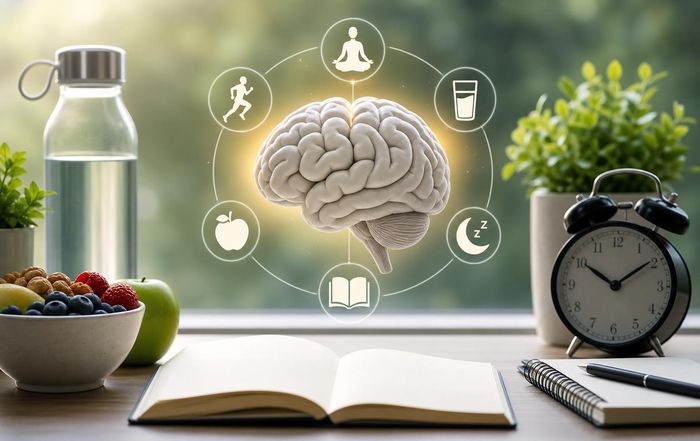
Ultimately, stronger focus emerges from a personalized, integrated framework that aligns biological needs, environmental design and digital habits with professional and personal aspirations. Rather than chasing isolated hacks, individuals benefit from systematically addressing the pillars of sleep, movement, nutrition, stress management, digital hygiene and environment, adjusting each based on feedback from their own bodies and performance. For some, this may mean prioritizing earlier bedtimes and structured morning routines; for others, it may involve reconfiguring workspaces, renegotiating meeting norms or embracing new training protocols.
FitBuzzFeed is uniquely positioned at the intersection of sports, health, business and wellness, enabling it to translate cutting-edge research and global best practices into actionable insights for a diverse group of people. By drawing on evidence from leading institutions such as World Health Organization, Harvard Medical School, Mayo Clinic, American Psychological Association and others, the platform emphasizes Experience, Expertise, Authoritativeness and Trustworthiness, while remaining grounded in the real-world constraints faced by professionals, athletes and everyday readers.
As the world moves on deeper into the digital age, with things like artificial intelligence, automation and remote collaboration reshaping industries from finance to healthcare, the human capacity for deep, sustained focus will remain a differentiating factor that technology cannot easily replicate. Professionals who invest in healthy lifestyle habits today are not merely improving their well-being; they are future-proofing their careers and enhancing their ability to contribute meaningfully in an increasingly complex global landscape. For those seeking to build that advantage, returning regularly to FitBuzzFeed's home for integrated performance insights offers a trusted pathway to continuous learning, refinement and long-term cognitive strength.