

What Brazil's Beach Culture Teaches the World About Community Fitness
Introduction: From Copacabana to Corporate Boardrooms
As organizations across the globe search for sustainable ways to improve health, productivity, and engagement, Brazil's beach culture offers an unexpectedly powerful blueprint for community fitness that extends far beyond sand and surf. From the iconic stretches of Copacabana and Ipanema in Rio de Janeiro to the bustling waterfronts of Florianópolis, Recife, and Salvador, Brazil's coastlines have evolved into open-air laboratories where social connection, physical activity, and informal public health strategies intersect in ways that business leaders, policymakers, and wellness professionals can no longer afford to overlook. For a platform like FitBuzzFeed, which exists at the crossroads of fitness, health, lifestyle, and business, Brazil's model is particularly resonant because it demonstrates how environments can be intentionally shaped to make active living the default rather than the exception.
As companies in the United States, Europe, Asia, and beyond confront rising healthcare costs, hybrid work fatigue, and the mental health burdens of an always-on digital economy, the Brazilian shoreline reveals a different paradigm: one in which fitness is not a prescribed "program" but a lived social norm, embedded into daily routines, local identity, and community rituals. By examining the structures, behaviors, and cultural values that underpin Brazil's beach culture, executives and HR leaders in sectors as varied as technology, finance, consumer brands, and professional services can uncover practical insights that translate into healthier workforces, stronger employer brands, and more resilient communities worldwide.
The Beach as an Open-Air Fitness Ecosystem
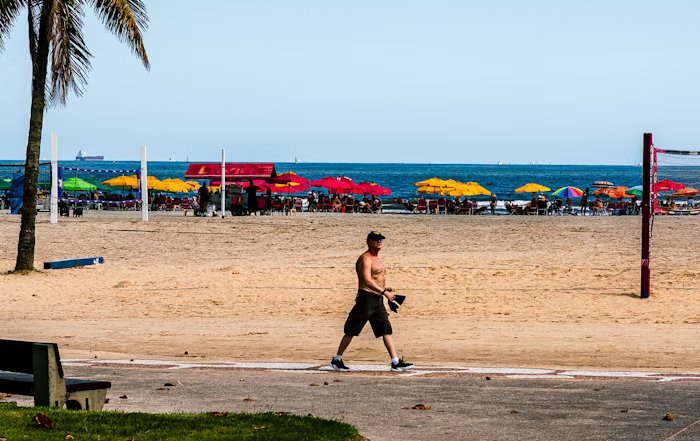
Brazil's beaches function less as passive leisure destinations and more as dynamic ecosystems of movement, interaction, and informal coaching, where the line between athlete and amateur is often blurred. Along the promenades of Rio, for example, visitors encounter public gym equipment, volleyball courts, running and cycling lanes, calisthenics stations, and surf schools in close proximity, creating a naturally integrated environment for multi-modal fitness. Observers from organizations such as World Health Organization have long emphasized the importance of environments that facilitate incidental physical activity, and Brazilian coastal cities have, by design or evolution, turned this principle into everyday reality. Those interested in the broader health implications of such environments can explore how urban design supports active living through resources provided by the World Health Organization.
In contrast to traditional gym-centric cultures found in many high-income countries, where fitness is often compartmentalized into structured sessions behind closed doors, Brazil's beach culture normalizes visible, communal exercise across age groups, body types, and socioeconomic backgrounds. The result is an open-source fitness ecosystem where knowledge is shared informally, imitation replaces instruction manuals, and social participation becomes a more powerful motivator than individual discipline alone. For readers of FitBuzzFeed who follow training and physical performance, this model highlights the value of designing spaces-whether corporate campuses, neighborhood parks, or digital communities-that reduce friction and increase visibility for active behaviors.
Social Cohesion as a Performance Enhancer
One of the most striking aspects of Brazil's beach culture is the central role of social cohesion in sustaining high levels of physical activity. On the sands of Copacabana, spontaneous football matches, beach tennis games, and group runs are not events planned weeks in advance but organic gatherings that arise from habit and shared expectation. The psychology of group belonging, which organizations such as American Psychological Association have linked to improved resilience and mental health, becomes a powerful driver of consistent movement. Readers can explore the science behind social connection and well-being through the American Psychological Association, which details how communal experiences can amplify motivation and adherence.
This social fabric has direct implications for businesses seeking to design effective wellness strategies. Traditional corporate wellness programs often rely on top-down initiatives, financial incentives, or digital tracking tools, which, while useful, can feel transactional or impersonal. Brazil's beaches suggest an alternative: prioritize community-building first, then layer in structured activity. When employees identify with active peer groups-whether through lunchtime walking circles, after-work sports clubs, or company-sponsored community leagues-participation ceases to be a compliance task and becomes a natural extension of social life. For those following workplace trends on FitBuzzFeed, the connection between jobs, well-being, and social belonging is increasingly clear, particularly as younger workers in markets like the United Kingdom, Germany, and Canada demand employers who support holistic health.
Informal Coaching and Peer-Led Expertise
Another defining characteristic of Brazilian beach culture is the prevalence of informal coaching and peer-led instruction that coexists alongside professional expertise. On any given morning, one can observe experienced runners pacing newer athletes along the Aterro do Flamengo, seasoned surfers guiding beginners through their first waves, or older adults demonstrating bodyweight exercises at public workout stations. While elite athletes may train with certified coaches, the everyday beachgoer often learns through observation, imitation, and friendly correction from peers. This model aligns with research popularized by institutions such as Harvard T.H. Chan School of Public Health, which underscores how social learning and peer support can significantly increase adherence to healthy behaviors; more on this can be found through the Harvard T.H. Chan School of Public Health.
For business leaders and HR professionals, the lesson is that expertise in organizational fitness does not need to be centralized exclusively in formal wellness departments or external vendors. Instead, companies can empower internal champions-enthusiastic employees who already run marathons, practice yoga, or lead recreational sports-to act as catalysts for peer-led initiatives. By recognizing and supporting these internal influencers, organizations can replicate the Brazilian pattern of informal guidance that feels authentic, culturally aligned, and intrinsically motivating. On FitBuzzFeed, where readers track developments in sports and performance culture, this peer-led approach resonates strongly with how athletic communities often organize themselves outside corporate structures.
Inclusivity Across Age, Ability, and Background
Brazil's beaches present a more inclusive vision of fitness than many traditional gym or club environments, which can unintentionally signal exclusivity through pricing, aesthetics, or membership requirements. On the sand, adolescents play football next to retirees walking in groups, while casual joggers share space with competitive triathletes and recreational volleyball players. The open, public nature of the coastline allows for a shared physical culture that does not require expensive equipment, specialized clothing, or private facilities. Organizations such as United Nations have highlighted the importance of reducing inequality in access to health-promoting resources, a theme that is explored in depth on the United Nations platforms addressing sustainable development and public health.
For global employers, especially those with diverse workforces in regions such as South Africa, Brazil, India, and Southeast Asia, the Brazilian example underscores the importance of designing wellness programs that are economically and culturally accessible. Rather than focusing exclusively on high-cost offerings such as boutique fitness partnerships or premium app subscriptions, companies can create low-barrier opportunities like walking meetings, stair challenges, or community park workouts that reflect the democratic spirit of the beach. Readers of FitBuzzFeed who explore wellness content are increasingly looking for strategies that acknowledge socioeconomic realities while still delivering meaningful health benefits.
Environmental Design and the Power of "Default" Choices
A critical factor behind the success of Brazil's beach culture is urban and environmental design that makes physical activity the path of least resistance. Long, uninterrupted waterfront promenades, integrated cycling paths, strategically placed outdoor gyms, and safe pedestrian crossings all reduce the friction associated with getting active. Organizations such as World Bank have documented how infrastructure investments in active transport and public spaces can yield substantial health and productivity gains; interested readers can learn more about these urban planning approaches through the World Bank.
For corporate campuses and urban workplaces, the translation is straightforward yet often overlooked: design matters as much as programming. Employers can emulate Brazilian coastal design principles by creating inviting stairwells, integrating walking paths between buildings, offering secure bike storage and showers, and situating healthy food options in prominent, easily accessible locations. The more that active choices become the default-whether in office layouts, cafeteria design, or event planning-the less organizations must rely on willpower or incentive schemes to drive participation. At FitBuzzFeed, this intersection of technology, architecture, and health is a recurring theme, particularly as smart-building solutions and data analytics enable more precise measurement of how space influences behavior.
Mental Health, Resilience, and the Blue-Green Interface
Beyond physical fitness, Brazil's beach culture offers valuable insights into mental health and resilience, areas of growing concern for leaders in high-pressure industries worldwide. The combination of natural light, ocean views, fresh air, and rhythmic wave sounds creates what environmental psychologists call a "restorative environment," which can lower stress, improve mood, and enhance cognitive function. Research summarized by organizations like National Institutes of Health has consistently shown that exposure to natural environments, particularly blue (water) and green (vegetation) spaces, is associated with reduced anxiety and depression; further reading on these findings is available through the National Institutes of Health.
For businesses grappling with burnout, remote-work isolation, and rising mental health claims, the Brazilian model suggests integrating nature-based elements into wellness strategies. While not every organization can relocate to a beachfront, many can incorporate biophilic design elements, encourage outdoor walking breaks, or organize offsite events in parks and natural settings. On FitBuzzFeed, coverage of health and performance increasingly recognizes that physical training and psychological recovery are inseparable, and Brazil's coastal communities provide a living, large-scale case study of how nature-integrated activity supports long-term resilience.
Community Events, Micro-Economies, and Brand Opportunities
Brazil's beaches are also hubs of economic activity, where fitness, tourism, and local entrepreneurship intersect. From surf schools and stand-up paddle rentals to beachside juice vendors and sportswear pop-ups, a vibrant micro-economy supports and is supported by the culture of movement. Major sporting events, such as beach volleyball tournaments and open-water swims, draw spectators and sponsors, creating opportunities for brands to align with health, vitality, and community spirit. Organizations like International Olympic Committee have highlighted how sport-based events can catalyze urban renewal and economic development, as seen during the Rio 2016 Olympic legacy; those interested in this broader impact can explore resources from the International Olympic Committee.
For global brands and employers, Brazil's model illustrates how community fitness initiatives can become powerful platforms for marketing, recruitment, and corporate social responsibility. Sponsoring public fitness events, supporting local sports leagues, or co-creating outdoor wellness spaces can reinforce a company's commitment to health while generating authentic engagement with customers and employees. Readers who follow brands and sponsorship strategies on FitBuzzFeed can recognize the competitive advantage gained by organizations that move beyond transactional advertising to become embedded contributors to local health ecosystems.
Digital Amplification: From Local Beaches to Global Influence
Although Brazilian beach culture is rooted in physical spaces, its influence in 2026 is amplified through digital platforms that extend the reach of local practices to global audiences. Social media channels, fitness apps, and streaming platforms now broadcast sunrise workouts from Rio, surf sessions from Florianópolis, and beach football drills from Salvador to viewers in London, Tokyo, New York, and Johannesburg. Organizations such as Strava and other digital fitness communities have demonstrated how virtual networks can reinforce real-world activity by enabling group challenges, performance tracking, and social recognition; those interested in these dynamics can explore how digital communities support active lifestyles through platforms like Strava.
For businesses across North America, Europe, Asia, and Africa, this convergence of local culture and global technology presents an opportunity to curate hybrid wellness experiences that blend in-person and virtual participation. Companies can host global beach-themed fitness challenges, encourage employees to replicate Brazilian-style outdoor workouts in their own environments, or partner with Brazilian trainers to deliver online sessions that share both movement patterns and cultural context. At FitBuzzFeed, where readers engage with world and news content, this cross-border flow of fitness culture aligns with broader trends in globalization, digital collaboration, and cross-cultural exchange.
Policy, Public-Private Collaboration, and Long-Term Impact
The evolution of Brazil's beach culture is not solely the product of informal social dynamics; it is also shaped by policy decisions, public investment, and collaboration between government, civil society, and private sector stakeholders. Municipal authorities in cities like Rio de Janeiro and Fortaleza have invested in lighting, security, sanitation, and infrastructure that make beaches safe and attractive for early-morning and late-evening exercise, while health ministries and local NGOs have leveraged these spaces for public health campaigns, free exercise classes, and mass participation events. Organizations such as Pan American Health Organization have documented how Latin American cities are experimenting with active-transport and open-street initiatives, offering valuable insights for policymakers worldwide; those who wish to understand these regional strategies can refer to the Pan American Health Organization.
For corporate leaders, particularly in sectors such as real estate, hospitality, sportswear, and consumer health, the Brazilian model demonstrates how public-private collaboration can create shared value. Companies can co-invest in public fitness infrastructure, sponsor community trainers, or participate in urban planning dialogues to ensure that new developments support active lifestyles. For the FitBuzzFeed audience tracking business and ESG trends, this approach aligns with the growing expectation that organizations contribute tangibly to community well-being rather than limiting their role to internal employee wellness alone.
Lessons for Global Employers and Urban Leaders
Translating Brazil's beach culture into actionable strategies for other regions requires sensitivity to local context, climate, and culture, yet several core principles emerge that are broadly applicable across continents. First, fitness flourishes when it is socially embedded, visible, and normalized rather than hidden or treated as a niche hobby; this suggests that employers and city planners should prioritize public, communal spaces for movement and encourage visible participation. Second, low-cost, low-barrier access is essential for inclusivity, which means that free or affordable options must sit at the heart of any serious attempt to shift population-level health metrics. Third, environmental design that favors walking, cycling, and outdoor gathering is not a luxury but a foundational investment in long-term productivity and reduced healthcare burden, a point underscored by organizations such as OECD, whose analyses of health and productivity are available through the OECD.
Finally, the Brazilian experience highlights the importance of cultural storytelling in shaping health behaviors. The beach is not only a place to exercise; it is a symbol of national identity, aspiration, and shared memory. For employers and city leaders in places as diverse as Singapore, Stockholm, Johannesburg, and Toronto, creating similar narratives around local parks, rivers, or urban plazas can anchor fitness initiatives in something deeper than metrics and incentives. As FitBuzzFeed continues to cover nutrition, movement, and holistic living, the Brazilian example serves as a reminder that sustainable health cultures are built as much through meaning and belonging as through programs and policies.
Conclusion: Building the Next Generation of Community Fitness
In the evolving landscape of 2026, where organizations confront complex challenges ranging from chronic disease and mental health crises to hybrid work fatigue and demographic shifts, Brazil's beach culture offers a compelling, human-centered model for community fitness that bridges health, business, and social cohesion. By treating public spaces as shared gyms, embedding activity into everyday routines, leveraging peer leadership, and aligning policy, design, and culture, Brazilian coastal cities have created environments where movement is not an obligation but a natural expression of communal life.
For the readership of FitBuzzFeed, spanning executives, entrepreneurs, HR leaders, coaches, and health-conscious professionals across North America, Europe, Asia, Africa, and South America, the message is both simple and profound: community fitness thrives where environments, stories, and social structures make it easy, enjoyable, and meaningful to move together. Whether through reimagined office campuses, revitalized urban waterfronts, or digitally connected global challenges, the spirit of Brazil's beaches can inform the next generation of wellness strategies that prioritize experience, expertise, authoritativeness, and trustworthiness.
As cities and companies look ahead to the coming decade, those that internalize these lessons-creating inclusive, socially rich, and environmentally supportive spaces for physical activity-will not only foster healthier individuals but also build stronger brands, more engaged workforces, and more resilient communities. In that sense, the rhythms of Rio's shoreline and the early-morning runs along Brazil's coasts are not merely local traditions; they are signals of what a truly integrated, community-driven fitness future can look like for the world.